

Bizarre Child Abuse - Münchausen Syndrome by Proxy
The hospital room smells like antiseptic and plastic. Machines blink softly. A child lies in the bed, small, pale, barely awake. A nurse adjusts the IV line, careful not to wake them. Across the room, the mother sits perfectly still. Her hands folded in her lap. Calm. Tired. A little too still.
She’s been here every day, she says. Slept in the chair. Ate what the cafeteria would give her. She keeps a journal of symptoms. Brings detailed logs. Shows the doctor’s photos—rashes, bruises, odd patterns of fatigue. She knows every medication by name. Every specialist on the floor now greets her by first name. To most people, she looks like a parent fighting for her child’s life.
But not everyone’s convinced. One nurse noticed something off. The vitals dip when Mom’s alone in the room. The child seems to get worse only after visits from home. Notes don’t line up. The wounds don’t make sense. Too sudden. Too clean.
Key Takeaways
- Münchausen Syndrome by Proxy involves caregivers faking or inducing illness in others, often children, for attention and control.
- This form of abuse is subtle, hidden behind a facade of concern and devotion, making it difficult to detect.
- Caregivers may fabricate symptoms, tamper with test results, or directly cause harm to maintain the illusion of illness.
- Medical professionals often struggle to identify this abuse due to the caregiver’s convincing and attentive demeanor.
- Recognizing patterns such as medical inconsistency, overinvolvement, and illness following the caregiver can help in spotting this abuse.
The doctors start double-checking everything. Surveillance is requested. Someone mentions the term quietly, under their breath, in the break room, like it’s cursed.
Münchausen Syndrome by Proxy.
A disorder where the caregiver—usually a parent, almost always the mother—fakes or causes illness in the person they’re supposed to protect. Not for money. Not for insurance. For attention. Sympathy. Control. They keep their victims sick to stay needed. To be seen. To be the hero. And they do it without flinching.
It’s not loud abuse. Not broken bones or screams in the night. It’s slow. Surgical. Hidden behind kindness and concern. It’s not exactly common, but it’s certainly very real.
Münchausen Syndrome by Proxy
The name’s heavy, awkward in the mouth. Münchausen Syndrome by Proxy. Like something out of an old psychiatric journal, which, technically, it is. The original Münchausen Syndrome was about faking illness in yourself. But this takes it further, into a very dark place. This is about projecting that sickness onto someone else. Usually a child. Sometimes, an elderly parent. Occasionally, a pet.
The clinical term now is Factitious Disorder Imposed on Another. Doesn’t roll off the tongue, but it’s more accurate. At the core of it, a caregiver fabricates, exaggerates, or directly causes medical symptoms in someone under their care. They’ll lie to doctors. Tamper with test results. Slip pills into food. Inject foreign substances. Smother and resuscitate. Just enough to keep the illness going. Never enough to raise alarm—at least not at first.
The reasons are complicated. But it isn’t about money. This isn’t insurance fraud or medical grifting. It’s about identity. Validation. A need to be seen as the devoted, suffering parent. The one holding it all together. The one person whispered in admiration, “I don’t know how she does it.” It’s about control, too. Nothing makes someone more dependent than being too sick to move without you.
And it works—because the victim, usually a child, doesn’t know anything else. They grow up believing their body is broken, that their mother saved them. Is saving them. Over and over again. Every test, every hospital stay, every pill—another layer of dependency, carefully crafted. Pain disguised as love.
It’s rare. But not as rare as people like to think.
Doctors miss it, friends ignore it, and schools back off because, from the outside, these caregivers look like saints. They cry in waiting rooms, keep stacks of folders, and bring cookies to the nurses. They know how to perform the role. And the more attention they get, the deeper in they go.
Estimates vary, mainly because the abuse is so hard to detect. Some studies suggest it affects around 1 in 100,000 children, but experts say that’s probably low and could be as high as 30 per 100,000. The problem is that it hides too well. Many cases are misdiagnosed, misfiled, or never reported at all. In hospitals, nurses sometimes call it a “rule-out diagnosis”—you don’t consider it until everything else has failed.
While the headlines focus on the extreme examples, smaller-scale versions are likely more common: parents who exaggerate symptoms just enough to stay in the room, who doctor-hop for attention, and who let their kids think they’re weaker than they really are.
The numbers may be fuzzy, but the pattern is real. You’ll find it across countries, income levels, and age groups. Not just in mothers, but most often there. This is the kind of abuse that doesn’t need a raised voice. It just needs enough trust to stay unnoticed. And for a while—sometimes for years—it does precisely that.
Real Cases
When people hear about Münchausen by proxy, they often picture it in theory. Some strange edge cases. A psychological footnote. But it’s not abstract—not if you were the one in the hospital bed.
Take Gypsy Rose Blanchard. For most of her childhood, people believed she had leukaemia, muscular dystrophy, and a host of other chronic illnesses. She used a wheelchair. Had a feeding tube. Her mother, Dee Dee, said she had the mental capacity of a seven-year-old. They were inseparable. Always smiling in photographs taken at charity events, fundraisers, and award ceremonies. People donated money, trips, even a house. Strangers wept over how brave they both were.
None of it was true.
Gypsy could walk. She could read. Most of her diagnoses were fabricated—some entirely, some exaggerated until they became a full-time reality. Her medications made her sick. Her muscles atrophied. Her teeth rotted. But she believed it. For years. Because why wouldn’t she? Her mother was her world.
Eventually, Gypsy figured it out. She escaped—first mentally, then physically. The ending to that story is bloody and complicated. Gypsy managed to convince her secret boyfriend to murder her mother before they both fled. She was eventually convicted of second-degree murder and sentenced to ten years in prison.
Then there’s Marybeth Tinning. Over the course of fourteen years, she lost nine children. All died before the age of five. Nine tiny coffins, nine funerals. Her community wrapped itself around her in sympathy. Doctors whispered about genetic mutations, undiagnosed conditions. Friends dropped off casseroles. Priests offered blessings. Everyone believed she was cursed.
The deaths started in 1972 and continued, almost rhythmically, until 1985. Each time, the explanation was vague—seizures, cardiac arrest, sudden infant death. Nothing stuck. And no one pressed too hard. Because what kind of person buries child after child without losing their mind?
But the truth crept in slowly. The timeline didn’t make sense. Some of the children had been adopted—no shared genes. And the hospital visits followed a pattern: the child was healthy until they were alone with Marybeth. Then suddenly not. Still, she remained protected by a wall of disbelief. The idea that a mother could intentionally smother her own baby was too heavy for most people to carry.
Eventually, she confessed to smothering three of them, but later claimed her confession was made under duress. She was only charged with the murder of one, Tami Lynne, her last. That conviction was enough to send her to prison in 1987.
She was denied parole six times. Each time, the board cited her lack of remorse. But in 2018, Marybeth Tinning walked free.
And finally, Beverly Allitt—later called the Angel of Death.
She worked as a nurse at Grantham and Kesteven Hospital in Lincolnshire, England. Bright smile. Soft voice. The kind of person you’d want watching over your child. And that’s exactly what she did—she worked in the children’s ward.
Watch The Project Briefing
Open Video
Video Briefing
What You Should Know About Cyber Attacks.
But between February and April of 1991, something wasn’t right.
Children who came in with mild conditions suddenly went into cardiac arrest. Some stopped breathing. Others developed seizures they’d never had before. Medical staff rushed to revive them. Some were saved. Others weren’t. The survivors were left with lasting damage—brain injuries, physical disabilities. It didn’t add up. Too many cases. Too fast.
Allitt was there for nearly all of them. Always the one who discovered the collapse. Always in the room, or just outside it. She cried with families. She stayed late. She offered comfort like a professional mourner. But behind the tears was something colder.
She’d been injecting her patients with insulin, potassium, and air. Silent, deadly, almost impossible to trace at first. She didn’t just hurt them—she watched them die, then helped respond. That was the performance. She wasn’t trying to kill without being caught. She was trying to be seen.
Eventually, patterns emerged. Blood tests didn’t match records. Suspicion turned into surveillance. And she was arrested. Beverly Allitt was convicted of killing four children, attempting to murder three more, and seriously harming six others. Thirteen in total. She received thirteen life sentences in 1993.
She didn’t look like a killer. She looked like every other nurse—until she wasn’t.
What ties all these cases together isn’t the method. It’s the mask. They all knew how to look caring. Composed. Tragic, but strong. They didn’t shout. They didn’t hit. They didn’t need to. They had something stronger—trust.
When Doctors Get It Wrong
Hospitals are built on trust. That’s the foundation—patient, caregiver, doctor. You walk in sick. They believe you. They fix what they can. That’s the exchange.
But what happens when the sickness is planted?
In most cases of Münchausen by proxy, the caregiver doesn’t storm in demanding treatment. They don’t scream. They don’t throw tantrums in the hallway. They do something far more dangerous. They build a file. Keep a chart. Offer thoughtful, emotional, seemingly helpful insights. They’re polite. Involved. Grateful.
And that’s what throws people off.
Doctors and nurses aren’t trained to doubt concern. When a mother says her child stopped breathing during the night, you don’t ask for proof. You act. When she says the symptoms only happen at home, you work around that. You believe her, because not believing sounds cruel. And the child? The child’s quiet. Tired. Confused. Or too young to speak at all.
So the tests begin. Medications follow. Procedures get scheduled. Some kids end up with feeding tubes, oxygen masks, and unnecessary surgeries. Scars they don’t understand. Pain that’s been justified by people in white coats.
And sometimes—only sometimes—someone on the medical staff starts to wonder. Why aren’t the symptoms showing up when we monitor? Why does the child get worse after weekend visits? Why don’t the test results match the story?
But even then, raising suspicion is risky. Accusing a parent, especially one who’s been attentive, present, and exhausted, is a hard line to cross. No one wants to be wrong. No one wants to risk alienating a family in crisis. And Münchausen by proxy doesn’t come with a red flag. It comes dressed in empathy.
So it slips through. Not because doctors don’t care. But because this kind of harm doesn’t look like harm, until you zoom out. And by then, the damage is already done.
Red Flags & How to Spot It
Münchausen by proxy doesn’t announce itself. There’s no loud entry, no screaming or bruises. It blends in. That’s what makes it so dangerous.
Still, the patterns are there—if you know where to look.
The first red flag is medical inconsistency. A child sees multiple doctors, bounces between clinics. Symptoms shift or intensify, but test results stay clean. Nothing quite lines up. Diagnoses come and go. One week it’s seizures, the next it’s anaphylaxis—a long history of unexplained conditions that never seem to settle into a clear cause.
Then there’s the overinvolved caregiver. Always present, always speaking on the child’s behalf. They often seem calm in moments that should be panic-inducing. Not just composed—prepared. They arrive with binders of records, medication lists, and timelines. They correct doctors, argue diagnoses, and push for more tests. On the surface, it reads like diligence. But there’s something off underneath. A need for attention that feels just slightly too hungry.
You might also see illness following the caregiver. The child gets worse at home or when alone with the parent, but stabilises in the hospital, especially under observation. It’s subtle. Easy to write off. But it happens more than once.
Isolation is another clue. Some children are pulled from school, kept away from other adults. The fewer people watching, the fewer people asking questions. Friends, teachers, even other family members may be pushed out.
And then there’s the child.
Sometimes they’re passive. Quiet. Scared to speak. Other times, they start to believe the narrative. They think they’re sick. They repeat what they’ve been told. And why wouldn’t they? That story has shaped their whole world.
Spotting this kind of abuse requires pattern recognition—not just one odd visit or one offhand comment. It’s the accumulation that matters. It’s hard to imagine, and that’s what allows it to thrive. But just because someone looks like a devoted parent doesn’t mean they are. Sometimes, devotion is a disguise.
Escape, Discovery, Consequences
The end doesn’t always look like justice. Sometimes it’s a nurse who notices something off. A social worker who asks one more question. A child who finally says, “I don’t think I’m sick.” Sometimes it’s a mistake—a caregiver caught on camera, or test results that don’t match up. But even when the truth slips through, it doesn’t fix everything.
When authorities step in, it gets messy fast. The child might be taken out of the home. The parent might be arrested, evaluated, released, or quietly redirected. Some face prison. Others don’t. Courts struggle with this kind of abuse—it’s psychological, layered, and often built on years of carefully curated documentation. How do you prove something invisible?
The children don’t walk away untouched. Even if they’re freed, the damage sticks. Many of them spent years believing they were sick, defective, broken. They grew up surrounded by medical language, fear, and dependency. That doesn’t disappear just because someone tells you it wasn’t real. Some never recover. Others recover physically, but not mentally. The betrayal goes deep.
Then there are those like Gypsy Rose—who didn’t just escape, but exploded. Her case ended in murder, trial, and media frenzy. People called her a victim. Others called her dangerous. The truth didn’t sit cleanly anywhere. How could it?
There’s no easy arc with Münchausen by proxy. No tidy resolution. It’s not about exposure and punishment—it’s about untangling years of manipulation, belief, and loss. And even when the truth finally lands, it doesn’t come with relief. Just silence. And space. And the long, slow work of trying to figure out what was ever real to begin with.
Some monsters don’t look like monsters. They wear scrubs. They bake cupcakes. They cry in waiting rooms and call the nurses by name. They sit by hospital beds with trembling hands and worn faces, whispering, “I just want them to be okay.”
And we believe them. Because we’re trained to. Because questioning love feels wrong. Because what kind of person would hurt their own child? But it happens. Quietly. Over the years. In bedrooms and hospitals and cars parked outside pharmacies. It hides behind the language of care—healing, nurturing, protecting. And it uses our instincts against us. Our tendency is to look at a devoted parent and assume goodness.
Olivier Guiberteau
Key Takeaways
- Münchausen Syndrome by Proxy involves caregivers faking or inducing illness in others, often children, for attention and control.
- This form of abuse is subtle, hidden behind a facade of concern and devotion, making it difficult to detect.
- Caregivers may fabricate symptoms, tamper with test results, or directly cause harm to maintain the illusion of illness.
- Medical professionals often struggle to identify this abuse due to the caregiver’s convincing and attentive demeanor.
- Recognizing patterns such as medical inconsistency, overinvolvement, and illness following the caregiver can help in spotting this abuse.
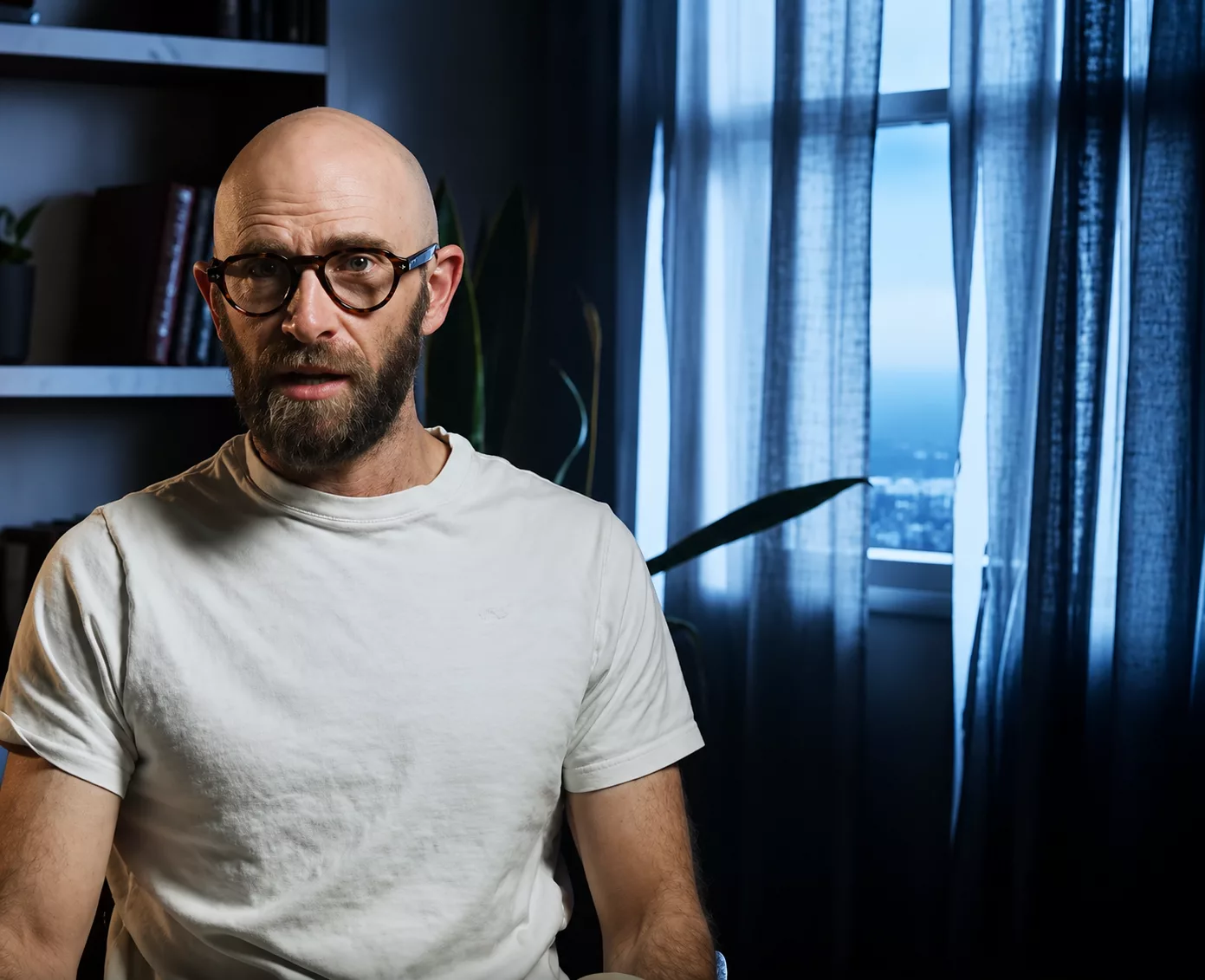
Simon Whistler
Simon Whistler is one of YouTube's most prolific documentary presenters, known for calm, authoritative deep dives into true crime, disappearances, and the world's most enduring unsolved cases. Into the Shadows is his companion archive for the cases he can't stop thinking about.
Frequently Asked Questions
What is Münchausen Syndrome by Proxy?
Münchausen Syndrome by Proxy is a disorder where a caregiver, usually a parent, fakes or causes illness in the person they are supposed to protect, typically a child. This is done for attention, sympathy, or control, rather than for financial gain.
How common is Münchausen Syndrome by Proxy?
The exact prevalence is uncertain, but estimates suggest it affects around 1 in 100,000 children, though some experts believe it could be as high as 30 per 100,000. It is often underreported and misdiagnosed.
What are the signs of Münchausen Syndrome by Proxy?
Signs include medical inconsistency, an overinvolved caregiver who is always present and seems overly prepared, illness that follows the caregiver, isolation of the child, and the child’s belief in their own illness.
Why is Münchausen Syndrome by Proxy difficult to detect?
It is difficult to detect because the caregiver often appears devoted and concerned, making it hard for medical professionals to suspect abuse. The abuse is subtle and hidden behind a facade of care and concern.
What motivates someone to commit Münchausen Syndrome by Proxy?
The motivation is not financial but rather a need for attention, sympathy, and control. The caregiver wants to be seen as a devoted, suffering parent and to maintain control over the victim.
How does Münchausen Syndrome by Proxy affect the victim?
The victim, usually a child, grows up believing they are sick and dependent on the caregiver. This can lead to long-term psychological and physical damage, even after the truth is revealed.
What are some real-life examples of Münchausen Syndrome by Proxy?
Examples include the cases of Gypsy Rose Blanchard, Marybeth Tinning, and Beverly Allitt, who all caused harm to their victims under the guise of care and concern.
How do medical professionals often miss the signs of Münchausen Syndrome by Proxy?
Medical professionals may miss the signs because the caregiver appears devoted and concerned, making it hard to suspect abuse. The abuse is subtle and hidden behind a facade of care and concern.
What happens when Münchausen Syndrome by Proxy is discovered?
Discovery can lead to the child being removed from the home, the caregiver facing legal consequences, and long-term psychological and physical recovery for the victim. The process is complex and often messy.
How does the caregiver maintain control in Münchausen Syndrome by Proxy?
The caregiver maintains control by keeping the victim sick, making them dependent on the caregiver for medical care and attention. This dependency is carefully crafted over time.
Sources
- Original Into the Shadows video: What You Should Know About Cyber Attacks.
- Hero image source by David Johnson / openverse, by-sa.