
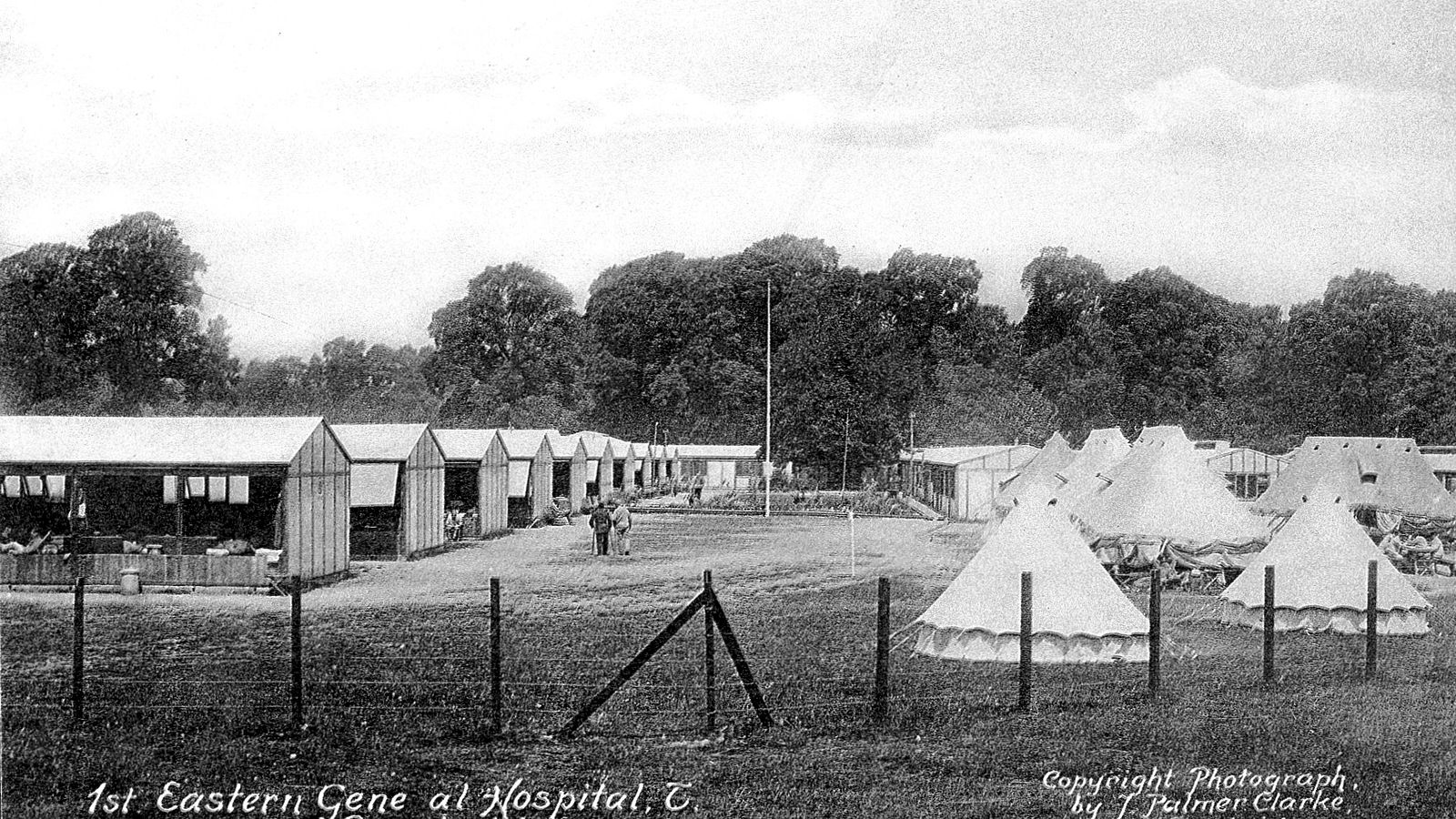
An estimated 21 million people were wounded during World War I. Both soldiers and civilians received gunshot wounds, burns, shrapnel damage and untold psychological trauma. Many of the images of the wounded survivors are that of amputees. There were 240,000 amputations of arms and legs in the British army alone. What is seen less often are the facial disfigurements that almost as many were left with.
Their injuries were so gruesome that mirrors were banned from hospital rooms, children were terrified of their fathers and wives and girlfriends couldn’t bear to look. Hospital orderly and writer of ‘The Happy Hospital’ in 1918, Ward Muir, did nothing to disguise his disgust in his writings, calling them broken gargoyles with hideous smashed faces.
The men were left isolated, in pain, unable to work and in many cases unable to form any social relationships. Even venturing out in public subjected them to stares, retches and humiliation. Nothing like the brave soldiers’ homecoming they expected or deserved.
Key Takeaways
- World War I resulted in 21 million wounded, with many soldiers and civilians suffering severe facial disfigurements.
- Facial reconstruction techniques were rudimentary, with early methods like pedicle skin grafts and paraffin wax implants.
- Harold Gillies pioneered modern plastic surgery, developing techniques like the tubed pedicle to improve facial reconstruction.
- Sculptors like Francis Derwent Wood created masks to help soldiers with severe facial injuries, restoring some semblance of normalcy.
- The psychological and social impact on disfigured soldiers was profound, leading to isolation and difficulty reintegrating into society.
Their only hope to return to a life of normalcy lay with surgeons, but facial reconstruction was in its infancy, with crude techniques and cloths soaked in chloroform. Nothing like the plastic surgery available today.
Early Plastic Surgery
However, surgeons were not completely unprepared. Humans had been conducting plastic surgeries for thousands of years. Long before the first successful use of anaesthesia in 1846. The earliest record comes from India in the 6th Century BCE. A physician named Sushruta, documented over 1,100 diseases, hundreds of medicinal plants and instructions for many surgical procedures in his work – The Sushruta Samhita. It included details of 3 types of skin graft and the technique for the world’s first nose job.
At the time, noses would be removed as a punishment for theft and adultery and patients were willing to undergo painful procedures to have them reconstructed. A leaf-shaped flap of skin would be cut from the patient’s forehead leaving the bottom portion attached. It would then be twisted down and sewn on to create a new nose. By leaving it partly attached, blood supply would be maintained as the skin fused to its new site, reducing the risk of rejection.
This is now known as a pedicle skin graft. Although not pretty, at the very least it would cover the gaping nostril hole victims had been left with.
It wasn’t until the 1400s that the first pedicle skin graft was used to create noses in Europe. Sicilian surgeon Branca de Branca first employed the Indian method, taking skin from his patient’s cheek to restore a lost nose. His son, Antonio Branca went one step further and developed the Italian method in 1460.
He wanted to repair the nose without causing further facial scarring and instead chose to use skin from the patient’s arm. Unfortunately, to maintain the blood supply the skin could not be completely cut from the arm until it had fused to the new spot on the face. So, the patient would have to suffer their arm strapped to their head for 8 to 10 days until the final cut could be made.
By now noses were not being lost to brutal punishments but the horrific effects of syphilis causing soft tissue decay to destroy the nose. The associated stigma and risk of infection left victims desperate and so were willing to undergo the torturous treatment.
Surgeons continued their experimentations into the early 20th century but progress was slow and often unsuccessful. They found the body would reject many of the materials they’d insert. For a while they tried injecting hot paraffin wax under the skin and moulding it into the shape of a nose. Unfortunately, it would move around the face, especially after time in the sun, causing further disfigurements, paraffinomas and wax cancers.
World War I
It wasn’t until the outbreak of World War I in 1914 that great leaps in plastic surgery began to be made. The development of the machine gun and the practice of trench warfare brought thousands of head and facial injuries that hadn’t been seen before. Fred Albee, an American surgeon, explained the vast number of facial injuries stating, ‘They seemed to think they could pop their heads up over a trench and move quickly enough to dodge the hail of machine-gun bullets.’ Of course, they couldn’t and would be hit multiple times.
Many returned home with horrific injuries, missing their eyes, noses and jaws.
Even more terrifying was artillery fire. Exploding shells would propel fragments of metal the size of a fist, capable of slicing off noses and decimating jawbones. American doctor, Wood Hutchinson described how much more devastating the effects of shells were compared to bullet wounds in his memoir. ‘A bullet would go completely through the face from side to side, and perhaps break one jaw or put out an eye, a shell splinter will often shear away the whole lower half of the face, leaving the tongue hanging down on the chest, or tear away an eye, all the front of the upper jaw and teeth.’
John Glubb, who was hit by a shell fragment in 1917, recalled, ‘The floodgates in my neck seemed to burst, and the blood poured out in torrents… I could feel something lying loosely in my left cheek, as though I had a chicken bone in my mouth. It was, in reality, half my jaw, which had been broken off, teeth and all, and was floating about in my mouth.’
In the past, injuries like this would’ve guaranteed death but advancements in anaesthesia and antiseptics meant victims would survive and be presented to surgeons who had no idea how to treat them. Many would be stitched up in an effort to close the wounds as quickly as possible. Their skin would heal too tightly, become painful and stretched and prevent them from eating and speaking. The jagged edges of the wounds caused by the shrapnel would make the job even more difficult and soldiers were left with devastating disfigurements.
Those who returned home were greeted with horror. There were reports of soldiers being left by their loved ones including one whose wife ‘couldn’t bear to look at him.’ They’d walk down the street and instead of being greeted by bows and offers of gratitude for their service, people would stare in repulsion and would sometimes faint. The men referred to it as the Medusa effect.
They also found it difficult to find work, those who tried to return to their original professions were sent away with employers deeming their looks too distressing for the public to cope with.
The Development of Plastic Surgery
One doctor who witnessed this horrendous suffering and felt compelled to help was Harold Gillies. Originally a surgeon from New Zealand he’d been posted in France in 1915. On witnessing the extensive facial damage soldiers were returning with, he travelled to England and set up a dedicated ward for facial wounds at the Cambridge Military Hospital. Demand for his care was great, the Battle of the Somme brought him 2000 patients in just one day.
So, he persuaded medical chiefs that a separate hospital devoted to the injuries was needed and the Queens Hospital in Sidcup was opened in 1916. It had over 1000 beds and facilities for the extended recovery patients would need.
Watch The Project Briefing
Open Video
Video Briefing
Tin Noses: How Plastic Surgery Got it's Start
His work involved not only treating the patients and trying to restore function to their faces but also developing a range of new techniques that would be more effective. He was already familiar with pedicle skin grafts but the damaged areas were extensive and infection was a huge problem. Particularly in patients who’d suffered damage to their mouths and jaw as bacteria from their saliva could spread and infect the graft leading to the famous piece of advice ‘A clean mouth like a clean conscience is a mighty good thing to go into battle with.’
Fortunately, Gillies found a way around this problem. When operating on Willie Vicarage, a man who’d received extensive burns in a fire during the battle of Jutland, he needed to create a graft large enough to cover the lower part of the face. Once he’d cut the flap from Willie’s chest he noticed that it curled inwards at the edges and decided to sew it into a tube. This enclosed the exposed underside of the graft, reducing the risk of infection and he also found it improved blood flow, increasing the chances of the graft’s success.
He named his new method the ‘tubed pedicle’.
The procedure looked terrifying with sausages of skin stretched between the patient’s chest and face for weeks but it was successful and many patients received extensive reconstructions that wouldn’t have been possible before. He also developed techniques to replace lost cartilage where he’d remove pieces from the patient’s ribs and use them to rebuild the face. In the treatment of Lieutenant William Spreckley, he embedded the cartilage into Williams’ forehead for 6 months before twisting it down to create a nose.
Tin Noses
Despite the incredible efforts of Gillies and his team, in some cases, the damage was too extensive for a successful reconstruction. The surgeons would work to restore function so that the soldiers could eat, drink and if possible speak but the disfigurements would remain. Benches in Sidcup, near Gillies’ hospital, were painted blue to alert the public that the person sitting on it was extensively disfigured and looking at them could cause distress.
British sculptor, Francis Derwent Wood who’d been volunteering at the 3rd London General Hospital in 1915 witnessed the pain and distress of the soldiers with facial wounds and decided to use his background in sculpting to help. He planned to create masks to disguise the damage that couldn’t be fixed with surgery and opened the ‘Masks for Facial Disfigurement Department’. Later earning the nickname ‘The Tin Noses Shop’.
He’d begin by taking a plaster cast of the patient’s face, ensuring that the mask would fit perfectly into all the new curves of the patient’s wound. He’d then fill the cast with clay and sculpt the victim’s old face, based on a photograph taken before the war. He aimed to restore his client as closely as possible to his prewar looks. Once he had the required shape he’d create the mask itself from 1/32nd of an inch thin copper, coat it with silver and paint it using spirit enamel.
His attention to detail was incredible, using varnish to exactly match his client’s skin tone, individual strips of metallic foil, tinted and curled, for eyelashes and each eyebrow hair would be painted by hand. In the final stages, his patients would sit, wearing the mask as he painted to ensure the closest match possible.
Similar work was undertaken by Anna Coleman Ladd, an American sculptor who was living in Paris. She opened a small shop ‘The Studio for Portrait Masks’ and had created 185 masks by the end of 1919. Her shop was funded by the American Red Cross and so was able to provide the service at a low cost of only $18 per mask. Unfortunately, when the war ended the funding ran out and she had to close.
Between both Wood and Ladd hundreds of masks were provided but it was a drop in the ocean compared to the estimated 60,500 who received a facial injury during the War.
The masks received a mixed reception. Some found them too uncomfortable to wear. Others found they were fine when their expression remained neutral but if they tried to smile or talk the effect was eerie and caused as much terror as the disfigurements themselves. However, many found them invaluable. One soldier wrote to Ladd saying ‘The woman I love no longer finds me repulsive, as she had the right to do. She has agreed to be my wife.’
Very few masks remain today and so the skill and craftsmanship can only be seen in a few silent films recorded in Ladd’s workshop. Unfortunately, they weren’t hardy enough to last more than a few years and became battered, worn and were probably thrown away. But, many would not be parted from them. They formed both their new identity and a link to their old. They’d wear them, dented and chipped for the rest of their lives and would eventually be buried in them.
Key Takeaways
- World War I resulted in 21 million wounded, with many soldiers and civilians suffering severe facial disfigurements.
- Facial reconstruction techniques were rudimentary, with early methods like pedicle skin grafts and paraffin wax implants.
- Harold Gillies pioneered modern plastic surgery, developing techniques like the tubed pedicle to improve facial reconstruction.
- Sculptors like Francis Derwent Wood created masks to help soldiers with severe facial injuries, restoring some semblance of normalcy.
- The psychological and social impact on disfigured soldiers was profound, leading to isolation and difficulty reintegrating into society.
Simon Whistler
Simon Whistler is one of YouTube's most prolific documentary presenters, known for calm, authoritative deep dives into true crime, disappearances, and the world's most enduring unsolved cases. Into the Shadows is his companion archive for the cases he can't stop thinking about.
Frequently Asked Questions
What was the estimated number of wounded during World War I?
An estimated 21 million people were wounded during World War I.
What types of injuries were common among soldiers and civilians during World War I?
Both soldiers and civilians received gunshot wounds, burns, shrapnel damage, and untold psychological trauma.
How many amputations of arms and legs were there in the British army alone during World War I?
There were 240,000 amputations of arms and legs in the British army alone.
What was the early method used for reconstructing noses in India?
A leaf-shaped flap of skin would be cut from the patient’s forehead, leaving the bottom portion attached, and then twisted down and sewn on to create a new nose.
What was the Italian method for reconstructing noses developed by Antonio Branca?
Antonio Branca used skin from the patient’s arm to restore a lost nose, requiring the patient to have their arm strapped to their head for 8 to 10 days.
What were some of the materials initially tried for facial reconstruction that were unsuccessful?
Surgeons tried injecting hot paraffin wax under the skin and molding it into the shape of a nose, but it would move around the face and cause further disfigurements.
What was the impact of World War I on the development of plastic surgery?
The outbreak of World War I led to great leaps in plastic surgery due to the high number of facial injuries from machine guns and artillery fire.
Who was Harold Gillies and what was his contribution to plastic surgery?
Harold Gillies was a surgeon from New Zealand who set up a dedicated ward for facial wounds and later opened the Queens Hospital in Sidcup, developing new techniques like the ‘tubed pedicle’ for facial reconstruction.
What were ‘tin noses’ and who created them?
Tin noses were masks created by British sculptor Francis Derwent Wood and American sculptor Anna Coleman Ladd to disguise the damage that couldn’t be fixed with surgery.
How did the public react to soldiers with facial disfigurements returning from World War I?
The public often reacted with horror, staring in repulsion and sometimes fainting, leading soldiers to refer to it as the Medusa effect.
Sources
- Original Into the Shadows video: Tin Noses: How Plastic Surgery Got it’s Start
- Hero image source by openverse, by.