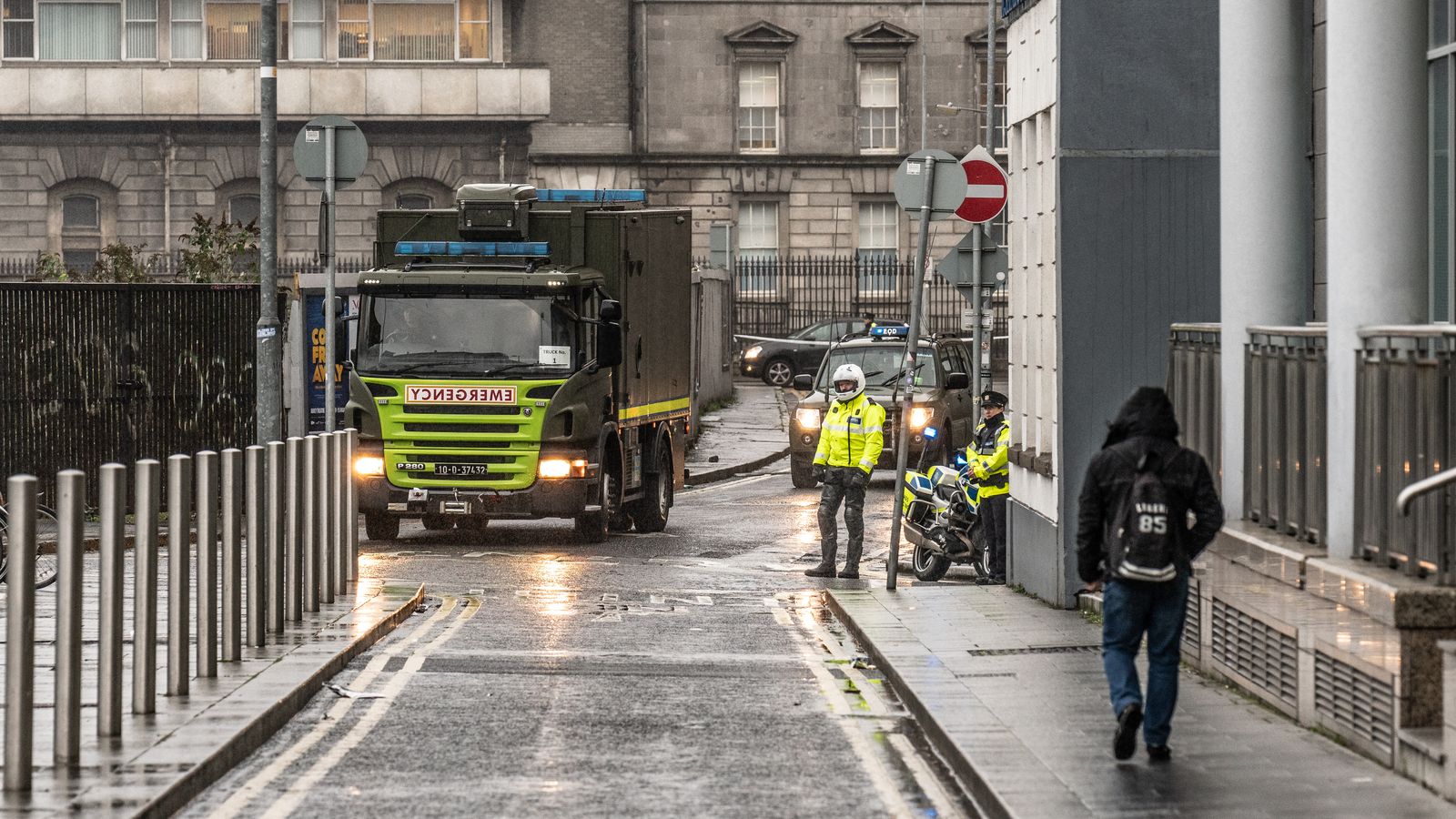
July 21, 1972, started as a perfectly normal day in Belfast. However, around 2 p.m., that normalcy was violently shattered as powerful blasts began echoing throughout the city. What followed next was an hour of sheer terror, where over 20 bomb explosions plunged the city into a dark day of death and chaos, remembered as Bloody Friday.
When the smoke settled, the victim toll stood at nine fatalities and 130 injuries. The dead included two members of the British Army and seven civilians just getting on with their day, the youngest being Stephen Parker, aged 14.
In most places, such a brutal event would be almost unthinkable, but for the people of Northern Ireland, this had become the new norm. They were trapped in a decades-long conflict known as the Troubles, as multiple factions fought along ethnic and nationalist lines to determine the status of Northern Ireland.
Key Takeaways
- Bloody Friday in 1972 marked a day of terror in Belfast with 20 bomb explosions, resulting in nine deaths and 130 injuries, highlighting the ongoing conflict in Northern Ireland.
- The IRA, formed from the Irish Volunteers, sought an independent Ireland through violence, evolving from the Easter Rising in 1916 through various conflicts, including the Troubles.
- The Troubles, lasting from the late 1960s to the late 1990s, involved multiple factions and resulted in over 3,700 deaths and 47,000 injuries, with significant civilian casualties.
- The Good Friday Agreement in 1998 aimed to end the Troubles, but dissident groups like the Real IRA continued violent activities, including the Omagh bombing in 1998.
- The IRA’s legacy persists with various splinter groups continuing to engage in violence, despite the decommissioning of the Provisional IRA’s arsenal.
The perpetrators of Bloody Friday were the Irish Republican Army, or IRA, a group of Irish Catholic republican extremists who wanted a united and independent Ireland free of British imperialism. They believed this goal could only be achieved through force and violence.
Some have referred to the IRA as a paramilitary group fighting for independence. Others labeled them a terrorist organization that kills innocent people. Over the course of the last century, they have been both. Today, we are looking at the history, the motivations, and the murderous methods of one of the oldest and deadliest gangs in Europe — the IRA.
The Irish Volunteers
The first ever Irish Republican Army traces its origins to a seminal event in Irish history, the 1916 insurrection known as the Easter Rising. For many people, World War I was a period of turmoil and despair. Irish nationalists, however, saw it as a great opening. Focused entirely on its war with Germany, England would never be more vulnerable than it was then. If they were going to strike, then that was the time to do it.
The precursor to the IRA was a paramilitary group of nationalists and republicans called the Irish Volunteers, formed in 1913. It had over 100,000 members at its peak, but the vast majority of them left to fight overseas when the First World War broke out. Crucially, around 13,000 of them stayed behind, rejecting the idea that the conflict concerned them in any way. If anything, they believed that “England’s difficulty is Ireland’s opportunity,” and allied themselves with other nationalist groups that wanted to free Ireland from under the British yoke.
They were armed, ready, and willing to fight. They were simply waiting for the right time.
In the lead-up to Easter, around 1,500 Irish Volunteers descended on Dublin, led by writer and revolutionary Patrick Pearse, who proudly proclaimed that “the old heart of the earth needed to be warmed by the red wine of the battlefield.”
On April 24, 1916, in the early hours of Easter Monday, the uprising began. Contemporary Irish poet James Stephens provided a vivid firsthand account of the ordeal. He said:
“The sound of artillery, of rifles, machine guns, grenades, did not cease even for a moment. From my window I saw a red flare that crept to the sky, and stole over it and remained there glaring; the smoke reached from the ground to the clouds, and I could see great red sparks go soaring to enormous heights; while always, in the calm air, hour after hour there was the buzzing and rattling and thudding of guns, and, but for the guns, silence.”
The nationalists had the element of surprise on their side. As they predicted, Britain had its hands full with Germany. Plus, a large part of Dublin’s elite and police force were out of town to take part in the Easter festivities. The remaining police officers were gunned down in the streets without hesitation or mercy, and, in a matter of hours, the rebels controlled Dublin.
It soon became clear, however, that the insurrectionists didn’t really know what they were doing. Nobody among them had the expertise or experience to carry off such an operation. The British would soon rally and strike back. The rebels had a short window to prepare, but failed to do so and made many mistakes that doomed their revolt.
They dug trenches in areas overlooked by tall buildings, turning themselves into the fish in the proverbial barrel. They failed to capture Dublin Castle, the main defensive position in the city, and, more importantly, did not even secure the ports and stations that British reinforcements would undoubtedly use.
British Prime Minister H. H. Asquith sent an armed response to Dublin. His men were trained soldiers with artillery and a gunboat, and they turned Dublin’s city center into a smoldering pile of rubble. After six days of fighting, the Easter Rising was over, and the attempted rebellion had been nipped in the bud. The final death toll was somewhere between 450 and 500 people, over half of them innocent civilians caught in the crossfire.
This, however, was only the beginning as far as the British Government was concerned. They didn’t just want to quell the uprising; they wanted to crush it completely. No mercy was shown following the rebellion. Curfews were enacted, house-to-house searches were conducted, and anyone even remotely suspected of aiding the Irish Volunteers was placed in an internment camp without trial.
Fourteen men who were deemed ringleaders of the revolution were court-martialed behind closed doors, sentenced to death, and executed.
This extreme reaction had a profound effect on the Irish public, but not the one that the British Government was looking for. Instead of making them sit down in silence and accept British rule without question, it mobilized them. It made them want independence even more, and it made them want to fight for it.
The War of Independence
After the war, Sinn Féin, a republican nationalist party, swept the election in Ireland, winning almost three-quarters of the Irish seats in the British Parliament. Up until that point, they had been a fringe party, a non-entity on the political landscape. However, parts of the media portrayed them as the true architects of the Easter Rising, even referring to the event as the “Sinn Féin rebellion.” Once again, this had the opposite of the desired effect, making Sinn Féin far more popular with the Irish electorate.
As soon as they were in power, Sinn Féin took action against Britain. Instead of going to Whitehall in January 1919 when Parliament convened, they went to Dublin, where they declared the independence of the Irish Republic. On January 21, they formed the First Dáil, the parliament of this new revolutionary republic. Meanwhile, the Irish Volunteers had rebranded themselves as the Irish Republican Army, or IRA, and they acted as the military branch of the newly declared independent Ireland.
Since many splinter groups appeared in the decades that followed, this original incarnation is now referred to as the Old IRA.
Obviously, the British Government did not recognize the authority of this breakaway state and outlawed Sinn Féin and the First Dáil across Ireland. With no diplomatic recourse left, the Irish War of Independence began, although strictly speaking, both sides hesitated to declare a state of war.
For most of the conflict, the IRA primarily fought with the Royal Irish Constabulary, or RIC, Ireland’s police force, which still served the Crown. As we said, there was no official war, so the British Parliament was reluctant to send in the army. Instead, they opted to reinforce the RIC with thousands of recruits from England, Wales, and Scotland, most of whom were World War I veterans looking for work.
Because there weren’t enough RIC uniforms, these auxiliary units wore a variation consisting of dark tunics and caps with khaki military trousers, and thus, they became known as the Black and Tans. They quickly developed a reputation for ruthless violence and wanton destruction. Beatings, lootings, robberies, arson, even murder; they were all carried out with the tacit approval of the police and the willful ignorance of the British Parliament.
In one extreme case, the Black and Tans destroyed the entire town of Balbriggan in an event that drew outrage all over the world, even back in London, and pushed Ireland even further into the embrace of nationalism.
On their end, the IRA fought a smarter war, one that relied on extensive propaganda to garner support for their cause, both locally and on the international stage. They had learned a few lessons from the previous rebellion. They knew they were severely outmanned and outgunned by the British forces.
Fighting them head-on would only result in their own annihilation. Instead, the IRA relied on superior military intelligence and guerrilla tactics to strike mainly at high-value targets through quick ambushes and assassinations. Bombings also became the IRA’s favorite way to get their message across, but they only hit strategic targets such as lines of communication and police barracks…at least, for now.
Many people create a distinction between the original IRA and all the splinter groups that came after it. They label the first as “freedom fighters,” and the second as “terrorists.” Whether or not this is apt, we’ll let you be the judge.
The IRA’s PR campaign worked, and the Irish people showed their support for the war effort without resorting to violence. Labor groups organized strikes; dockers and railway workers refused to transport war supplies or military troops; jurors didn’t turn up to court; people stopped paying taxes to the British Crown. Every little helped.
RIC men were ostracized and became pariahs in their communities for fighting against their own. This was a huge blow to morale and led to a significant decrease in their numbers. To counter that, the British added a second unit of WWI veterans to the Royal Irish Constabulary.
This one was simply known as the Auxiliaries and was meant to be an elite strike force, but just like the Black and Tans, it quickly developed a reputation for unchecked violence that was often directed at civilians. Anyone suspected of being an IRA sympathizer was at risk of having their home or business burned down, being beaten, tortured, and even murdered.
By the end of 1920, the bloodshed had ramped up considerably on both sides. It reached its peak on November 21, a day remembered in history as Bloody Sunday. First, the IRA conducted a series of attacks around Dublin to dismantle an undercover intelligence network known as the Cairo Gang, killing 14 and wounding six in the process.
In retaliation, a squad of Auxiliaries stormed Croke Park that afternoon, where 10,000 football fans had gathered to watch Dublin play Tipperary. Without mercy and without warning, they opened fire on the crowd indiscriminately, murdering 14 and wounding between 60 and 100 people. The fatalities included three schoolboys, aged 10, 11, and 14, respectively, who had been excited to go to the stadium and see the football match.
The IRA responded to the massacre by ambushing an Auxiliary patrol in Kilmichael a week later, killing 16 of the 18 officers.
The attacks continued into 1921, but neither side could sustain this level of lethal escalation. The IRA was running low on men and ammo, while the British Government was facing tremendous pressure to end the conflict as soon as possible, despite there not being a clear path to victory in sight.
They had reached a stalemate and declared a truce on July 11, 1921. After another half a year of negotiations, the Anglo-Irish Treaty was signed on December 6, 1921, creating the division of Ireland that still exists today. Most of it became the Irish Free State, which, although self-governing, was still a dominion of the British Empire at the time. Meanwhile, six counties in the north, which were dominated by Protestant loyalists, became Northern Ireland.
As part of the treaty, this new territory was given the option of either joining the free state or remaining a devolved part of the United Kingdom. It chose the latter. Unsurprisingly, not everyone was happy with this arrangement, and Ireland was immediately plunged into a new conflict, going from a war of independence to a civil war, courtesy of the new IRA.
Civil War
Many members of the IRA were hardliners on Irish independence. They wanted all or nothing and saw the treaty as an unacceptable compromise. They refused to acknowledge the authority of the Irish Free State or Northern Ireland and decided that their fight was far from over.
Somewhere between 70–75 percent of the IRA opposed the treaty, and this division led to the appearance of the group’s second incarnation. They still called themselves the IRA, but we refer to them as the Anti-Treaty IRA or the Irregulars to distinguish them from the original. Meanwhile, the members who were satisfied with the new arrangement simply became the Irish National Army.
In March 1922, the Anti-Treaty IRA formed its new leadership, called the Army Executive, with Liam Lynch as the Chief of Staff, and repudiated the authority of the Dáil. The following month, they forcefully occupied the Four Courts in Dublin, Ireland’s most prominent judicial building. The IRA had always been seen as outlaws in the eyes of the British Government, but now they also operated outside the command of the Irish Government.
Watch The Project Briefing
Open Video
Video Briefing
Gangs: The IRA
The build-up to the civil war lasted over six months, as there was still hope that further carnage could be avoided. But tensions between the two sides kept rising, and whenever there was a confrontation between pro-treaty and anti-treaty members, it ended in violence. The deadliest clash occurred on May 2, when a few hundred Irregulars took over the city center of Kilkenny, and 200 army troops were sent over from Dublin to overthrow them. The fighting resulted in 18 fatalities and prompted the leaders of both sides to announce a hasty truce the following day in a last-ditch effort to prevent civil war.
It did not work. The rest of the month was filled with even more fighting and even more death, and in June, the point of no return was crossed when government troops used British artillery to open fire on the Four Courts with the Army Executive inside.
This triggered the Battle of Dublin, a seven-day conflict dominated by cannon fire and open warfare in the city streets. Pro-treaty forces had emerged victorious thanks to superior firepower, but with a heavy cost: 65 deaths and over 500 wounded.
The IRA had been pushed back, but it had no intention of giving up. Instead, it began relying on tried and true guerrilla tactics that had been successful for them in the past: ambushes on small patrols, assassinations of high-ranking officers, and raids on small towns that were occupied by Free State Forces.
On August 22, 1922, Michael Collins, the commander-in-chief of the National Army, was killed in an ambush in his native County Cork. Previously, during the War of Independence, Collins had been the de facto leader of the IRA as its Director of Intelligence, and had been crucial to the group’s success. But now that he had sided against them, he had become a target, just like everyone else.
Despite proving to be more ruthless than ever, the IRA never gained a strong foothold during the civil war. By the start of 1923, their numbers were down; their guns, money, and supplies were running out; and their morale was at an all-time low. Many of its key figures had been arrested, some even executed. Then, on April 10, the IRA’s own leader, Liam Lynch, was gunned down during a raid on the group’s headquarters.
Twenty days later, the IRA’s new Chief of Staff, Frank Aiken, signalled a stop to their military operations. He ordered an official ceasefire in May, thus bringing an end to the civil war. Then, in August, the first general election since the establishment of the Irish Free State took place. With 40 percent of the votes, the winner was the pro-treaty party, while Sinn Féin only garnered 27 percent after dominating the previous elections.
This showed the world that, perhaps, more Irish people were okay with things as they were than one would expect. Or, perhaps, that they were simply fed up with all the death and destruction, and just wanted to live their lives in peace.
The IRA Flounders
The next years were a more relaxed period for the IRA. Well, about as relaxed as you can expect from a group that regularly carries out bombings and assassinations to get its point across. For a while, the IRA thought it had found a strong ally in Éamon de Valera, one of Ireland’s most prominent political figures of the 20th century.
Eventually, de Valera would serve as both Prime Minister and President of Ireland, but he started as a member of the Irish Volunteers during the Easter Rising, so his dedication to an independent and united Ireland was beyond a shadow of a doubt. Afterward, he joined Sinn Féin but grew dissatisfied with their tactics, which he considered inefficient. Following the treaty, despite being one of the Irish Free State’s most popular parties, Sinn Féin engaged in abstentionism. This is a political practice where a party runs in elections, but refuses to take up the seats it wins or participate in parliamentary business in any way.
De Valera saw this as a waste of time, preferring instead to win seats and then actually do stuff. So in 1926, he founded a new party, Fianna Fáil, with the expressed intent of turning the Irish Free State into a republic. Many liked what de Valera had to offer, and his party grew in popularity at a staggering rate. By the 1932 general election, Fianna Fáil had become the largest party in the Dáil.
Initially, as everyone expected, the relationship was cordial between the new government and the IRA. De Valera legalized the organization and released its members from prison. However, the honeymoon phase only lasted a few years. De Valera was a politician at heart.
He understood that turning the Irish Free State into an independent republic would not happen overnight. He progressed one step at a time. He abolished the Oath of Allegiance to the British Monarchy. He adopted a new constitution in 1937.
He prevented Ireland from allying with the United Kingdom during World War II.
The IRA, however, had no time for such lengthy measures. They denounced Fianna Fáil and accused de Valera of selling out. In response, he banned them again in 1936 and began adopting more and more anti-IRA policies.
He wasn’t the only one getting fed up with the IRA. The group hit its nadir after World War II, as public support reached rock bottom, and membership numbers shrank to just 200 active members at one point. The fact that the IRA tried to ally themselves with Nazi Germany during the war didn’t help matters.
At first, this made sense, with the whole “enemy of my enemy is my friend” thing, but once the war was over and the atrocities committed by the Nazis were exposed to the world, there weren’t many people left in the IRA fan club. Not to mention that many senior members had been swayed by Nazi ideology and had added the Jews to their list of people the IRA didn’t like.
For a while, it looked like the IRA might simply fade away into obscurity, but one last-ditch attempt in the early 50s turned the tide in their favor. They began the decade by launching multiple successful raids on British military bases, leaving with a hefty cache of weapons each time. Then, in 1956, once they had rearmed themselves, the IRA started the Border campaign, also known as Operation Harvest. The group relied, once again, on guerrilla warfare, attacking military and infrastructure targets located primarily in Northern Irish towns along the border.
The campaign lasted for five years and included hundreds of attacks, although the death count remained surprisingly low by IRA standards. Fewer than 20 people were killed throughout the entire ordeal, and five of them died on the same day, November 11, 1957, when one of the IRA’s bombs detonated prematurely. But there was no denying that Operation Harvest failed to make any headway with its objectives and that the IRA was, once again, at a crossroads. Little did everyone suspect that the bloodiest chapter in the IRA’s history was only beginning: a 30-year conflict known as the Troubles.
The Troubles
1969 became a pivotal year not just for the IRA, but for Northern Ireland. In August, riots erupted throughout numerous towns and cities in the region, starting with the Battle of the Bogside in Derry. The fighting went on for five days between Protestant loyalists and Irish nationalists, resulting in eight deaths, hundreds of injuries, and thousands of families that had to be evacuated to escape the wrath of the rioters.
Things got so bad that Britain sent in the army as part of Operation Banner. The hope was that the soldiers would be able to restore order in a matter of days. What actually happened was that Operation Banner became the longest continuous deployment in British military history, just shy of 38 years.
During the riots, the Protestants had Northern Ireland’s police force, the Royal Ulster Constabulary, on their side. But what about the Catholics and the republicans? Where was the IRA in all of this? Criticisms were leveled at the group for not doing anything to protect the people whose interests they supposedly guarded.
Even worse, they were accused of initially inciting the violence and then backing down when the army rolled in. They were taunted with jeers that IRA stood for “I Ran Away.” This created a deep division within the group, one which saw it split into two different factions in December 1969: the Official IRA and the Provisional IRA.
The former consisted mainly of older members who embraced a Marxist ideology and wanted to ally themselves with other communist groups in Ireland. Their most infamous attack occurred on February 22, 1972, in Aldershot, Hampshire, England. They detonated a car bomb that killed seven people and injured another 20. This was meant to be retaliation for the Bogside Massacre that took place a month earlier in Derry, when British soldiers opened fire on protesters and killed 14 of them.
However, the intended targets were not there. Instead, the bomb killed six civilians and an army chaplain.
Soon after this attack, the Official IRA declared a ceasefire in 1972. It didn’t completely stop its agenda of mayhem and murder, but those among them who still had a deep thirst for blood went on to establish a different terrorist group, the Irish National Liberation Army.
The Provisional IRA was more in line with the IRA of old. No communist leanings. Instead, they purported to be focused on toppling the Northern Irish Government and protecting the Catholic population. And the only way to achieve their goals was through carnage and bloodshed…a lot of it.
The Provisional IRA, or simply the Provos, were, by far, the most active and most vicious incarnation of the long-standing insurgency group. Events such as the Bogside Massacre mobilized the population on their side and helped fill their ranks in a short period of time, causing their numbers to swell from dozens to thousands. Some regions of Northern Ireland were almost completely under their control, and the IRA had the power to act as a vigilante police force.
Beatings and kneecappings were among their favorite ways of meting out justice, and if they really didn’t like you, then you simply disappeared. To this day, there is a special commission that is still searching for all the people who were abducted, murdered, and buried in secret by the IRA and other terrorist groups during the Troubles.
The Provisional IRA referred to their conflict as the Long War, and in 1973, they took it one step further when they began attacking the British mainland. Westminster, the Old Bailey courthouse, and the Euston and King’s Cross railway stations in London were all hit that year. In 1974, the Provos were even deadlier, as they detonated bombs in a bus on the M62 motorway, and in several pubs in Birmingham and Guildford, claiming another 40 lives and injuring another 250.
But the IRA cannot shoulder the entire blame for the lives lost during the Troubles. Many other terrorist groups were formed at this time, particularly on the side of the unionists who wanted Northern Ireland to remain in the United Kingdom. Groups such as the Ulster Defence Association, the Ulster Resistance, the Loyalist Volunteer Force, and the Ulster Volunteer Force all claimed to have taken up arms to combat the IRA. Unfortunately for the people of Ireland, they employed the same brutal tactics as their enemies, and often showed little regard for who paid the price.
In fact, the single deadliest day of the Troubles was the handiwork of the Ulster Volunteer Force, not the IRA. On May 17, 1974, the UVF unleashed two separate attacks, detonating four car bombs during rush hour in Dublin and Monaghan. Thirty-three people were killed, all of them civilians, and over 250 more sustained serious injuries.
There have been so many violent events during the Troubles that we simply cannot mention them all. Just in 1972 alone, the deadliest year of the conflict, the Provos carried out 1,300 bombings. Four hundred and eighty people were killed that year by bombs and gunshots.
Over the course of three decades, there were over 16,000 bombings and almost 37,000 shootings. When it was all said and done, over 3,700 people had lost their lives in the Troubles, and another 47,000 were injured, and more than half of them were innocent civilians. So many people in Northern Ireland were born, grew up, and then spent their lives in a state of perpetual fear, knowing that they were trapped between two fighting sides that often viewed them as nothing more than collateral damage.
Good Friday
April 10, 1998, was a day that many people in Northern Ireland thought they would never see. It was the day that the British and Irish Prime Ministers signed the Good Friday Agreement, a deal intended to finally bring an end to the turbulent times known as the Troubles. Northern Ireland had a new parliament and a new government that was meant to serve the interests of both loyalists and nationalists alike. And the sticking point of whether Northern Ireland should remain in the UK or not could only be determined with the consent of the majority through a referendum.
It was a deal more than a decade in the making. The Anglo-Irish Agreement, signed in 1985, laid down the foundations, then the 1993 Joint Declaration set out a charter to find peace and reconciliation for Ireland.
Paramilitary groups such as the IRA agreed to ceasefires, and an independent, international body was brought in to assess the decommissioning of arms. Almost all the major political parties in the UK and Ireland supported the Good Friday Agreement. More importantly, the people of Ireland and Northern Ireland voted overwhelmingly in favor of the deal. Finally, after almost a century of strife, chaos, and bloodshed, it seemed like there could be peace.
That hope lasted only for a few months before it was shattered to pieces in yet another bombing attack. Although the Good Friday Agreement is generally considered the end of the Troubles, some people had no intention of stopping their campaign of horror. The members of the Provos who opposed the agreement broke away and formed a new faction, the Real IRA.
And just four months after the deal was signed, they carried out the deadliest single attack to occur in Northern Ireland during the Troubles. On August 15, 1998, a bomb inside a red Vauxhall detonated on the streets of Omagh, County Tyrone, killing 29 people and injuring hundreds more. Among the dead were people of all ages and backgrounds: Protestants and Catholics, loyalists and republicans, teenagers, children, a pregnant woman, and tourists just doing some sightseeing.
As always, the innocent bystanders paid the heaviest price.
During the 2000s, the Provisional IRA decommissioned its entire arsenal and officially called it quits. However, this was far from the IRA of old, and many of its members had already left to form new groups. The Continuity IRA split from the Provos during the 80s, and regarded themselves as the true continuation of the Irish Republican Army. In the early 2000s, some Provos relinquished their anti-imperialist ideals and formed Republican Action Against Drugs, or RAAD, a vigilante group that targeted suspected drug dealers.
In 2012, the Real IRA announced that they had merged with RAAD and other dissident groups to become the New IRA, and that they were working together with the Continuity IRA to further their murderous agenda. Since then, they have claimed responsibility for multiple assassinations, and in 2014, they carried out the first IRA attack in Britain in almost a decade and a half when they sent letter bombs to seven different army recruitment offices.
It might not be as powerful or as deadly as it once was. It might not have as many members as it once did, but the IRA has not gone away. For the people of Ireland and Northern Ireland, the IRA has been around longer than they’ve been alive. It has become a perpetual agent of death and terror, one that they have to learn to live with, while knowing that it may strike again at any time.
Key Takeaways
- Bloody Friday in 1972 marked a day of terror in Belfast with 20 bomb explosions, resulting in nine deaths and 130 injuries, highlighting the ongoing conflict in Northern Ireland.
- The IRA, formed from the Irish Volunteers, sought an independent Ireland through violence, evolving from the Easter Rising in 1916 through various conflicts, including the Troubles.
- The Troubles, lasting from the late 1960s to the late 1990s, involved multiple factions and resulted in over 3,700 deaths and 47,000 injuries, with significant civilian casualties.
- The Good Friday Agreement in 1998 aimed to end the Troubles, but dissident groups like the Real IRA continued violent activities, including the Omagh bombing in 1998.
- The IRA’s legacy persists with various splinter groups continuing to engage in violence, despite the decommissioning of the Provisional IRA’s arsenal.
Simon Whistler
Simon Whistler is one of YouTube's most prolific documentary presenters, known for calm, authoritative deep dives into true crime, disappearances, and the world's most enduring unsolved cases. Into the Shadows is his companion archive for the cases he can't stop thinking about.
Frequently Asked Questions
What was Bloody Friday?
Bloody Friday refers to July 21, 1972, when the IRA detonated over 20 bombs in Belfast, resulting in nine fatalities and 130 injuries.
What was the IRA’s goal?
The IRA’s goal was to achieve a united and independent Ireland free of British imperialism through force and violence.
What was the Easter Rising?
The Easter Rising was an insurrection that took place in Dublin on April 24, 1916, led by the Irish Volunteers, aiming to free Ireland from British rule.
What was the outcome of the Easter Rising?
The Easter Rising was suppressed by British forces after six days of fighting, resulting in the deaths of around 450-500 people, mostly civilians.
What was the Irish War of Independence?
The Irish War of Independence was a conflict between the IRA and British forces, including the Royal Irish Constabulary and auxiliary units like the Black and Tans, from 1919 to 1921.
What was the Anglo-Irish Treaty?
The Anglo-Irish Treaty, signed on December 6, 1921, created the division of Ireland into the Irish Free State and Northern Ireland, with the latter choosing to remain part of the UK.
What caused the Irish Civil War?
The Irish Civil War was caused by a split within the IRA over the Anglo-Irish Treaty, with the Anti-Treaty IRA opposing the agreement and the Pro-Treaty IRA supporting it.
What was the Border Campaign?
The Border Campaign, also known as Operation Harvest, was launched by the IRA in the 1950s, involving guerrilla warfare against British targets in Northern Ireland.
What were the Troubles?
The Troubles were a 30-year conflict in Northern Ireland, starting in the late 1960s, involving violence between republican and loyalist paramilitary groups, as well as British security forces.
What was the Good Friday Agreement?
The Good Friday Agreement, signed on April 10, 1998, aimed to bring peace to Northern Ireland by establishing a power-sharing government and setting conditions for a referendum on the region’s status.
Sources
- Original Into the Shadows video: Gangs: The IRA
- https://www.thecollector.com/history-ira/
- https://www.historyextra.com/period/20th-century/irish-republican-army-ira-brief-guide-history/
- https://www.nam.ac.uk/explore/troubles-1969-2007
- https://www.iwm.org.uk/history/what-you-need-to-know-about-the-troubles
- https://www.nam.ac.uk/explore/irish-war-independence
- Hero image source by William Murphy / openverse, by-sa.