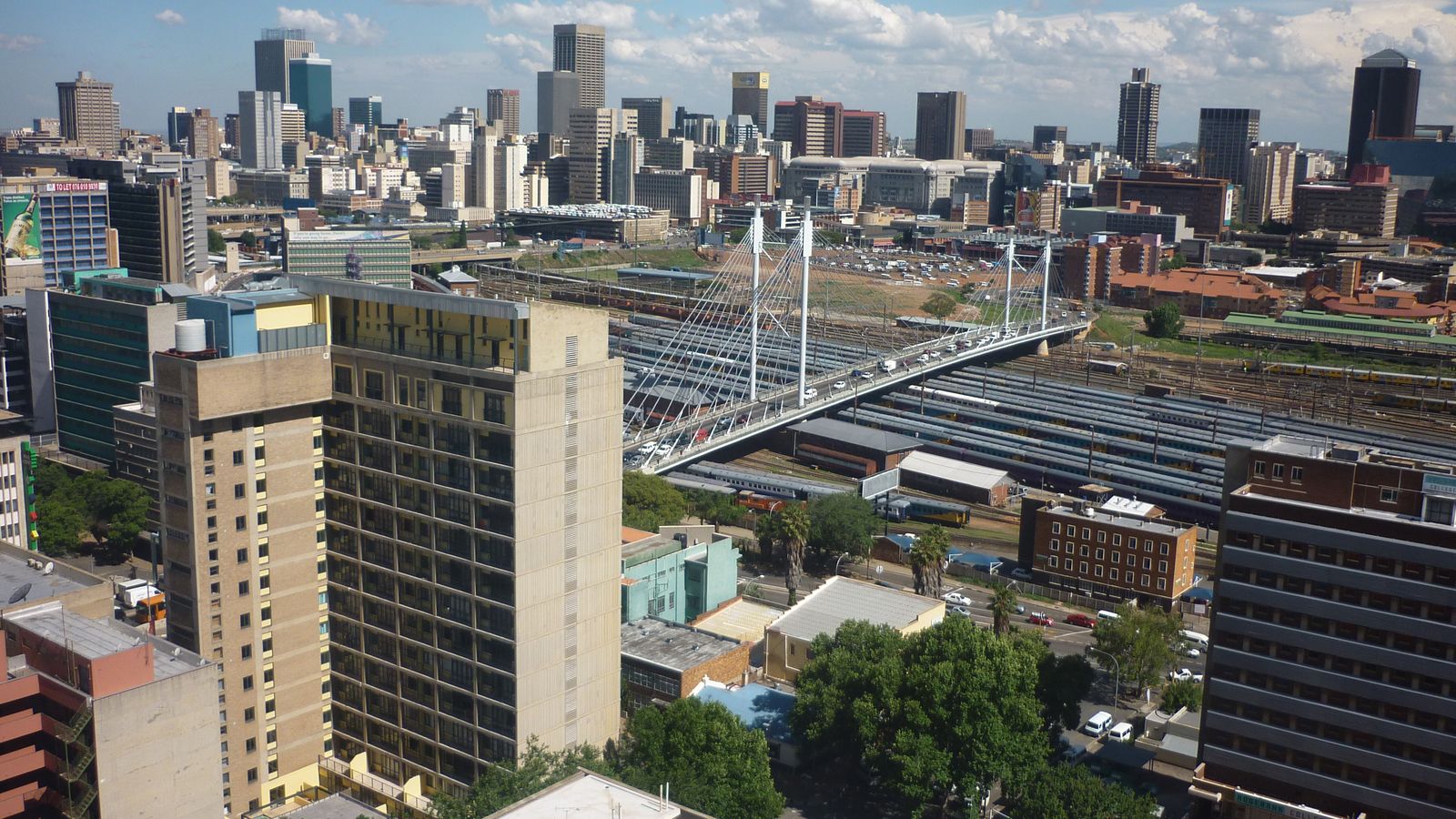
Following the discovery of gold in Johannesburg in 1886, South Africa became the largest producer of gold in the world. For more than a century, they produced 50% of the world’s gold supply, relying on cheap labour and rapid advances in mining technology to keep producing hundreds of metric tons of gold a year, keeping that top spot until 2010, when they were finally surpassed by China and Australia.
The majority of South Africa’s gold reserves are located in the Witwatersrand Basin, an area that comprises 35 000 km2 or 17 670 mi2. In some areas, geological shifts had pushed the gold ore close to the surface, but in other places, the ore veins stretch down to 4 kilometers or 2.48 miles underground, giving birth to some of the world’s deepest gold mines in an attempt to access these rich ore veins.
Political upheaval, economic shifts, labor disputes, the depletion of ore veins and the astronomical costs of running a gold mine have forced some mining conglomerates into liquidation, resulting in them abandoning their mining sites before they could be properly rehabilitated.
Key Takeaways
- South Africa was the world’s top gold producer for over a century, relying on cheap labor and advanced mining technology.
- Abandoned mines in the Witwatersrand Basin have become hubs for illegal mining, known as Zama Zama’s, who face extreme dangers.
- Illegal mining activities in Johannesburg are causing significant environmental and infrastructural damage, including frequent earthquakes.
- Organized crime groups, like ‘Terene,’ exploit illegal miners and engage in violent turf wars, endangering local communities.
- High unemployment and poverty drive people into illegal mining, with corrupt officials often turning a blind eye to the activities.
Today, we’re going to have a look at how these abandoned mines have allowed the illegal mining industry to flourish, and how the people who live near these mines now fear for their lives.
The Road to Egoli
Historically, South Africa’s mining industry depended heavily on cheap migrant labour, which mostly consisted of black South Africans who moved to Johannesburg in the early 1900s looking for a chance to offer their families a better life. A century later, the illegal mining industry mostly consists of poor black South Africans and undocumented emigrants who explain that they have no other choice but to go down into the mines and perform backbreaking labor in an attempt to provide for their families. They are colloquially known as Zama Zama’s.
The Zama Zama’s compare their jobs to gambling, explaining that the only difference is that the odds are usually in their favor, and yet life down in the mines is fraught with danger. They spend up to five days underground and have to carry all their tools and supplies with them. Their only light sources are the headlamps they carry and temperatures down in the shafts can range from 23 to 40 degrees Celsius.
The shafts are filled with dust and are unventilated, there are open pit shafts that are hundreds of meters deep, and it’s not uncommon for a tunnel to collapse without warning. One miner explained that he once got lost in the mine after he ran out of batteries, and he was trapped for three days before some of the other miners found him.
And those are not the only hazards they face. One zama zama from Zimbabwe explained that he and a group of others were once held hostage for four days by a group of armed men from Lesotho. They were forced to mine on behalf of these men, and all of the ore they’d mined for themselves was confiscated before they were allowed to leave the mine. Because of these violent groups, many zama zama mining teams employ armed men who agree to guard their backs in return of a portion of the gold they mine.
The zama zama’s eat, sleep, and socialize while down in the mines, work in teams to process the rocks they’d mined, and once their packs are filled with rich ores, they make their way up to the surface and then spend days breaking and grinding down the rocks, washing the resulting sand, sifting through the sediment and smelting the gold dust they find, hoping to find at least a few grams worth of gold. Of course, they can’t legally sell these gold nuggets, so they have to sell their gold to a broker, resulting in them earning only a fraction of what the gold is worth – usually between $25 and $35 a gram, when the market price per gram in February 2024 was close to $65. Some zama zamas report that if they’re lucky, they make up to $1 500 within two weeks – more than they’d be able to earn within a year if they had to work minimum wage.
That money is then used to buy supplies, support themselves and their families, and used to bribe police officials who patrol the area and turn a blind eye to their activities.
But as one of these miners explained, he only works in these abandoned mines because he wasn’t able to find work anywhere else. He has a wife and a daughter who depend on him, and despite the risks, despite the danger, he doesn’t have another way to provide for his family. His only wish is that the police and the South African government would realize the amount of blood and sweat that goes into his job and that they’d leave him alone.
But there’s more to the illegal mining industry than a father’s simple and honorable wish to provide for his family, and it’s endangering the lives of the people who make a living above ground.
Bloodstained Gold
One zama zama explained that where there is gold, there is going to be blood, and in the last year, the truth of his words had become apparent.
According to the news agency TimesLive, two zama zama groups from Lesotho collectively called ‘Terene’ (Teh-reh-neh) have in recent years become the largest organized crime group in South Africa. These groups lay claim to abandoned mines, demand money from the zama zama’s working there in exchange for a ‘protection fee’, and habitually harass these groups. In recent years they’ve even infiltrated mining companies and still-working gold mines, sabotage their operations, and often steal large amounts of processed gold from these mines. The money they make from selling their stolen gold then goes to their leaders and is used to lobby for favours from the politicians in Lesotho.
On the 30th of July 2022, these two groups drew national attention when a group of eight models were attacked by a group of armed zama zama’s on an abandoned mining site outside of Krugersdorp, Gauteng. The models had been shooting a music video when they were attacked, and five of them were sexually assaulted by a group of these men.
14 zama zama’s were arrested in connection with the attack, but the sexual assault charges against them were later dropped. To date, nothing had yet been done to find justice for these women.
In July 2023, residents in Riverlea, a suburb in the south of Johannesburg, reported that a turf war had broken out between two factions of the Teh-reh-neh. These two groups were armed with AK-47’s and had taken their battles to the streets of Riverlea, resulting in the deaths of at least 5 zama zama’s and one resident, and leaving 20 others injured.
The residents of Riverlea then called on the Minister of Police and the South African National Defense Force for assistance but reported that the help they’d received was minimal, and as a result, the community barricaded off their streets at the beginning of August in an effort to protect their homes. Some even dragged zama zama’s out of their homes and presented them to the police, demanding that they arrest them. In an effort to please the community, the minister of police sent a task team out to seal the nearby mining shafts and arrest as many zama zamas as they could find, but their ploy fell flat when the zama zama’s voluntarily left their holes in droves and told the police that they were also being victimized by the Teh-reh-neh and that they demanded justice.
Watch The Project Briefing
Open Video
Video Briefing
Zama Zamas: The Deep Abuses of South Africa’s Illegal Mining Industry
After this, the turf war seemingly came to an end, but in a video circulated on social media, one of the zama zama’s involved explained that it was a simple matter of one group ridding itself of a rival group that had threatened to take over their territory. Now that the other group had been dealt with, they were free to carry on as usual.
Since then, the sealed mining shafts have been reopened, and the residents of Riverlea report that they can still see the zama zama’s walking around freely in the area. Once again, the police are doing nothing to put an end to their activities.
But if they don’t take action soon, there might be disastrous consequences.
A City Built on a Honeycomb
There are an estimated 40 000 to 75 000 zama zama’s working within the Witwatersrand Basin, and they are having a noticeable impact on not only the local economies of the communities they live in, but also the environment and infrastructure surrounding their mining sites.
Dozens of stolen cattle are slaughtered every day, and their hooves and hides are cooked and prepared as delicacies, others supply the zama zama’s with snacks, cold drinks and other necessities, and hundreds of cooking fires fueled by old tyres burn throughout the day. Illegal water and electricity connections provide power to the informal settlements where the zama zama’s live, which is costing the city millions of Rands in lost revenue every year.
When the abandoned mines they work in run dry or become too dangerous to work in, the zama zamas dig their own tunnels, allegedly using dynamite smuggled in from Zimbabwe to create makeshift mining shafts. Exploratory tunnels are then dug, and these tunnels range from just 4 meters (or 13ft) to 100 m (or 328ft) underground. These tunnels will usually wind underneath houses and roadways, often intercepting gas, power, sewage and water lines. These lines are then cut or blocked off, leaving hundreds of households without water or power for weeks on end until the city can figure out where the fault lies and repair it.
One zama zama explained that the old mining companies had left rock columns in the mine shafts to keep them from collapsing, but since these columns are also rich in gold, the zama zama’s packed wooden supports and sandbags next to the columns before they mined them out as well, significantly weakening the labyrinths of old mining tunnels that run underneath Central Johannesburg’s streets.
Since many geologists have explained that Johannesburg is essentially built on a honeycomb, some experts fear that these illegal mining activities could endanger a significant portion of the city and its infrastructure – specifically around Braamfontein, Hillbrow, Marshalltown, Selby, and the M2 – and result in the creation multiple sinkholes that would make the area unlivable.
And their fears aren’t unfounded. 108 earthquakes have been reported in the area in the last decade alone, averaging at around 10 earthquakes a year which measure a magnitude of 3.5 on average. 95% of these are caused by mining activities, and seeing as how the most profitable gold mines are all located on a fault line, it’s entirely possible that one good shake could bring the oldest parts of the city tumbling down like a house of cards.
Can It Be Prevented?
Although politicians have been actively lobbying against the threats that illegal mining poses since at least 2016, there are more factors at play here than a group of armed men who have laid claim to an abandoned mining site. Skyrocketing unemployment rates and poverty will drive more and more people into the abandoned mine shafts. As long as there is a market for the gold they mine, and as long as corrupt police officials are willing to look the other way, the problem is only going to get worse.
The authorities can only prepare for the inevitable and hope that when the world does come tumbling down around them, there won’t be too many lives lost.
Key Takeaways
- South Africa was the world’s top gold producer for over a century, relying on cheap labor and advanced mining technology.
- Abandoned mines in the Witwatersrand Basin have become hubs for illegal mining, known as Zama Zama’s, who face extreme dangers.
- Illegal mining activities in Johannesburg are causing significant environmental and infrastructural damage, including frequent earthquakes.
- Organized crime groups, like ‘Terene,’ exploit illegal miners and engage in violent turf wars, endangering local communities.
- High unemployment and poverty drive people into illegal mining, with corrupt officials often turning a blind eye to the activities.

Simon Whistler
Simon Whistler is one of YouTube's most prolific documentary presenters, known for calm, authoritative deep dives into true crime, disappearances, and the world's most enduring unsolved cases. Into the Shadows is his companion archive for the cases he can't stop thinking about.
Frequently Asked Questions
What is the historical significance of gold mining in South Africa?
South Africa became the largest producer of gold in the world following the discovery of gold in Johannesburg in 1886. For over a century, they produced 50% of the world’s gold supply, relying on cheap labor and rapid advances in mining technology. They held the top spot until 2010, when they were surpassed by China and Australia.
What are the conditions like for Zama Zamas working in illegal mines?
Zama Zamas spend up to five days underground, carrying all their tools and supplies. They face extreme temperatures, unventilated shafts filled with dust, and the risk of tunnel collapses. They also face dangers from armed groups who demand protection fees and confiscate their mined ore.
How do Zama Zamas process the gold they mine?
Zama Zamas work in teams to process the rocks they mine, breaking and grinding them down, washing the resulting sand, sifting through the sediment, and smelting the gold dust they find. They then sell the gold to brokers, earning only a fraction of its market value.
What are the environmental and infrastructural impacts of illegal mining in South Africa?
Illegal mining activities, including the digging of new tunnels and the removal of supporting columns, weaken the underground structure, leading to earthquakes and potential sinkholes. These activities also disrupt water and power lines, causing outages for households.
What is the role of organized crime in South Africa’s illegal mining industry?
Organized crime groups like ‘Terene’ from Lesotho control abandoned mines, demand protection fees from Zama Zamas, and engage in violent turf wars. They also infiltrate mining companies, sabotage operations, and steal processed gold, using the proceeds to lobby politicians.
What are the economic factors driving illegal mining in South Africa?
High unemployment rates and poverty drive many people into illegal mining. The market for the gold they mine, along with corrupt police officials who turn a blind eye, perpetuates the problem.
What are the risks faced by residents living near illegal mining sites?
Residents face violence from turf wars between Zama Zama groups, as well as disruptions to water and power supplies due to illegal mining activities. They also live in fear of potential sinkholes and earthquakes caused by the weakening of underground structures.
How do Zama Zamas justify their dangerous work?
Many Zama Zamas explain that they work in illegal mines because they have no other means of providing for their families. They view their work as a risky but necessary way to earn money, despite the dangers and low pay.
What measures have been taken to address the issue of illegal mining?
Authorities have attempted to seal mining shafts and arrest Zama Zamas, but these efforts have been largely ineffective. Politicians have been lobbying against illegal mining since at least 2016, but the problem persists due to economic and social factors.
What is the estimated number of Zama Zamas working in the Witwatersrand Basin?
There are an estimated 40,000 to 75,000 Zama Zamas working within the Witwatersrand Basin, significantly impacting local economies, the environment, and infrastructure.
Sources
- Original Into the Shadows video: Zama Zamas: The Deep Abuses of South Africa’s Illegal Mining Industry
- https://www.youtube.com/watch?v=2jNZf9DvYfA&list=PLFTLMsD5d28FCd7xniTcR1qx9InG_b05D&index=19
- https://projectsiq.co.za/gold-mining-in-south-africa.htm
- https://en.wikipedia.org/wiki/Witwatersrand
- https://www.britannica.com/place/South-Africa/Gold-mining
- https://www.youtube.com/watch?v=fhDs1cm1e0c&list=PLFTLMsD5d28FCd7xniTcR1qx9InG_b05D&index=17
- https://www.youtube.com/watch?v=LTvBuaxsjJ4&list=PLFTLMsD5d28FCd7xniTcR1qx9InG_b05D&index=15
- https://earthquakelist.org/south-africa/gauteng/
- https://www.youtube.com/watch?v=3gmHG0MN54I&list=PLFTLMsD5d28FCd7xniTcR1qx9InG_b05D&index=12
- https://www.youtube.com/watch?v=bPsMx8DVPJg&list=PLFTLMsD5d28FCd7xniTcR1qx9InG_b05D&index=11
- https://www.news24.com/news24/southafrica/news/five-bodies-discovered-as-clashes-between-zama-zamas-rage-in-riverlea-20230730
- Hero image source by Evan Bench / openverse, by.