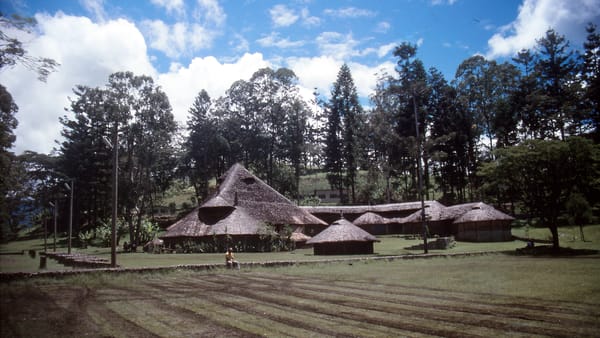

In a compound outside Harbin, in what was then Japanese-occupied Manchuria, Imperial Japan ran a biological warfare research unit that used living human beings as test subjects. The unit was designated 731. Between 1937 and 1945, it conducted experiments on prisoners — mostly Chinese, Korean, and Soviet nationals — that killed an estimated 3,000 people under documented experimental conditions. Some estimates place the total at far higher when deaths from field deployment are included.
The commander, Lieutenant General Shirō Ishii, surrendered to American forces in 1945. He was never tried. He died in Tokyo in 1959.
Key Takeaways
- Unit 731 conducted lethal biological and medical experiments on prisoners in Japanese-occupied Manchuria from approximately 1937 to 1945.
- An estimated 3,000 people died in documented experimental conditions; field deployment deaths may be considerably higher.
- After Japan’s surrender, the United States secretly granted immunity to Unit 731 researchers in exchange for their experimental data.
- The senior unit commander, Shirō Ishii, was never prosecuted and died of natural causes in 1959.
- The full extent of the immunity arrangement was not publicly documented until the 1980s and 1990s.
- No Unit 731 researcher was ever prosecuted by Japanese or American authorities.
What Unit 731 Did
The Harbin facility was purpose-built and staffed by over 3,000 personnel at its peak. The research covered plague, cholera, typhoid, anthrax, and other agents, developed for weaponisation and tested on live subjects. Prisoners called “maruta” — a Japanese word for log, used to dehumanise — were infected without consent, vivisected without anaesthesia, subjected to cold-water immersion, pressure chambers, and field weapons tests.
The unit produced one of the most extensive bodies of data on biological weapon effects on humans ever compiled. It was precisely that data — unique and unreplicable — that made it valuable to the US Army’s biological weapons programme.
The Immunity Arrangement
After Japan’s surrender, General Douglas MacArthur’s command entered into secret negotiations with Ishii and the senior Unit 731 researchers. The arrangement, documented in US Army and State Department records that were eventually declassified, was straightforward: in exchange for the research data, the researchers would be granted immunity from prosecution at the Tokyo War Crimes Tribunal.
The Soviet Union captured some Unit 731 personnel and did prosecute them at the Khabarovsk War Crime Trials in 1949. The United States dismissed the Soviet proceedings as propaganda. For decades, official US policy was to maintain that no evidence existed of Japanese biological warfare experimentation.
How It Came Out
The full scope of the arrangement did not become public until the 1980s, when Japanese journalist Seiichi Morimura published The Devil’s Gluttony, drawing on survivor testimonies and physical evidence from Harbin. US declassification of relevant documents accelerated through the 1990s.
The Japanese government has acknowledged that Unit 731 existed and conducted experiments, but has consistently resisted formal acknowledgement of the immunity arrangement’s role in suppressing war crimes accountability. Chinese survivors and their descendants have pursued reparations in Japanese courts with no success.
Key Takeaways
- Unit 731 conducted lethal biological and medical experiments on prisoners in Japanese-occupied Manchuria from approximately 1937 to 1945.
- An estimated 3,000 people died in documented experimental conditions; field deployment deaths may be considerably higher.
- After Japan’s surrender, the United States secretly granted immunity to Unit 731 researchers in exchange for their experimental data.
- The senior unit commander, Shirō Ishii, was never prosecuted and died of natural causes in 1959.
- The full extent of the immunity arrangement was not publicly documented until the 1980s and 1990s.
- No Unit 731 researcher was ever prosecuted by Japanese or American authorities.
Simon Whistler
Simon Whistler is one of YouTube's most prolific documentary presenters, known for calm, authoritative deep dives into true crime, disappearances, and the world's most enduring unsolved cases. Into the Shadows is his companion archive for the cases he can't stop thinking about.