
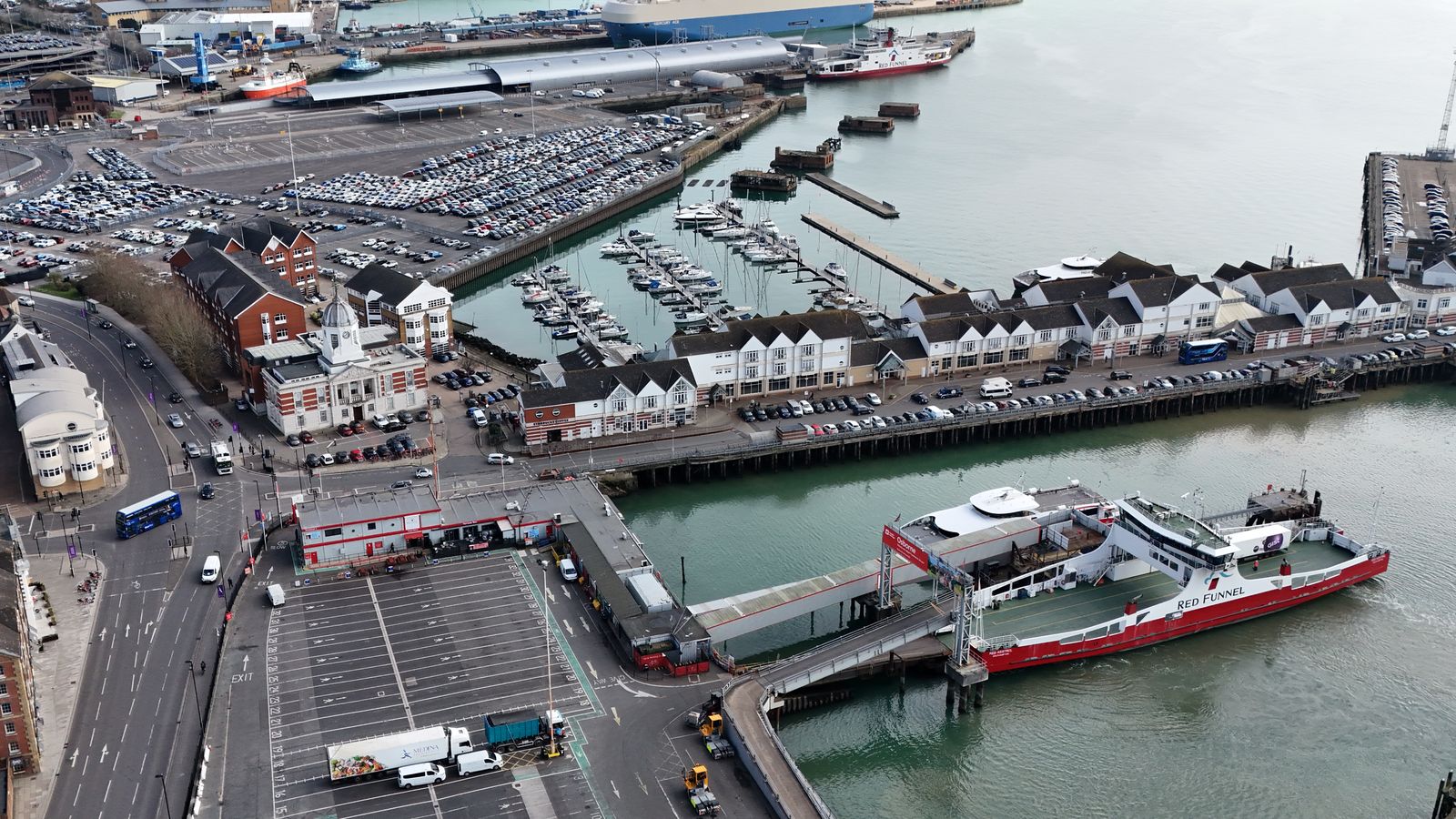
It was the early hours of the 15th of April, 1912.
On the evening of the fourth day of her maiden voyage from Southampton to New York, the lauded ocean liner RMS Titanic had a collision with an iceberg in the North Atlantic. She foundered two and a half hours later, with around 2,224 people on board. Around 1,500 of them perished.
Among those who died that evening were people from all walks of life and economic classes. From impoverished immigrants seeking a new life in New York, to some of the wealthiest people in the world: the ocean did not distinguish. Those who went down with the ship included her captain and most of the crew, as well as naval architect Thomas Andrews, who’d designed the vessel.
Key Takeaways
- J. Bruce Ismay, White Star Line chairman, survived the Titanic sinking but faced lifelong public scorn despite official inquiries clearing him of wrongdoing.
- Both US and British investigations found Ismay not guilty of malfeasance, with Lord Mersey stating his survival merely preserved his own life rather than costing another.
- Media magnate William Randolph Hearst orchestrated a vicious smear campaign against Ismay, coining ‘J. Brute Ismay’ and fueling his enduring villainous reputation.
- Ismay lived as a recluse until his 1937 death, never mentally recovering; films like Cameron’s 1997 ‘Titanic’ continued depicting him unfairly without later apology.
- A 2022 book by Ismay’s relative highlighted survivor accounts of him helping passengers into lifeboats, challenging decades of one-dimensional cowardice narratives.
But one person who did survive the tragedy was Joseph Bruce Ismay, Chairman and Managing Director of the White Star Line, which commissioned and owned the Titanic. Ismay had decided to travel on the liner’s maiden voyage, to see the heralded ship through to New York in full splendour.
But although Ismay physically survived the sinking, April 15th 1912 was the end of his life too.
Let’s explore.
Ismay and the ‘Unsinkable’ Titanic
To this day, Ismay’s Wikipedia introduction includes what could rank—without context—as one of the website’s most strangely-worded entries:
He was the highest-ranking White Star official to survive the 1912 sinking of the company’s flagship RMS Titanic, for which he was widely criticized.
Ismay had been born into great wealth and inherited control of the White Star shipping line from his father, Thomas Henry Ismay. Ismay junior had a keen mind for business, and built the company into the dominant force in maritime travel around the turn of the century. Under his directorship, White Star Line began to develop new ocean liners known for grandeur and luxury. This included the so-called Big Four: the RMS Celtic, the RMS Cedric, the RMS Baltic, and the RMS Adriatic.
Ismay announced plans for the RMS Titanic in 1907. She was intended to feature style and luxury unparalleled even by the great liners which preceded her.
Construction of the vessel began in 1909, and no expense was spared. The ship cost the company 7.5 million dollars, around 220 million dollars today. She was built at the Harland and Wolff shipyard in Belfast, and designed by respected shipbuilder Thomas Andrews. Titanic was the largest ocean liner in the world when completed in 1912.
It was later mythicised that the Titanic had been believed to be unsinkable. While this was untrue, she had been described as ‘practically unsinkable’ by her builders and various publications before she launched. The ship featured sixteen compartments which could be sealed with cast iron doors in case of emergency, and could also remain afloat even with four of these compartments flooded.
But of course, the Titanic was very much sinkable. This fact was proven the night she careened into an iceberg around 370 miles off the coast of Newfoundland. As the ship foundered, it was clear that the majority of those on board would go down with her.
Ismay escaped the sinking with his life, one of only 138 of the male passengers to do so, according to a later US-led inquiry. 678 died, including many of the aforementioned first-class ticket holders such as Benjamin Guggenheim, John Jacob Astor, and Isidor Strauss, who perished alongside his wife Ida. When counting crew members, it was determined that a total of 1,517 souls had been lost, of whom 1,360 were men.
Being one of very few men who’d survived was a bad look for the Chairman of the company which owned the ship. But Ismay was handed a terrible choice that night, one of very few people to be presented with such a choice.
As the lifecraft was being lowered—visibly not about to take anyone else, but with room still on board—he realised he could climb into it. As it happened, the lifeboat was Engelhardt Collapsible C, the last to leave the Titanic before she sank. Ismay’s other option would have been quite clear: to take a step back and gallantly await what was likely to be a very unpleasant death. This, while probably suspecting that his self-sacrifice wouldn’t gain many headlines—while the foundering of the ship he’d commissioned would.
Unlike many of the other first-class passengers on board, Ismay had travelled alone on the Titanic, having boarded from the ship’s origin point in Southampton. His wife and their four children were safely home in England. His eldest child Margaret had gotten married three weeks before the ship sailed, and his youngest, George, was soon to turn ten years old.
Ismay made his choice, and boarded the lifeboat. He wasn’t alone, and was accompanied by William Ernest Carter, a millionaire Pennsylvania stockbroker and polo player, and another member of the aristocratic community on board the Titanic. Carter and Ismay rowed Collapsible C until it was reached by the Carpathia, whereupon they and the remainder of their group were rescued.
Within hours, news of the disaster had spread to the US. An iconic news headline from the New York Times appeared in print the same day as the disaster, announcing known details of the vessel’s demise and prominently declaring that Ismay had been saved while at least 1250 others perished.
The press would swiftly be damning for the White Star Line chairman.
‘J Brute Ismay’
On board the Carpathia, Ismay’s world unravelled.
According to the accounts of people who visited him, Ismay was inconsolable, absent, and frozen. He consumed very little, and remained in shock for days after the event.
An inquiry into the disaster was established four days after the sinking, overseen by the United States Senate.
The inquiry explored the details of the event, and also examined accounts of Ismay’s actions. Contrary to many subsequent rumours, the inquiry did not find Ismay personally guilty of any malfeasance. It also did not find that White Star Line had been negligent under existing maritime laws, as they had followed standard practices of the time. It did find that those practices were insufficient, that complacency had been prevalent aboard the ship, and (perhaps most controversially) that Captain Edward Smith had “shown an indifference to danger [that] was one of the direct and contributing causes of this unnecessary tragedy.”
Senator Alden Smith, chair of the inquiry, also scathingly criticised the British Board of Trade, stating:
We shall leave to the honest judgment of England its painstaking chastisement of the British Board of Trade, to whose laxity of regulation and hasty inspection the world is largely indebted for this awful fatality.
At around the same time, the British Board of Trade conducted its own investigation into the disaster. In its report, it concurred that there were no flaws with the Titanic under existing maritime laws (which included the lack of adequate lifeboats), but did not find Smith liable for an unruly course taken by the vessel. It also rejected its own culpability for the sinking.
Both inquiries found that maritime practices at the time were insufficient, but that this was not within the purview of control of either White Star Line or its parent company, the US-based International Mercantile Marine Company. And neither inquiry found J. Bruce Ismay guilty of any wrongdoing.
None of this saved Ismay from the ire of the public.
Among the colourful nicknames he received was ‘J Brute Ismay’. But it was the moniker ‘The Coward of the Titanic’ which followed him closest for the rest of his life.
He wasn’t the only one subject to fairly dismal treatment. William Carter’s wife divorced him, claiming he abandoned her and the children during the ailing hours as the Titanic sank. However, she only did so almost two years later, and only after Carter had suffered severe injuries in a polo accident which ended his career. Carter never remarried, and steadfastly disputed that he’d ever abandoned anyone.
His wife, curiously even for the time, remarried two months after the divorce was granted to another prominent figure from Philadelphian high society. Still, Carter’s fate was not as bad as Ismay’s, as he continued to live a high-rolling life in spite of the shame they shared of having lived out the tragedy.
Ismay’s reality was quite different. As the chairman of the White Star Line, it was seen as almost a morose duty to go down with the ship—as Captain Edward Smith and shipbuilder Thomas Andrews had done.
Hearst and the Ismay Hate Train
Now, many of the circumstances from that night, and rumoured or confirmed events which preceded it, meant that severe criticism of Ismay was unavoidable.
For one thing, the severe undercount of lifeboats was held as one of the central reasons why so many passengers lost their lives. Despite being built to accommodate 2,400 passengers and crew, the Titanic did not have nearly enough collapsible boats to save all on board. The requisite number would have been 48, and the Titanic had only 20—a decision made by Ismay, and enough to save less than 1,200 people. The subsequent inquiries recommended strict regulation of the amount of such crafts a ship must have, which must be the same as the amount of people on board.
With that said, even if there had been more lifeboats on board, it may have made little difference under the circumstances. The Titanic staff had a little over two hours to stuff as many people onto the boats as possible, amidst rising fear and chaos, and while no doubt aware that many of the crew, themselves, were doomed. They would also have had to ensure women and children entered first, as was policy at the time.
But as shown by the fact that some of the lifeboats departed the Titanic half-filled, to transfer all passengers into the boats really wasn’t achievable in the short window before the vessel sank, and may have been impossible in all but the most snailpaced sinking.
Watch The Project Briefing
Open Video
Video Briefing
The Most Unjustified Villain in History?
The average occupancy rate of the collapsibles as the ship sank was later found to be around 60% of capacity. Therefore the ‘absence of lifeboats’ argument was probably overused, to Ismay’s great detriment. In actual fact, Ismay’s choice to have 20 boats on board exceeded the British Board of Trade’s requirements at the time—which was just 16 lifeboats.
Other reports of Ismay’s boorish behaviour also circulated: including that he’d pressured Captain Edward Smith to sail at full speed in precarious waters to ensure favourable press coverage. But there is little to substantiate this, and the report appears to stem from the testimony of Elizabeth Lines, a first-class passenger who survived the sinking and made the claim in a deposition to the US inquiry. However, the logic of inconveniencing one’s own passengers by sailing them into an empty dock wouldn’t really have been of any grace to Ismay. The rumoured encounter nevertheless wrote its way into Ismay’s unfavourable depiction in the 1997 film Titanic. According to historian Paul Louden-Brown, a consultant on the film set, the scene was included simply because it was what the public expected to see. He further stated in regard to the alleged encounter between Ismay and Smith:
Every single film-maker has found that betrayal to be too delicious not to incorporate into their film.
One of Ismay’s most vitriolic critics was William Randolph Hearst, a media magnate and pioneer of tabloid press. The two had fallen out before the sinking of the Titanic, and savage criticism of Ismay soon came by way of Hearst’s ‘yellow paper’ empire.
It is thought that it was Hearst who came up with the derisive nickname ‘J. Brute Ismay’, which appeared in a full-page cartoon depicting Ismay in a lifeboat watching the sinking Titanic. Another of Hearst’s publications ran a caption reading:
We respectfully suggest that the emblem of the White Star be changed to that of a yellow liver.
Hearst, coincidentally, was the inspiration for the titular character in the 1941 drama film Citizen Kane. In the film, Charles Foster Kane is depicted as an arrogant and cold-hearted newspaper publisher. Despite being later held by many as the greatest film of all time, Citizen Kane failed at the box office and received acclaim only in the 1950s—probably in part because Hearst prohibited all promotion of the film across his media empire.
A Victim of the Times
In some ways, Ismay’s story was a consequence of the thinking of the time, which devoted great interest to the lives of the wealthy and much stock in the details of their lives. Titanic had been built primarily as a vessel of class and luxury, and to be seen onboard as she crossed the Atlantic for the first time was a thing of great prestige. She was filled with some of high society’s most recognisable names, including mining magnate Benjamin Guggenheim, politician and businessman Isidor Strauss, and real estate multi millionaire John Jacob Astor IV.
But it was this preoccupation with the lives of the rich and the famous which brought Ismay directly into the scope of the public following the disaster. From the very first news reports, Ismay’s name was prominently listed as having survived, and his image remained in constant circulation amid coverage of his testimony. Aside from the hounding by Hearst’s press, it was this exposure which made Ismay subject to much of the public’s own moralising regarding the event.
In general, aristocrats were—at least, publicly—held to the high moral standards of the Edwardian era, bound to notions of chivalry and duty which included fastidiousness in the face of great danger.
It was this kind of thinking which saw men sign up in droves for the killing fields of France and Belgium as World War I erupted two years later. Men of the period—young and old, of all nationalities and economic classes—were expected to dutifully commit their lives to the great conflicts of the twentieth century. Conflicts which regularly offered little other than slaughter.
The Ismay family was no different. J Bruce Ismay’s youngest son George was killed in action while serving with the British Army in Tunisia in 1943. Perhaps graciously, Ismay was at least saved this final horror. He died of a stroke in 1937, having never mentally recovered from the sinking.
And in some ways, Ismay likely permitted the vicious dismantling of his name by resigning himself to the misery which affected him the rest of his life. He already suffered from insecurity before the sinking, and regressed further in following years towards near-despondence. A year after the sinking, Ismay stepped down from White Star Line.
Before doing so, he donated a significant sum to a fund for widows of the disaster, and helped pay out compensation to victims’ relatives. Ismay spent the following years working on insurance claims with a company his father had founded, issuing hundreds of thousands of pounds to relatives of Titanic victims.
In the wake of the disaster, Ismay was rejected by London’s high society and became a recluse. He retreated with his wife to a cottage in the west of Ireland, a location he chose for its remoteness and its access to salmon and trout fishing. Despite the isolation, Ismay didn’t escape the quiet ridicule of locals, who referred to him in Irish Gaelic as ‘Brú Síos Mé’ (pronounced ‘Broo Shees Mé’) or ‘push me down’: a play on his name ‘Bruce Ismay’, and a coy reference to the pushing down of the lifeboat which saved him.
Ismay continued spending much time at the cottage for the rest of his years, and never spoke publicly or privately about the tragedy. Later in life, he was described as a ‘corpse’ by his granddaughter, and the subject of Titanic became family taboo. But at a Christmas dinner in 1936, shortly before his death, he was asked by one of his grandsons if he’d ever been shipwrecked. It is said that in that moment, Ismay finally broke his silence on the disaster. He turned to his grandson and replied:
Yes. I was once in a ship which was believed to be unsinkable.
Despite his troubled life, and unlike William Carter, Ismay’s wife Florence didn’t divorce him and the couple remained married for a total of 49 years until his death. She didn’t remarry and died at age 96 in 1963.
The White Star Line continued in operation for several decades, but suffered another calamity during World War I. The HMS Britannic, which had been requisitioned as a hospital ship for the British Army, struck a naval mine in the Aegean Sea and sank at the cost of 30 lives. The Britannic became the largest ship lost during the conflict. White Star Line teetered on the brink of bankruptcy following the financial recession of 1929, and was ultimately merged with another company in 1934.
Legacy
Despite the miserable end to his life, Ismay’s misfortune continued beyond the grave. He was subject to dishonourable depictions in practically every film or series made about the tragedy in the time after his death.
In 1997, the James Cameron-directed epic film Titanic was released, with a budget greater than the cost of building the actual ship when adjusted to modern figures. In it, Ismay—played by English actor Jonathan Hyde—is depicted as an aloof and detached aristocrat, who seizes the opportunity to abscond in a descending lifeboat (alone) as the ship begins to sink. No mention of Carter is made in the scene, and emphasis is placed on Ismay’s pitiful avoidance of the gaze of a nearby sailor as the boat descends.
The film was acclaimed, but did receive criticism for inaccurate or unfair depictions of some historical figures. One such character was Scottish First Officer William Murdoch—ironically, the man whose gaze Ismay avoided in the lifeboat scene. Murdoch was depicted as a brash and indecisive figure who accepted a bribe as the ship sank, and shot dead a third-class passenger amidst the chaos before shooting himself.
Murdoch had generally been held as having heroically worked to minimise loss of life as the ship sank, and the depiction was met with outrage by his descendants and residents of his hometown, Dalbeattie. Cameron later issued an apology for Murdoch’s portrayal, and a donation of 5,000 pounds was made by Fox to Dalbeattie High School. However, no such retrospection was applied to Ismay, and his image remained butchered as had been the case since the sinking.
In the 2012 centennial miniseries Titanic, produced by British filmmaker and Conservative peer Julian Fellowes, Ismay is depicted as a brutish man who locks crew members below deck, sealing their fate. He is also portrayed as racist towards the Italian waiters of the Titanic’s dining hall—including its manager Luigi Gatti—who, in real life, Ismay had personally hired to run the A la carte restaurant onboard.
For years, the only clemency issued to Ismay came from some filmfan forums and several isolated media articles posing the relatively backhanded question whether he should be “forgiven”.
But the sacrileged name of J Bruce Ismay did receive some respite with the publishing of a new book in 2022.
Understanding J. Bruce Ismay was written by one of Ismay’s distant relatives, and attempted to shine a new light on his actions on the night of the disaster. The book pointed to the fact—attested to by multiple survivors—that Ismay worked tirelessly in the two hours before the ship sank to usher panicking passengers into lifeboats. He was described as strictly adhering to the “women and children first” policy, and also insisting that a stewardess be admitted to a lifeboat, dismissing her hesitance due to her status as a crew member. The book also pointed to the dubiousness of the infamous discussion overheard by Elizabeth Lines, as well as the unrelenting smear campaign to which Ismay was subjected by Hearst’s American press.
Yet, ironically, perhaps the most cogent defence of Ismay’s actions that night can be traced all the way back to one month after it took place. In his report for the British inquiry, committee chairman Lord Mersey declared:
As to the attack on Mr. Bruce Ismay, it resolved itself into the suggestion that (…) some moral duty was imposed upon him to wait on board until the vessel had foundered. I do not agree. Mr. Ismay, after rendering assistance to many passengers, found “C” collapsible, the last boat on the starboard side, actually being lowered.
Had he not jumped in, he would simply have added one more life, namely his own, to the number of those lost.
Key Takeaways
- J. Bruce Ismay, White Star Line chairman, survived the Titanic sinking but faced lifelong public scorn despite official inquiries clearing him of wrongdoing.
- Both US and British investigations found Ismay not guilty of malfeasance, with Lord Mersey stating his survival merely preserved his own life rather than costing another.
- Media magnate William Randolph Hearst orchestrated a vicious smear campaign against Ismay, coining ‘J. Brute Ismay’ and fueling his enduring villainous reputation.
- Ismay lived as a recluse until his 1937 death, never mentally recovering; films like Cameron’s 1997 ‘Titanic’ continued depicting him unfairly without later apology.
- A 2022 book by Ismay’s relative highlighted survivor accounts of him helping passengers into lifeboats, challenging decades of one-dimensional cowardice narratives.
Simon Whistler
Simon Whistler is one of YouTube's most prolific documentary presenters, known for calm, authoritative deep dives into true crime, disappearances, and the world's most enduring unsolved cases. Into the Shadows is his companion archive for the cases he can't stop thinking about.
Frequently Asked Questions
Who was J. Bruce Ismay and what was his role in the Titanic disaster?
J. Bruce Ismay was the Chairman and Managing Director of the White Star Line, which commissioned and owned the RMS Titanic. He survived the sinking on April 15, 1912, by boarding Collapsible C, the last lifeboat to leave the ship before she sank. He was one of only 138 male passengers to survive, while 678 male passengers died.
What nicknames did Ismay receive after surviving the Titanic sinking?
Ismay received several derisive nicknames after the disaster, including ‘J Brute Ismay’ and most notably ‘The Coward of the Titanic.’ The nickname ‘J Brute Ismay’ is thought to have been coined by media magnate William Randolph Hearst.
What did the official inquiries conclude about Ismay’s conduct during the Titanic disaster?
Both the US Senate inquiry and the British Board of Trade investigation did not find Ismay personally guilty of any malfeasance or wrongdoing. The US inquiry found that White Star Line had not been negligent under existing maritime laws. British inquiry chairman Lord Mersey specifically defended Ismay, stating that had he not jumped into the lifeboat, ‘he would simply have added one more life, namely his own, to the number of those lost.’
How many lifeboats did the Titanic have, and was this number illegal at the time?
The Titanic had 20 lifeboats, which exceeded the British Board of Trade’s requirement of 16 lifeboats at the time. However, this was far fewer than the 48 needed to accommodate all 2,400 passengers and crew. The decision to have 20 lifeboats was made by Ismay. The subsequent inquiries recommended that ships carry enough lifeboats for all people on board.
What role did William Randolph Hearst play in shaping public opinion against Ismay?
William Randolph Hearst, a media magnate and pioneer of tabloid press, was one of Ismay’s most vitriolic critics. The two had fallen out before the sinking. Hearst’s ‘yellow paper’ empire published savage criticism of Ismay, including a full-page cartoon depicting Ismay in a lifeboat watching the sinking Titanic and the suggestion that the White Star emblem be changed to ‘that of a yellow liver.’ Hearst is thought to have coined the nickname ‘J. Brute Ismay.’
How was Ismay depicted in the 1997 film Titanic, and was this portrayal accurate?
In James Cameron’s 1997 film Titanic, Ismay was played by Jonathan Hyde and depicted as an aloof and detached aristocrat who seized the opportunity to abscond in a descending lifeboat alone as the ship began to sink. The film showed him avoiding the gaze of a nearby sailor. This portrayal was inaccurate: Ismay was actually accompanied by William Ernest Carter in Collapsible C, and multiple survivors attested that Ismay had worked tirelessly to usher panicking passengers into lifeboats before boarding the last lifeboat himself.
What happened to Ismay in the years following the Titanic disaster?
Ismay stepped down from White Star Line a year after the sinking. He donated significantly to a fund for widows of the disaster and helped pay compensation to victims’ relatives, then worked on insurance claims issuing hundreds of thousands of pounds to relatives of Titanic victims. He was rejected by London high society, became a recluse in a remote cottage in western Ireland, and never spoke publicly or privately about the tragedy. He died of a stroke in 1937, having never mentally recovered from the sinking.
What new information emerged about Ismay’s actions in the 2022 book ‘Understanding J. Bruce Ismay’?
The 2022 book ‘Understanding J. Bruce Ismay,’ written by one of Ismay’s distant relatives, presented evidence from multiple survivors that Ismay worked tirelessly in the two hours before the ship sank to usher panicking passengers into lifeboats. He strictly adhered to the ‘women and children first’ policy and insisted a stewardess be admitted to a lifeboat despite her hesitance as a crew member. The book also questioned the reliability of Elizabeth Lines’ testimony about Ismay pressuring Captain Smith to sail at full speed.
How did the 2012 miniseries ‘Titanic’ portray Ismay, and how was this inaccurate?
In the 2012 centennial miniseries ‘Titanic’ produced by Julian Fellowes, Ismay was depicted as a brutish man who locked crew members below deck, sealing their fate, and as racist towards Italian waiters including Luigi Gatti. This was inaccurate: in real life, Ismay had personally hired Gatti and the Italian waiters to run the A la carte restaurant onboard.
What was the actual survival rate of Titanic’s lifeboats, and why might more lifeboats not have saved more people?
The average occupancy rate of the collapsible lifeboats as the ship sank was later found to be around 60% of capacity. Even if there had been more lifeboats, it may have made little difference because the Titanic staff had only a little over two hours to load passengers amid rising fear and chaos, while ensuring women and children entered first. Some lifeboats departed half-filled, and transferring all passengers into boats wasn’t achievable in the short window before the vessel sank.
Sources
- Original Into the Shadows video: The Most Unjustified Villain in History?
- https://timesmachine.nytimes.com/timesmachine/1914/09/01/101924917.pdf?pdf_redirect=true&ip=0
- https://www.abc.net.au/news/2012-04-13/how-news-of-the-titanic-disaster-broke/3934198
- https://www.npr.org/2011/10/15/141328305/how-to-survive-the-titanic-and-sink-your-name
- [https://titanic-itv-2012-miniseries.fandom.com/wiki/Bruce_Ismay_(from_2012_Miniseries](https://titanic-itv-2012-miniseries.fandom.com/wiki/Bruce_Ismay_(from_2012_Miniseries)
- https://titanicfacts.net/building-the-titanic/
- https://www.shiftcomm.com/thinking/never-let-go-titanic-survival-101#:~:text=Gender%20%26%20Class&text=Women%20had%20a%20much%20higher,it%20safely%20back%20to%20shore
- https://www.titanicinquiry.org/USInq/USReport/AmInqRep03.php#a3
- https://web.archive.org/web/20140717231017/http://www.titanicinquiry.org/BOTInq/BOTReport/BOTRepRec.php#a3
- https://www.titanicinquiry.org/USInq/USReport/AmInqRepSmith01.php
- https://www.history.com/this-day-in-history/titanic-sinks
- https://youtu.be/DybY1C4ExKA?si=m-qk-R_bVkMGQlYj
- https://www.telegraph.co.uk/books/what-to-read/time-forgive-j-bruce-ismay-coward-titanic/
- https://archive.nytimes.com/www.nytimes.com/learning/general/onthisday/big/0415.html
- https://web.archive.org/web/20170515141920/http://www.titanichistoricalsociety.org/articles/ismay.html
- https://www.irishcentral.com/roots/history/coward-titanic-j-bruce-ismay
- https://www.bbc.com/news/uk-northern-ireland-17694824
- Hero image source by Geni / openverse, by-sa.