It’s no secret that Stalin was responsible for the murder of millions of his own citizens during his reign over the Soviet Union. It’s widely known that he purged his military and government after taking power, intentionally starved Ukraine and Kazakhstan, sent scores of political dissidents to the infamous gulags, committed numerous massacres, and much more, all of which resulted in the excess deaths of at least 10 million people, with some historians estimating a staggering 20 million or higher.
With numbers this extreme and decades of history to sift through, it was only inevitable that at least one of his atrocious acts would be largely swept under the rug, and that’s exactly what happened to the Crimean Tatars.
Officially called a “deportation” or a “forced resettlement” by the Soviet authorities and most other countries, the sickening death toll and irreparable damage it did to the Tatar homeland and culture makes it clear that only one label can describe what really went down: a genocide.
Key Takeaways
- Stalin’s regime forcibly deported Crimean Tatars, leading to massive deaths and cultural destruction.
- The Soviet government falsely accused Crimean Tatars of mass collaboration with Germany to justify their deportation.
- Crimean Tatars faced horrific conditions in exile, including forced labor, disease, and discrimination.
- Despite official recognition of their suffering, Crimean Tatars continue to face struggles and human rights violations.
- Only a few countries recognize the deportation of Crimean Tatars as a genocide, with Russia disputing the events.
Stalin’s Justification
The history of the Crimean Tatars goes back deep into history. The people are indigenous to Crimea, but their history began to be shaped around the 13th century when they became a state of the Golden Horde, called the Crimean Khanate, under which the population converted to Islam. The Golden Horde splintered over time, but the Crimean Khanate held on, and remained stable for hundreds more years.
Its independence was lost, however, in 1783, when it was annexed by the Russian Empire, who they’d been at war with on many, many occasions. Over the next century or so, the Empire began their tried-and-true process of Russification, which, at its least violent, basically involves flooding an area with their own Slavic people to marginalize natives while also, either officially or unofficially, removing the target’s native language and culture. Under Russian rule, scores of Crimeans began fleeing the peninsula, with around 300,000 departing for the Ottoman Empire in just the first few years after annexation.
Even more fled their homeland in the mid-1800s, after Russia’s defeat in the Crimean War, which was fought against the Ottomans, British, and French. Despite the name of the war, the defeat didn’t result in any territorial changes in Crimea itself, but it did result in further Russian scrutiny over their ethnic minorities, an attitude which only got worse after the January Uprising, a rebellion in Poland led by Polish, Lithuanian, and Ukrainian rebels. After the uprising had been dealt with, Tsar Alexander II boosted Russification policies as an attempt to reduce further internal conflicts, after all, if all these other minorities lost their original cultures, they wouldn’t even know they were under colonial rule. These new policies included restricting local languages, often reducing them to optional school subjects while the main courses were all taught in Russian, and banning local traditions and replacing them with Russian ones.
Throughout these new policies, more and more Tatars left Crimea, along with hundreds of thousands of other Muslims throughout the Russian Empire, and by the year 1900, Crimean Tatars were no longer the ethnic majority in their region. In just a hundred years, they’d gone from comprising 98% of the peninsula’s population to just 34%, with the region now largely dominated by Slavic people.
But things were about to get a whole lot worse. 1917 saw the formation of the USSR, and Crimea was granted the status of an autonomous region, called the Crimean Autonomous Soviet Socialist Republic. This sounds nice and fairly independent on paper, but in reality, the new republic was soon to be horribly mistreated. For starters, tens of thousands of people were executed here during the Red Terror, accused of being enemies of the state. Then, collectivization in the 1920s saw the Soviet government redistribute crops to other republics that they deemed more important, leading to a severe famine in Crimea that killed around 100,000 people, at least three quarters of which were Tatars.
After Stalin rose to power, the situation deteriorated even further, as his policies continued to starve poor regions of the Soviet Union and to heavily suppress local culture.
In 1941, Germany invaded and annexed much of the western USSR, including Crimea. Crimean Tatars that had been captured while serving in the Red Army were sent to prisoner of war camps and labeled “Mongol sub-humanity” and “Asiatic inferiors”, which, of course, Germany intended to exterminate.
During the occupation of Crimea, many Tatars formed partisan groups, disrupting supply lines and fighting a guerilla war while they awaited the return of the Red Army. However, as with all occupied territories, there were also collaborators, who aided the Nazis and were permitted to form official Muslim Committees that monitored the local population.
The other Tatars that aided the Axis were many from the POW camps, who had been recruited to fight against the Soviets when it became clear that tide in the war was shifting.
In 1944, the Red Army finally liberated Crimea, and by then, 130,000 lives had been lost during the occupation, along with the complete annihilation of 70 entire villages.
As the Germans retreated, their fascist collaborators and committees fled with them, evacuating to Germany and Hungary where they joined the Wehrmacht’s Turkistan Division. This was widely known, and several Soviet officials at the time recognized that the Crimean Tatars had not betrayed the USSR en masse, and that the collaborators were but a minority.
To further prove the point, more than 25,000 Tatars served honorably in the Red Army throughout the entire war, all the way up to the Battle of Berlin. In fact, after the war, several thousand of them received high honors in the Army for actions of bravery and courage, including six who received the highest possible distinction of Hero of the Soviet Union.
But all of this would soon be twisted. You see, Stalin was highly suspicious of Crimean Tatars, and some of them collaborating with Germany was all the ammunition he needed to make a move on them. After the war, ten ethnic minority groups were collectively punished for alleged collaboration, including Tatars, despite their frantic denial of any wrongdoing.
Soviet media even went as far as to hide honorable actions by this ethnicity, a clear example of which can be seen in their reporting of Uzeir Abduramanov. Uzeir was a sapper in the Red Army, and was assigned along with 16 others to build a bridge across the icy Sozh river. After staying in the ice water for 9 straight hours under heavy enemy fire, only 3 of the sappers survived, but they completed their task and their troops were able to safely cross the river.
Uzeir sustained a serious head injury, blood loss, and hypothermia during the operation, but he survived and was declared a Hero of the Soviet Union for his determination.
But these selfless actions didn’t fit the narrative that Tatars had all been a traitorous bunch, and so the media lied, and said that he was actually from Azerbaijan. Another war hero, Bekir Osmanov, who had been an influential Soviet partisan for several years, was falsely depicted in several pieces as a German spy who had been shot for treason during the war, even though in reality he lived until the 1980s.
But this misinformation campaign was just the beginning, a tact to turn the public opinion against the natives of Crimea, so that Stalin could initiate the next step of his terror.
The Deportation
The idea of deporting Crimeans first arose in 1944, suggested to Stalin by Lavrentiy Beria, who, by the way, would later be found guilty of treason, terrorism, and serial rape, just in case you needed more evidence of how downright evil he was.
The supposed point of “relocating” certain ethnicities was that they couldn’t be trusted to populate the border regions of the USSR, where they could be easily swayed by nearby foreign powers. And so, on May 11th, 1944, Stalin issued GKO Order No. 5859ss, a document outlining the plan to deport the Crimean Tatars out of their homeland.
This order began by stating the accusations laid against the Tatars, such as:
“During the Patriotic War, many Crimean Tatars betrayed their Motherland…”
“…deserted from the Red Army…”
“…actively collaborated with the German occupation authorities…”
“…were especially distinguished by their brutal reprisals against Soviet partisans…”
Until eventually, the document reads,
“Taking into account the above - All Tatars should be evicted from the territory of Crimea and settled permanently as special settlers in the regions of the Uzbek SSR”
Without any input from the Crimeans themselves, without any due process or legal routine, it was decided that they needed to leave their homes and live in Uzbekistan, more than 3,000 kilometers, or 2,000 miles away.
Watch The Project Briefing
Open Video
Video Briefing
Tatar Deportation: Stalin’s Forgotten Genocide
The deportation began on May 18th, and lasted just three days. Agents of the NKVD secret police systematically moved from house to house, forcing Tatars at gunpoint to gather a bag of belongings and enter sealed-off cattle trains that would be taking them to the most remote parts of Uzbekistan. Anyone who resisted was executed.
The only way to avoid this collective punishment was to be a Tatar woman married to a man of Slavic descent, otherwise, it didn’t matter who you were or what you had done, you were leaving. Even Uzeir Abduramanov, who, as we just mentioned, was a literal war hero who had risked his life for his fellow countrymen, was instantly expelled from the Moscow Engineering School and shipped away.
It would be an understatement to say that the train ride across the USSR was brutal. The crowded wagons lacked almost any food and water. Officially, there were supposed to be 50 occupants per wagon, but this guideline was rarely followed to save space, and one witness claimed that there were 133 in hers. There was only a single hole in the floor to use as a toilet, zero fresh air, since the doors had been bolted shut, and typhus quickly began spreading.
Worst of all, many pregnant women were forced to give birth in these horrible conditions. The train rides lasted for at least two weeks, with some trips taking up to 24 straight days, and, in the end, the official NKVD records show that 7,889 Tatars died on route to Central Asia.
151,000 Crimean Tatars ended up in Uzbekistan, 4,000 in Kazakhstan, and around 35,000 to various remote regions of Siberia. Along with them, the NKVD also evicted nearly 10,000 Armenians, 12,000 Bulgarians, and 15,000 Greeks.
On the fourth of July, 1944, the NKVD sent an official report to Stalin that the deportation was complete and that resettlement was underway. However, not long after sending off this report, they realized that they’d forgotten to work through a region called the Arabit Arrow, where several hundred Crimean Tatars were still living in small, coastal villages.
The NKVD didn’t want to organize another train route for them because word of it could easily spread and make it appear that they had lied when they reported that the order had been complete, and so they decided on an easier way to clean out the villages. On July 20th, hundreds of Tatars were corralled onto an old boat, which was then taken out into the middle of the Azov Sea and sunk. Anyone who didn’t drown in the aftermath was finished off by the NKVD who were waiting on the shores with machine guns.
Now that the peninsula had been ethnically cleansed, Stalin authorized the emigration of 51,000 people, mostly Russians and Ukrainians, into Crimea to settle the farms they’d confiscated. In total, the government seized 80,000 houses, 500,000 cattle, 360,000 acres of land, and 40,000 tons of agricultural provisions. Then, the Crimean ASSR was dissolved.
Put simply, their home was gone.
Life in Exile
Not only had they been forced to relocate to a remote region of Uzbekistan, they were also immediately subjected to living conditions that can only be described as horrific. Upon arrival, the local Uzbeks threw rocks at the Crimeans and called them fascist collaborators. This treatment was perhaps made worse by Soviet propaganda, which claimed that they had voluntarily resettled, and the Uzbeks didn’t appreciate their land being taken by people they’d been told were all traitors. Over the coming years, several Crimean Tatars would be killed in Uzbek attacks, to which the government turned a blind eye.
The first five years of this resettlement were the most brutal. Diseases spread like wildfire, malnutrition and injuries claimed lives, and deserters were executed.
The official Soviet records showed 44,887 excess deaths in the first five years of resettlement. Later, when Crimean Tatar activists began releasing statistics showing that 46% of people living in exile had died from disease or labor, which the government labeled as “slander to the USSR”, and in order to prove them wrong, published their own stats showing that ONLY 22% of the ethnic group had been wiped out. Various other mortality rates for these first few years have been thrown around, ranging from around 34,000 all the way to 80,000.
Regardless of the death toll, life in exile was made as harsh as it could be.
Most deportees ended up in forced labor, working in coal mines and construction teams, working brutal schedules of 12 hours a day, seven days a week. Despite this strenuous work, many were only allotted between 200 and 400 grams of bread per day. And even once they were off work, their new homes would be anything but relaxing, as the accommodations were extremely lacking, with many describing their houses as huts with no doors or windows, and just reeds on the floor to sleep on.
One woman recalled,
“My parents had sisters and brothers, but when they arrived in Uzbekistan, the only survivors were themselves. My parents’ sisters and brothers and parents all died in transit because of catching bad colds and other diseases… My mother was left completely alone and her first work was to cut trees”
Crimean Tatars were denied the right to education, and could not publish works in their native language. Officially registered as ‘special settlers’, Tatars were officially considered second-class citizens, and were not allowed to leave the borders of the region they’d been assigned to, essentially making it an open-air prison.
Things looked like they were about to improve in the 1950s though, when Stalin died and Nikita Khrushchev took power. Khrushchev held a speech at one point condemning many of Stalin’s actions, including the mass deportation of certain ethnicities, and authorized several groups to return to their homes. However, three were forced to remain in exile, Soviet Germans, Meskhetian Turks, and Crimean Tatars, even when Crimea was officially added to the Ukrainian Republic.
Census reports over the next few decades would only allow the people to classify themselves as Tatar, carefully eliminating Crimean from the name. Even in 1967, when Soviet officials issued a decree dropping the mass charge of treason against the ethnicity, they were careful to word their name not as Crimean Tatar, but rather,
“Citizens of Tatar nationality who having formerly lived in Crimea have taken root in the Uzbek SSR”
And although the treason charges had been dropped, they were still barred from returning home. In 1968, 6,000 formed their own group and headed home, only to be deported for a second time, and the most iconic moment of the Crimean struggle was captured by a man named Musa Mamut. Mamut had been deported when he was 12 and suffered in forced labor for 35 years. Upon sneakily returning to Crimea, he was apprehended, and told he would be deported.
Instead, he set himself on fire, displaying to the world that death was preferable to the conditions he would face in exile.
The travel ban wouldn’t be lifted until the late 1980s, when a huge Tatar protest near the Kremlin forced Gorbachev’s hand in officially removing the conditions placed on deported ethnicities, and that same year, 166,000 Tatars would make their way home, finally freed after more than 40 years.
Continued Troubles
In 1991, the USSR made its greatest contribution to the world by collapsing into its constituent, now independent republics. Crimea became part of Ukraine, and nearly all of the returnees were instantly granted Ukrainian citizenship under the new laws, however, they still faced a lot of issues.
Rebuilding their communities proved to be difficult as nearly all the land had now been inhabited by other families for nearly 40 years. The way the government of Ukraine operated with the peninsula was by mostly just letting Crimea govern itself. It was renamed the Autonomous Republic of Crimea, and wrote its own Constitution of Crimea which was approved by Kyiv. Throughout the early 2000s, Crimean Tatars made up around 12% of the population there, a victory for sure, but once again, trouble was heading their way.
In 2014, Crimea was annexed by the Russian Federation, marking the beginning of the ongoing conflict with Ukraine, and a new beginning of struggle for the Tatar people. More than 10,000 of them fled immediately after the annexation, but those who stayed would be subject to what the United Nations continues to classify as human rights violations.
These include intimidation by Russian authorities to vote or identify in certain ways, imprisoning Crimean Tatar officials on dubious charges, and banning their highest representative councils. In 2015, it was reported that Russia had banned the public remembrance of the deportation, an event that had been annual up until that point.
It really seems that there is just no end in sight for the struggles of the Tatars. According to many modern historians, such as British scholar Walter Kolarz, the deportation was simply Stalin’s excuse to complete a centuries-long colonization of Crimea, pushing its people away in order to seize the prime land. Of course, this effort can be seen as being undone in an instant when the USSR collapsed, since Crimea was left with Ukraine, leading to Putin’s desire to reclaim it.
Currently, only 4 countries on earth recognize the events that unfolded overall as a genocide, that being Ukraine, Latvia, Lithuania, and Canada. Others, mostly Russia, largely dispute the events, such as Alexander Statiev, who claims that although the death toll was certainly high, Stalin had no intent of exterminating the people.
But taking into consideration the destruction of their homeland, the false accusations levied against their entire nation, the collective punishments, death, and hardship brought to them based purely on their ethnicity, it’s clear that were, and to, some extent, still are, victims of ethnic cleansing, and it’s really quite a miracle that they’ve managed to maintain their cultural and linguistic identity despite it all.
Key Takeaways
- Stalin’s regime forcibly deported Crimean Tatars, leading to massive deaths and cultural destruction.
- The Soviet government falsely accused Crimean Tatars of mass collaboration with Germany to justify their deportation.
- Crimean Tatars faced horrific conditions in exile, including forced labor, disease, and discrimination.
- Despite official recognition of their suffering, Crimean Tatars continue to face struggles and human rights violations.
- Only a few countries recognize the deportation of Crimean Tatars as a genocide, with Russia disputing the events.

Simon Whistler
Simon Whistler is one of YouTube's most prolific documentary presenters, known for calm, authoritative deep dives into true crime, disappearances, and the world's most enduring unsolved cases. Into the Shadows is his companion archive for the cases he can't stop thinking about.
Frequently Asked Questions
What was the justification given by Stalin for the deportation of the Crimean Tatars?
Stalin justified the deportation by accusing the Crimean Tatars of betraying their Motherland, deserting from the Red Army, collaborating with German occupation authorities, and committing brutal reprisals against Soviet partisans.
How many Crimean Tatars were deported and where were they sent?
Approximately 151,000 Crimean Tatars were deported to Uzbekistan, 4,000 to Kazakhstan, and around 35,000 to various remote regions of Siberia.
What were the conditions like during the deportation train rides?
The train rides were brutal, with crowded wagons lacking food and water. There was only a single hole in the floor for a toilet, zero fresh air, and typhus quickly spread. The trips lasted for at least two weeks, with some taking up to 24 days, resulting in 7,889 deaths.
What happened to the Crimean Tatars who were left behind in the Arabit Arrow region?
The NKVD corralled several hundred Crimean Tatars onto an old boat, sank it in the Azov Sea, and finished off anyone who survived with machine guns.
What were the living conditions like for the Crimean Tatars in exile?
The living conditions were horrific. They faced discrimination from locals, were subjected to forced labor, and lived in poor accommodations. Many died from disease, malnutrition, and injuries.
When and how did the Crimean Tatars begin to return to their homeland?
The travel ban was lifted in the late 1980s, and in the same year, 166,000 Tatars returned home after more than 40 years of exile.
What challenges did the Crimean Tatars face upon returning to Crimea?
Rebuilding their communities was difficult as nearly all the land had been inhabited by other families for nearly 40 years. They also faced issues with the annexation of Crimea by Russia in 2014, leading to human rights violations.
How many countries recognize the events as a genocide?
Only four countries—Ukraine, Latvia, Lithuania, and Canada—recognize the events as a genocide.
What was the impact of the deportation on the Crimean Tatar culture and identity?
Despite the deportation and subsequent hardships, the Crimean Tatars have managed to maintain their cultural and linguistic identity, which is seen as a miracle given the circumstances.
Sources
- Original Into the Shadows video: Tatar Deportation: Stalin’s Forgotten Genocide
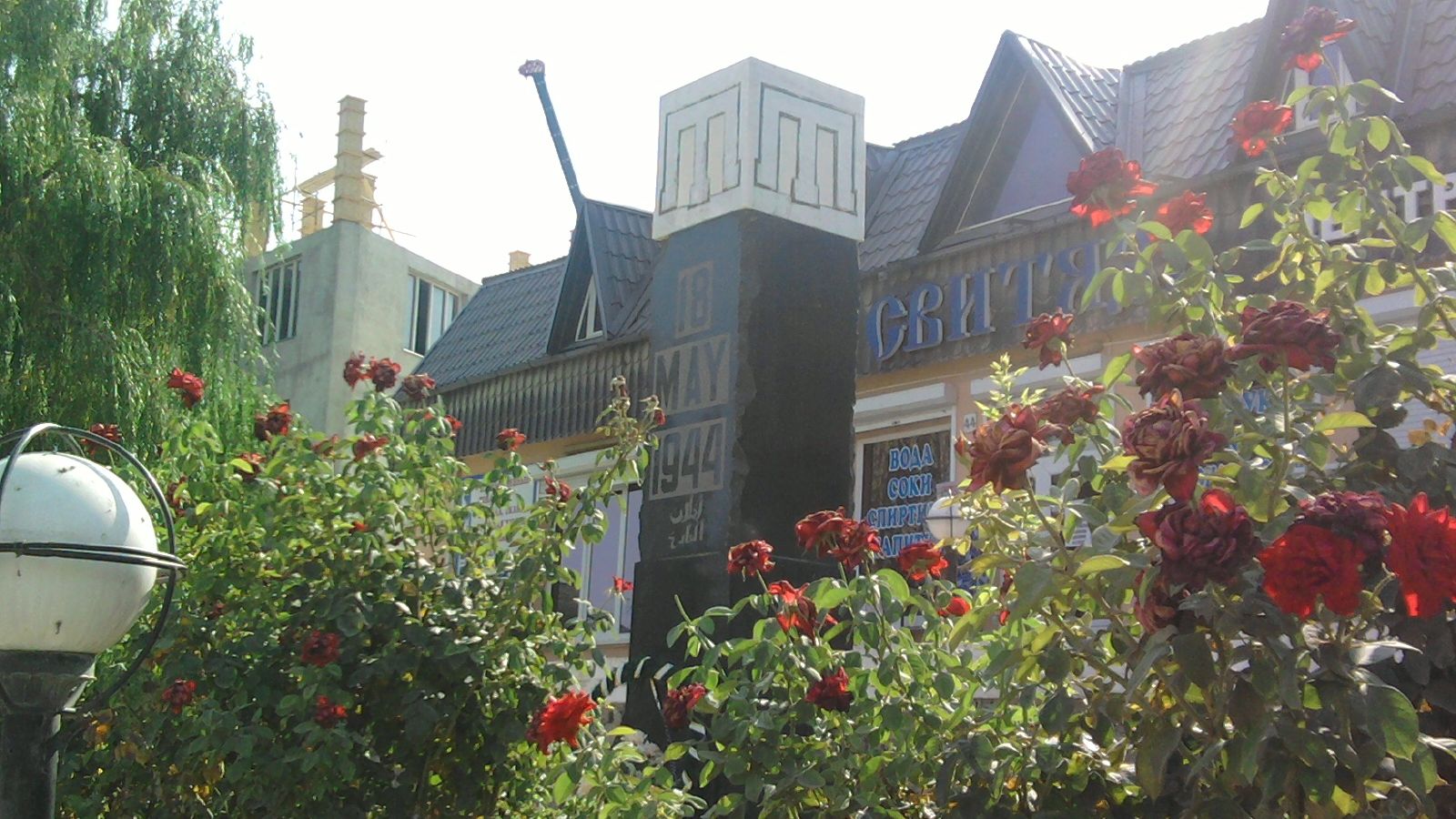
- Hero image source by Lystopad / openverse, by-sa.