

On a Wednesday night in 2006, a hitman closed the curtains in the bedroom of Susan Kuhnhausen, a perfectly normal 51-year-old nurse living in the suburbs of Portland, Oregon. He melted into the shadows to wait for her, his murder weapon in hand. Soon, he assumed, he’d be fifty thousand dollars richer.
But Susan Kuhnhausen proved to be no ordinary hit. By morning, her would-be killer was dead. Not just dead, but bloody, bruised, and strangled. This supposedly defenseless nurse had killed a dangerous criminal with her bare hands.
And everyone, including Susan, would be horrified to learn who’d hired the hitman: the person who swore to love and protect her, her husband.
Key Takeaways
- Susan Kuhnhausen, a nurse, killed a hitman sent by her husband in 2006.
- Susan’s husband, Mike, hired Edward Haffey to kill her for financial gain.
- Susan used self-defense techniques learned from work and her father to fight back.
- Mike was sentenced to ten years in prison for conspiracy to commit murder.
- Susan took extensive measures to ensure her safety after the attack.
The Love Story
The woman who would later kill her own hitman started life as an ordinary girl. Her parents divorced when she was in the second grade, and the family bounced around the desert southwest throughout her childhood. She later admitted that her parents failed to teach her what a healthy relationship looked like.
Instead, her father, a carpenter, taught her how to defend herself. In one lesson, he explained that if you need to attack someone with a hammer, make sure to use the claw end, because it will do more damage.
When she grew up, Susan became a registered nurse and moved to Oregon in the early 1980s. Once settled in the Portland area, she began to think about romance. Susan was a large woman (5 foot 7 and 260 pounds) and she wanted a man who could appreciate that. In a personal ad for the local paper, she described herself as “33, overweight but not over life, seeks [single man] who wants more out of a relationship than just ‘slender.’”
The man who responded was 39-year-old Mike Kahnhausen, who charmed her with philosophical phone calls and outings to the local garden. Before long, the couple was driving to Reno for a wedding ceremony in a casino.
From the outside, they seemed like a perfectly ordinary couple. Mike worked as a janitorial supervisor for Oregon Entertainment, which describes itself as an “adult lifestyle company.” Susan was an Emergency Room nurse for Providence Portland Medical Center. Since the ER sees people from all walks of life, including criminals, Susan was required to take training on de-escalation and self-defense techniques.
As the years wore on, Susan began to realize that her husband had a dark side. She later said he suffered from anxiety and abandonment issues, along with a pessimistic outlook on life. He never took her out on dates anymore and if she tried to kiss him, he burped in her face.
But Michael went beyond just being an absolute bummer of a husband. He demanded to know where she went and searched their bank statements for purchases he considered unsatisfactory. Susan had seen the results of domestic abuse at work and worried that if she didn’t leave soon, the situation could turn violent. Little did she know, it would turn violent anyway.
After seventeen years of marriage, Susan requested a temporary separation from Mike. She kept their house and he moved in with his father. After about a year, Susan presumably realized that her life was much better without a suspicious buzzkill in it, because she filed for divorce. But as it turned out, that was the most dangerous thing she could have done.
Studies of men who kill their partners are still relatively new, and a lot of work still needs to be done. But what is undeniable is that leaving an abusive man is very dangerous. In fact, out of all women who are murdered by intimate partners, up to 75% died after leaving or attempting to leave.
Mike Kahnhausen didn’t exactly fit the image as a potential murderer, but there were warning signs. In an eleven question lethality test, the best current predictor of whether a man will murder his partner, Susan would have found red flags. Pessimistic outlook on life? Check. Recent separation? Check. Recent unemployment? Check. Mike had lost his job at Oregon Entertainment during their year apart.
But there were also practical reasons for killing Susan. Together, they owned a house worth about three hundred thousand dollars. If she died while they were still married, that money would be his.
All Mike needed was a plan. Luckily, he just so happened to know someone familiar with murder. And as it turned out, that person had no problem going back into the business.
The Hitman
To say Edward Dalton Haffey had a checkered past would be an understatement. He grew up in an upper-middle-class family, but quickly squandered any advantages he’d had by getting really into drugs. Although he sampled liberally, his most used substance was cocaine and his best seller was methamphetamine.
In 1991, Haffey got into a fight with his girlfriend, Georgia Lee Dutton. She apparently didn’t care for his meth cooking partner and wanted to break up. The other drug dealers thought she might talk to the police, so Haffey agreed to lure his ex-girlfriend into a car so she could be assaulted and strangled by his buddies.
However, their plan backfired when the police found her decomposed body in the river. In 1994, Haffey pled guilty to conspiracy to commit aggravated murder and served nine years in prison. When he got out in 2003, he applied for a job at Adult Fantasy Video, a subsidiary of Oregon Entertainment. Mike Kahnhausen hired him to mop the floors.
To Mike, the 59-year-old Vietnam veteran must have seemed like a hardened ex-con with connections to the criminal underworld. In addition to the murder charges, he’d had numerous convictions for drug possession, robbery, and possession of burglary tools. Mike offered him fifty thousand dollars to kill his wife.
Ed Haffey accepted.
The Hit
On September 6, 2006, Susan Kuhnhausen clocked out of the emergency room as normal. Perhaps reveling in her new freedom, Susan stopped at a local hair salon before heading home, finally pulling into the driveway at about 6:30.
As usual, Susan entered through the back door. In the mudroom was the first sign of something unusual—there was a note from Mike by the microwave. It said: “Sue, haven’t been sleeping. Had to get away—Went to the beach. Luv, ME.”
Susan unlocked the back door and disarmed her security system. Then she walked to the front door, where she checked the mail. After flicking through the envelopes, she kicked off her shoes and headed down the hall into her bedroom, planning to change out of her work scrubs.
Now there was something even stranger: it was dark in the bedroom. Susan wondered if she’d forgotten to open her curtains in the morning, but that didn’t seem like her.
That was when a man stepped out from behind the bedroom door.
He was taller than her, but not by much. He wore Dockers, a blue-striped shirt and a ponytail that was tucked into a tan baseball cap. He’d pulled the brim low over his eyes and the shadows across his face almost looked like a mask.
Watch The Project Briefing
Open Video
Video Briefing
A Hitman Came for Susan Kuhnhausen. He Didn’t Survive.
But what terrified Susan more than anything were his hands. He wore yellow rubber gloves, the kind used for washing dishes. In one hand was a red and black hammer.
As the first blow from the hammer crashed into the side of her head, Susan remembered the self-defense lessons from work. Instead of running, she got closer, knowing the force of his swings had less power close to his body. A second blow collided with her left temple, and pain exploded across her skull. Susan barely registered it. Her whole body was flooded with adrenaline.
Hoping to push him over, Susan body-slammed the hitman into the wall. As they struggled, he said, “You’re strong.”
It was those two words, the only thing he said to her that night, that convinced Susan that the man was there to kill her. He hadn’t asked for money, or jewelry, or drugs; anything else that a robber might want. It was also the way he’d said it: not scared, but excited. As if her strength would make this more fun.
Susan wrestled the hammer away from the man and swung for his head, making sure to use the claw end like her father had taught her. She hit him three or four times before he managed to get the hammer back.
Susan grabbed his throat and squeezed. “WHO SENT YOU HERE?” she yelled.
The hitman didn’t answer. His face turned red, then purple, and then blue. Susan hesitated. She was a nurse. It was her job to preserve life, not take it. She didn’t want this man’s blood on her conscience.
Susan let go of her hitman and ran for the door. She only made it a few steps into the hallway before he grabbed her, spinning her around to punch her in the face. Susan fell to the ground. Her eyes darted to the phone, but she knew there was no way to reach it. Then she looked up to a sight that would haunt her forever.
The hitman was standing over her, the hammer coiled back in his fist for a final, deadly blow. Susan realized that she could die, right here on her hallway floor. And she refused to go down without a fight.
Susan dragged the hitman to the ground with a strength only possible in near-death experiences. She had no weapons, so she became a weapon by biting anywhere that she could reach. She hoped the pain would make him drop the hammer. She hoped that if she died, the police would use bite-mark analysis to identify her killer. Her hands scrambled along his pockets, hoping for an ID or keys or a comb that she could throw under the furniture as proof the man had been there. She didn’t want her murder to go unsolved.
Susan hooked her leg over the attacker, pinning him to the floor. She crawled on top of his back and put an arm around his neck, choking him. “TELL ME WHO SENT YOU HERE AND I WILL CALL YOU A FUCKING AMBULANCE!” she yelled, loosening her hold so he could talk.
As soon as he could breathe, the hitman growled and bucked, trying to throw her off. Susan knew that if he broke free, he would kill her.
Susan tightened her hold on her hitman’s neck, watching again as his face turned red, then purple, then blue. This time, she didn’t let go until the man was still.
Who the Bleep Did I Marry
A little before seven o’clock in the evening, a neighbor heard frantic knocking on her door. She opened it to find Susan Kuhnhausen covered in blood and holding a claw hammer. Susan calmly explained that they needed to call 911.
“She says call an ambulance for the guy. He may be dead,” the neighbor told the operator.
Police arrived shortly afterwards. Susan asked if the man was dead. The police told her that he was.
Susan didn’t revel in her victory. Instead, she wondered who the man had been. She wondered if there was someone out there, a parent, a spouse, a child, who would mourn him. But she didn’t regret her decision to kill him. It was him or her. She chose herself.
The police initially ruled the incident to be a burglary gone wrong and Susan was allowed into the house the next day to retrieve some personal items.
Understandably nervous about going back into the home where she’d been attacked, Susan asked a friend to come with her. When her friend went down into the basement to retrieve a suitcase, she found a black backpack that didn’t look familiar. It was that backpack that broke the case wide open.
It turned out that Ed Haffey had diabetes and, recognizing the importance of controlling his blood sugar during a murder-for-hire, had brought along some diabetes pills and a bottle of chocolate syrup. Since he was bringing a bag anyway, he’d also thrown in $200 cash, his pay stub from Adult Fantasy Video, and his daily planner. The police quickly noticed that an entry for September 4th read “Call Mike” and a manila envelope also found in the backpack had Mike Kuhnhausen’s phone number.
Police showed up at Mike’s last known address, his father’s house, where he’d left a suicide note before fleeing. With the help of a police bulletin, officers caught up with him a few days later. Mike Kuhnhausen was arrested for conspiracy to commit murder.
At first, Mike tried to play innocent. But in addition to failing to kill his wife, his hired hitman had failed to keep quiet about it. Perhaps sensing the job would be more than he could handle, Haffey had asked around for a hitman’s assistant. One prospective candidate had even met with Mike as part of a kind of job interview.
He turned down the offer, but was happy to testify to the police about the meeting. Also, Haffey had bragged about the payoff to his cocaine dealer mere hours before the job (an autopsy revealed that Haffey had been very high during the crime).
Mike pleaded guilty and was sentenced to ten years in prison. Despite remarks that this feels low, it is actually quite par for the course for the attempted murder of a romantic partner. A 2021 report from the United States Sentencing Commission lists the median sentence for murder at 198 months, or about sixteen and a half years in prison. Ten years for conspiracy to commit murder seems fairly average.
This, of course, was little consolation for Susan, who was convinced her husband would try to finish the job. The fact that he was in prison just meant he had more access to criminals who might take him up on becoming hitman number two. So Susan embarked on a second fight to save her life: make sure it could never happen again.
Her first move was to drain Mike’s bank account so he could never afford another hitman. In 2008, a jury voted 11 to 1 that her husband owed her one million dollars for emotional distress for the attempt on her life. Susan knew she would never see the full amount, but that wasn’t the point.
No longer able to feel safe in the home where she’d been attacked, she moved to a new house and installed a state-of-the-art alarm system, this time with a code that wasn’t her wedding anniversary. She paid to have decorative gravel installed on all sides, so that she could always hear approaching footsteps. She also, unsurprisingly, continued the divorce proceedings.
When Mike became eligible for parole in 2014, Susan did everything in her power to make sure his parole was denied. Upon discovering that the process was complex and confusing, she teamed up with a victims’ rights organization to create an app that streamlined the process. But as it turned out, Susan wouldn’t have to worry about her husband leaving prison. On June 13th, 2014, Mike Kuhnhausen died of cancer while in prison.
Conclusion
In the years since her ex-husband’s death, Susan has continued to be the same confident, caring person she was before, albeit with a lot more media attention. She appeared on the TV shows “I Survived” and “Who the Bleep Did I Marry,” as well as local news networks as part of her victims rights work.
But the man she had killed that night continued to weigh on her, even after Haffey’s family reached out to confirm there were no ill feelings. She hadn’t wanted to take his life. She wished he and her husband had different choices, ones that didn’t lead to that darkened bedroom in 2006.
Susan didn’t feel like a hero, even though she was often called one. It didn’t feel right to be called a hero for killing someone. She and her co-workers did much more heroic things in the ER every day, in her opinion. But yet, the remarks kept coming.
It wasn’t until her boss explained something to her that it made sense. He told her that she wasn’t called a hero for killing someone. Susan Kuhnhausen is a hero because she is the living proof that one day, if a hitman comes for us, we might survive too. Just like she did.
Key Takeaways
- Susan Kuhnhausen, a nurse, killed a hitman sent by her husband in 2006.
- Susan’s husband, Mike, hired Edward Haffey to kill her for financial gain.
- Susan used self-defense techniques learned from work and her father to fight back.
- Mike was sentenced to ten years in prison for conspiracy to commit murder.
- Susan took extensive measures to ensure her safety after the attack.
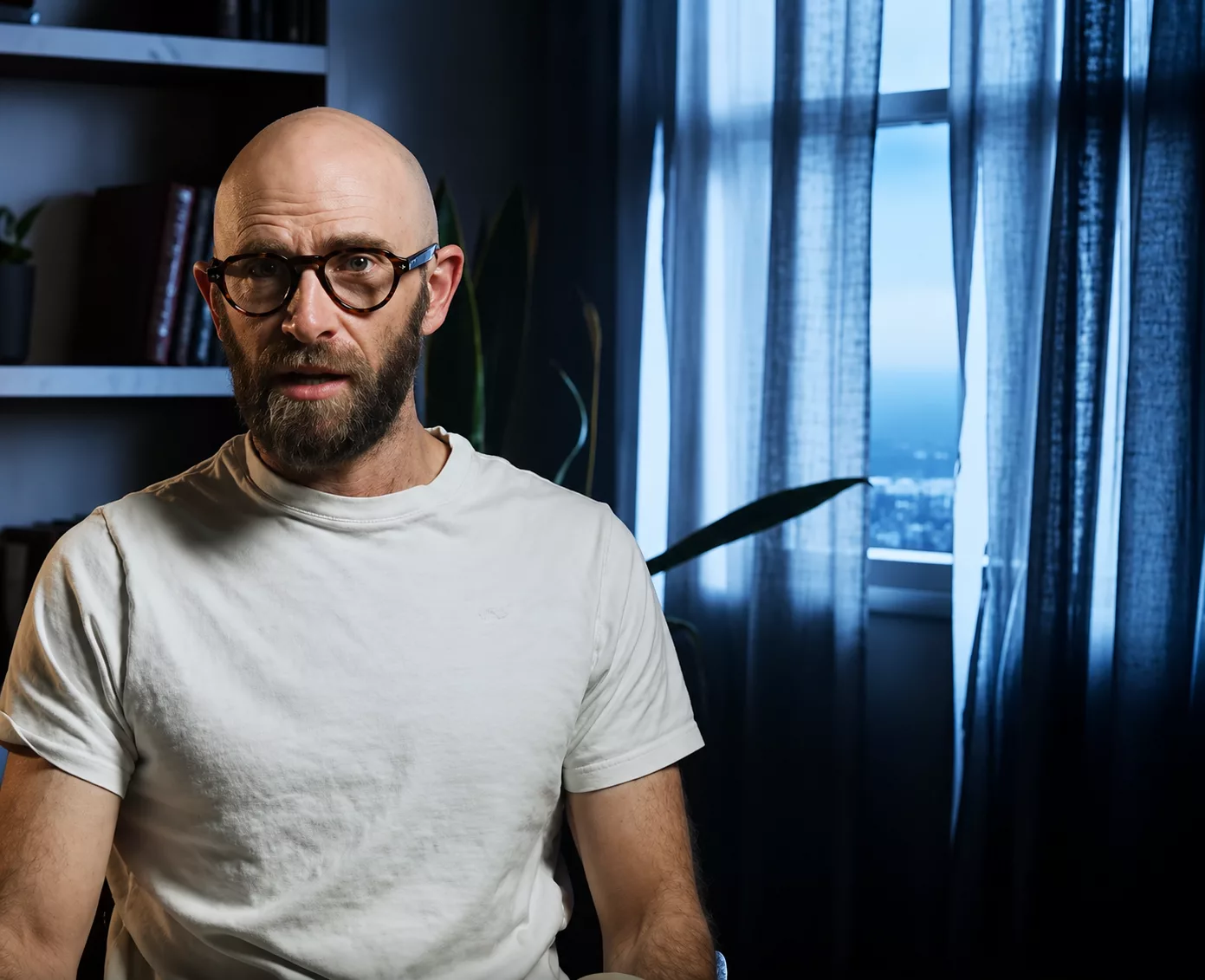
Simon Whistler
Simon Whistler is one of YouTube's most prolific documentary presenters, known for calm, authoritative deep dives into true crime, disappearances, and the world's most enduring unsolved cases. Into the Shadows is his companion archive for the cases he can't stop thinking about.
Frequently Asked Questions
Who was Susan Kuhnhausen?
Susan Kuhnhausen was a 51-year-old nurse living in the suburbs of Portland, Oregon, who killed a hitman sent to assassinate her.
What happened to the hitman Susan Kuhnhausen killed?
The hitman was found dead, bloody, bruised, and strangled by Susan Kuhnhausen.
Who hired the hitman to kill Susan Kuhnhausen?
Susan Kuhnhausen’s husband, Mike Kahnhausen, hired the hitman to kill her.
What was Susan Kuhnhausen’s background?
Susan Kuhnhausen grew up in the desert southwest, learned self-defense from her father, and became a registered nurse in Oregon.
How did Susan Kuhnhausen meet her husband?
Susan Kuhnhausen met her husband, Mike Kahnhausen, through a personal ad in the local paper.
What was the motive behind Mike Kahnhausen hiring a hitman?
Mike Kahnhausen wanted to kill Susan to inherit their shared house worth about three hundred thousand dollars.
What was the hitman’s background?
The hitman, Edward Dalton Haffey, had a criminal past involving drugs and murder, and had previously served time in prison.
How did Susan Kuhnhausen defend herself against the hitman?
Susan Kuhnhausen used self-defense techniques she learned at work and from her father, including using a hammer and choking the hitman.
What happened to Mike Kahnhausen after the failed assassination attempt?
Mike Kahnhausen was arrested for conspiracy to commit murder and sentenced to ten years in prison.
How did Susan Kuhnhausen ensure her safety after the attack?
Susan Kuhnhausen moved to a new house, installed a state-of-the-art alarm system, and paid for decorative gravel to hear approaching footsteps.
Sources
- Original Into the Shadows video: A Hitman Came for Susan Kuhnhausen. He Didn’t Survive.
- Hero image source by Another Believer / openverse, by-sa.