“Scientific racism.” Eugenics. Misogyny. Ideas that, in any truly modern and civilized society, should be relegated to the dustbin of history.
Yet for years, Stefan Molyneux managed to amplify these themes, parlaying them into a platform that brought him notoriety, wealth, and a fiercely loyal, cult-like audience. He styled himself as a champion for those who felt marginalized by mainstream culture, people convinced they were being singled out or dismissed as “conspiracy theorists” and every other “-ist” under the sun.
Today, we’re going to explore the story of Stefan Molyneux, guru of the alt-right, advocate of libertarian thought, and a king of controversy.
Key Takeaways
- Stefan Molyneux built a cult-like following through Freedomain Radio, evolving from libertarian philosophy to promoting eugenics, Holocaust denial, and white nationalism.
- Molyneux’s ‘deFOOing’ concept encouraged followers to sever family ties, prompting cult warnings after an 18-year-old left home citing his advice.
- The Christchurch mosque shooter had donated to Freedomain Radio and consumed Molyneux’s far-right propaganda before killing 51 worshippers in 2019.
- Major platforms including PayPal, YouTube, and Twitter banned Molyneux for hate speech, though he continues distributing content through alternative sites.
- Molyneux platformed white nationalists like Jared Taylor and David Duke while promoting conspiracy theories including ‘white genocide’ and anti-feminist rhetoric.
Canada and Career
Stefan Basil Molyneux was born in Ireland on September 24, 1966. His family relocated several times, first to London and then, when he was 11, to Canada. As a child, Molyneux appeared bright and well-rounded. After secondary school, he initially studied theatre at York University, performing at Theatre Glendon while also joining the campus debating society, an early sign of his appetite for contentious ideas.
He later pivoted from the arts to academia, earning a bachelor’s degree in history from McGill University and a master’s from the University of Toronto.
In the 1990s, Molyneux and his brother Hugh founded Caribou Systems Corporation, an environmental database software firm that they eventually sold in 2000. With that exit, Molyneux turned again to a new arena, media. Four years later, he launched “Freedomain Radio,” one of the early podcasts funded entirely by listener donations. Subscribers contributed anywhere from $5 to $100 per month in exchange for varying levels of access to Molyneux and his self-styled “teachings.”
At first, the show revolved around relatively benign themes: philosophy, libertarianism, atheism, and anarcho-capitalism, or the belief that a stateless society governed purely by free markets and voluntary exchange could replace centralized governments. Over time, however, Molyneux’s content drifted into more troubling territory. He began promoting pseudo-therapeutic ideas, such as the dangerous claim that mental illness isn’t real.
Larger donors were even offered private “therapy” sessions with him which amounted to unqualified advice that only risked harming people who needed genuine professional help. Today, he has released thousands of podcasts, each one seemingly more controversial than the last.
Conspiracy and Controversy
As Molyneux’s profile rose within libertarian circles, he attracted the attention of prominent figures who shared his ideology. He began collaborating with many of them, inviting like-minded guests onto his podcast and contributing to their platforms in turn. Among his new associates was Lew Rockwell, the libertarian publisher and right-wing activist who founded the Mises Institute in Alabama, an organization devoted to promoting Austrian economics and related ideas. Molyneux wrote articles for Rockwell’s website, published his own books, and even served on the Mises Institute’s think tank.
By the early 2010s, his reach extended even further. He appeared regularly on controversial right-wing programs such as “On the Edge,” “Adam vs. The Man,” and Alex Jones’s “InfoWars.” Whether these alliances influenced his evolution or merely gave him a larger stage with the freedom to truly speak openly is unclear. Regardless, it was around this time that Molyneux’s views, and ego, would start reaching new extremes.
On his personal website, he likened himself to Thomas Jefferson and Aristotle, casting himself as a visionary thinker far ahead of his time. By 2016, he was publicly claiming credit for shaping two of the decade’s biggest political shocks: the Brexit vote and the U.S. presidential election. He boasted that his podcast was the number one philosophy show in the world, amassing more than 600 million downloads and, by implication, wielding influence greater than almost anyone else online.
These claims were, at best, unverified, yet they circulated among his followers and even surfaced during his 2013 and 2014 appearances on the Joe Rogan Experience. By then, though, Molyneux had already shifted focus. Once devoted to philosophy and libertarian theory, his content veered into conspiracy territory, dismissing climate change as a hoax and, increasingly, echoing ethno-nationalist talking points.
From there, it was a short slide into promoting even more toxic ideas, including Holocaust denial.
Meanwhile, on his own show, Molyneux began platforming openly extremist guests, most notably white nationalists such as Peter Brimelow and Jared Taylor. Among his most infamous connections was David Duke, the former Grand Wizard, or leader, of the Ku Klux Klan. On YouTube and other platforms, Duke and Molyneux repeatedly signaled approval of each other’s views, amplifying one another’s audiences. Molyneux also gave airtime to South African activists promoting the “white genocide” conspiracy theory. This is the unfounded claim that immigration, racial integration, and eventual outright genocide form part of a global plot to eradicate white people. He even extended that narrative into pop culture analysis, at one point insisting that Star Wars: The Last Jedi was an allegory for the coming extinction of whites. A connection so far-fetched that even when he explained it, few could follow his logic.
Molyneux’s rhetoric grew steadily more extreme. He began openly endorsing ideas like eugenics and “scientific racism”, the pseudoscientific philosophy claiming that intelligence, ability, and moral worth differ inherently by race. In this framework, Black, Latino, and other ethnic minorities are cast as intellectually inferior purely because of skin color, while white people are framed as the pinnacle of human achievement. Such beliefs have historically been invoked to justify atrocities ranging from the transatlantic slave trade to South African apartheid.
Molyneux himself became an apologist for those very systems, arguing that apartheid was less about racism than about “protecting” whites from supposedly violent Black South Africans. In the U.S. context, he has blamed police shootings of Black men not on racism or systemic inequities but on a “rap culture” that he claims fosters self-destructive violence. His disdain extended to revered civil-rights and humanitarian leaders such as Martin Luther King Jr. and Nelson Mandela, whom he routinely vilified on his show.
Over time, Molyneux’s xenophobia widened further. He railed against non-white immigration into Europe, Canada, and the United States and attacked Muslims, transgender people, and women, all of whom he framed as existential threats to the supposed moral order of the straight, white, Christian male. Molyneux’s contempt extended to feminism, which he bizarrely recast as a form of socialism. In his telling, the movement had nothing to do with women’s empowerment or equal rights.
Instead, it was a sinister plot to suppress white birth rates. He even fixated on lipstick, arguing that it wasn’t a cosmetic tool at all but a devious sexual device, likening it to a man walking around an office with a massive artificial erection. On that basis, he said, lipstick should be banned from the workplace.
But these weren’t even his most extreme remarks about women. Speaking at a men’s-rights conference in Detroit in 2014, Molyneux reportedly declared that virtually all of the world’s violence could be traced back to women failing to raise their children properly. In his view, if mothers would simply pull their heads out of their rears and focus on parenting for “five years,” he claimed, war, addiction, promiscuity, and even sexually transmitted diseases would disappear completely.
In Molyneux’s worldview, women, and indeed every minority group, were at the root of society’s ills. Even history, he claimed, had been falsified to obscure this “truth.” He argued that World War II was triggered not by Nazi aggression but by the justified German fear of a Jewish-led communist plot that had already destroyed tens of millions of white Christians in Russia. The Holocaust, he said, was merely a slight overreaction resulting from this legitimate fear that had been grossly exaggerated by Jewish sympathizers.
Needless to say, such claims have been thoroughly discredited by credible scholars. Or to anyone with decency or common sense. Yet Molyneux’s ability to deliver long, confident monologues, mixing radical ideas with rhetorical sleight of hand, left many listeners unsure how to respond, and some were even swayed by his arguments. Despite his “facts” being easily debunked with minimal research, hundreds of thousands flocked to his show, creating a fervent, sometimes volatile fan base.
That following has fueled growing alarm over the way his content may be radicalizing impressionable young men around the world.
Watch The Project Briefing
Open Video
Video Briefing
Stefan Molyneux: The Guru of the Alt-Right
Cults and Culpability
By the late 2010s, Molyneux’s skill with rhetoric had earned him a fervent, almost cult-like following. With such extreme ideas circulating, it was inevitable that people began asking whether Freedomain Radio had actually crossed the line into being a cult. For longtime observers, though, those concerns had been simmering for more than a decade.
Back in the mid-2000s, Molyneux began promoting a concept he called “deFOOing.” A “Family of Origin,” or FOO, referred to the family someone grew up in, most commonly biological parents and siblings, but also adoptive relatives or any long-term caretakers. Whereas most people see their family of origin as a foundation of support, Molyneux painted it as a source of damage and limitation.
In his telling, a FOO was often toxic and should be considered optional, with all sense of familial obligation stripped away. Severing those ties, he argued, could be one of the healthiest choices a person could make. He and his longtime partner, psychotherapist Christina Papadopoulos, even said they had cut off contact with their own biological families.
Layered on top of this, Molyneux asserted that “good parents” don’t actually exist at all, that the very idea of good parenting is a social fabrication designed to trap people into loyalty and guilt.
Then, in 2008, stories began surfacing of young men actually acting on Molyneux’s advice. In one widely covered case from London, an 18-year-old named Tom Bell left home, leaving behind a note explaining that he was “deFOOing” and would no longer have contact with his family. Incidents like this prompted groups such as the British Cult Information Centre to issue warnings and publish articles labeling Freedomain Radio a cult, with Molyneux cast as its leader.
With that perception already in place, and amplified by his later remarks, the wider world grew increasingly wary of his rhetoric. By 2018, Molyneux had built a global following and teamed up with fellow alt-right Canadian YouTuber Lauren Southern for an international speaking tour. Controversy followed them abroad. In Australia, Molyneux openly downplayed the massacres committed against Aboriginal peoples, going so far as to argue the opposite: that European colonizers had done a “good thing” by stopping what he described as mass infanticide and rape supposedly carried out by violent and bloodthirsty Aboriginals.
A month later, Molyneux and Southern attempted to bring their tour to New Zealand but immediately ran into obstacles. Although the government allowed them entry, officials made clear their distaste for the pair’s rhetoric. The Auckland Council canceled the scheduled venue, citing public safety concerns and fears of violence.
A backup venue was quickly secured, but its owner soon followed suit and also canceled. In retaliation, a handful of local supporters vandalized the site. Yet these actions were dwarfed by the public backlash when roughly a thousand demonstrators marched through Auckland to celebrate the pair’s failure to secure a platform.
Local politicians spoke out openly, saying they wanted no part of such hate speech in their country. As tensions rose, peaceful protesters were subjected to online harassment, and Green Party co-leader Marama Davidson received rape and death threats.
The following year brought even greater tragedy. On March 15, 2019, 28-year-old Australian Brenton Tarrant—a self-identified white supremacist—perpetrated New Zealand’s deadliest mass shooting. During Friday prayers, he attacked two mosques in Christchurch, killing 51 worshippers and injuring dozens more, while livestreaming part of the massacre on Facebook. He was en route to a third mosque when police apprehended him.
Investigators later discovered that Tarrant had immersed himself in far-right propaganda, including the work of Stefan Molyneux, to whose Freedomain Radio he had previously donated.
This latest controversy proved to be the breaking point when even those profiting from Molyneux’s antics began to cut ties. In 2019, PayPal, his main source of donations, banned him over ties to antisemitic conspiracy theories. Soon after, Mailchimp, the service he used for newsletters, followed suit.
In 2020, YouTube launched a major purge of channels promoting hate speech, removing some 25,000 accounts, including white supremacists such as David Duke and Molyneux, who at the time reportedly had around 900,000 subscribers. Twitter also permanently suspended him, though his account was later reinstated after Elon Musk acquired the platform.
One might have expected these bans to end his reach. Yet through his personal website and alternative platforms like Odysee, a self-styled “free-speech” version of YouTube, Molyneux has continued uploading videos too inflammatory for mainstream outlets. Freedomain Radio still publishes episodes on Podbean, which syndicates them to larger podcast services such as Apple. And while his high-profile mainstream appearances have largely dried up, he still pops up on sympathetic shows, such as a July 2025 appearance on The Bob Murphy Show, where he discussed his evolving views on Christianity.
Although bans from major platforms have slowed the spread of his content, they haven’t stopped it. For many of his followers, Molyneux remains a guru, even a misunderstood visionary. But the damage inflicted by figures like him is hard to overstate. With a handful of provocative ideas, many of which he may not even fully believe in himself, Molyneux has seeded misinformation and resentment for profit.
Outrage, emotional extremes, and controversy have become his business model, and unless stronger measures are taken, men like him will continue to radicalize the impressionable, causing harm that lingers for years.
Key Takeaways
- Stefan Molyneux built a cult-like following through Freedomain Radio, evolving from libertarian philosophy to promoting eugenics, Holocaust denial, and white nationalism.
- Molyneux’s ‘deFOOing’ concept encouraged followers to sever family ties, prompting cult warnings after an 18-year-old left home citing his advice.
- The Christchurch mosque shooter had donated to Freedomain Radio and consumed Molyneux’s far-right propaganda before killing 51 worshippers in 2019.
- Major platforms including PayPal, YouTube, and Twitter banned Molyneux for hate speech, though he continues distributing content through alternative sites.
- Molyneux platformed white nationalists like Jared Taylor and David Duke while promoting conspiracy theories including ‘white genocide’ and anti-feminist rhetoric.
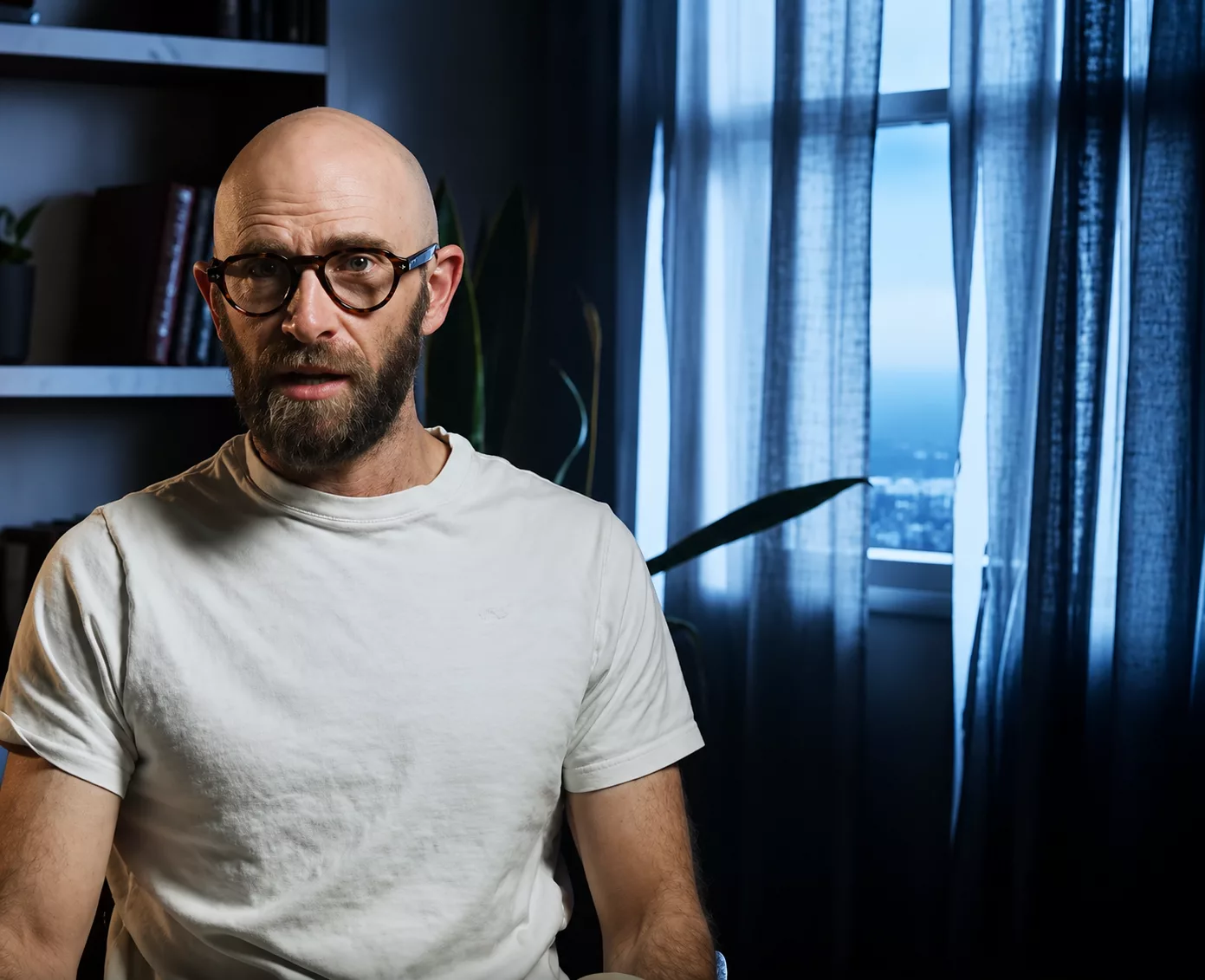
Simon Whistler
Simon Whistler is one of YouTube's most prolific documentary presenters, known for calm, authoritative deep dives into true crime, disappearances, and the world's most enduring unsolved cases. Into the Shadows is his companion archive for the cases he can't stop thinking about.
Frequently Asked Questions
Who is Stefan Molyneux and what is he known for?
Stefan Molyneux is a Canadian podcaster and media personality born in Ireland on September 24, 1966. He is known as “the guru of the alt-right” and gained notoriety for promoting controversial ideas including scientific racism, eugenics, misogyny, Holocaust denial, and conspiracy theories. He launched “Freedomain Radio” in 2004, one of the early podcasts funded entirely by listener donations.
What was Freedomain Radio and how was it funded?
Freedomain Radio was a podcast launched by Stefan Molyneux in 2004, four years after he sold his environmental database software firm Caribou Systems Corporation. It was one of the early podcasts funded entirely by listener donations, with subscribers contributing anywhere from $5 to $100 per month in exchange for varying levels of access to Molyneux and his self-styled “teachings.”
What is “deFOOing” and why did it raise concerns about Molyneux’s following being cult-like?
“DeFOOing” was a concept promoted by Molyneux in the mid-2000s referring to severing ties with one’s “Family of Origin” (FOO). Molyneux painted families as toxic sources of damage and limitation, arguing that familial obligation should be stripped away and that “good parents” don’t actually exist. In 2008, cases emerged of young men actually acting on this advice, including an 18-year-old named Tom Bell who left home with a note explaining he was “deFOOing.” This prompted groups like the British Cult Information Centre to label Freedomain Radio a cult.
What connections did Molyneux have to white nationalist figures and extremist ideologies?
Molyneux platformed openly extremist guests including white nationalists Peter Brimelow and Jared Taylor, and had connections to former Ku Klux Klan leader David Duke, with whom he repeatedly signaled approval of each other’s views. He promoted the “white genocide” conspiracy theory, endorsed eugenics and “scientific racism,” defended apartheid, and argued that World War II was triggered by German fear of a Jewish-led communist plot rather than Nazi aggression.
What happened with Molyneux’s 2018 speaking tour with Lauren Southern in Australia and New Zealand?
In 2018, Molyneux teamed up with fellow alt-right Canadian YouTuber Lauren Southern for an international speaking tour. In Australia, Molyneux downplayed massacres against Aboriginal peoples and argued European colonizers had done a “good thing.” In New Zealand, the Auckland Council canceled their scheduled venue citing public safety concerns, and a backup venue also canceled. Local supporters vandalized the site, while roughly a thousand demonstrators marched to celebrate their failure to secure a platform.
Green Party co-leader Marama Davidson received rape and death threats.
What connection was found between Molyneux and the 2019 Christchurch mosque shootings?
On March 15, 2019, Australian white supremacist Brenton Tarrant perpetrated New Zealand’s deadliest mass shooting, killing 51 worshippers at two mosques in Christchurch. Investigators later discovered that Tarrant had immersed himself in far-right propaganda, including the work of Stefan Molyneux, to whose Freedomain Radio he had previously donated.
What platform bans did Molyneux face and when?
In 2019, PayPal banned Molyneux over ties to antisemitic conspiracy theories, and Mailchimp followed suit. In 2020, YouTube removed Molyneux’s channel (which reportedly had around 900,000 subscribers) as part of a major purge of 25,000 accounts promoting hate speech. Twitter also permanently suspended him, though his account was later reinstated after Elon Musk acquired the platform.
How has Molyneux continued to distribute content after being banned from mainstream platforms?
Despite bans from major platforms, Molyneux has continued uploading videos through his personal website and alternative platforms like Odysee, a self-styled “free-speech” version of YouTube. Freedomain Radio still publishes episodes on Podbean, which syndicates them to larger podcast services such as Apple. He also still appears on sympathetic shows, such as a July 2025 appearance on The Bob Murphy Show.
What extreme views did Molyneux express about women?
Molyneux expressed numerous extreme views about women, including: recasting feminism as a socialist plot to suppress white birth rates; fixating on lipstick as a “devious sexual device” that should be banned from the workplace; and declaring at a 2014 men’s-rights conference in Detroit that virtually all of the world’s violence could be traced back to women failing to raise their children properly, claiming that if mothers focused on parenting for “five years,” war, addiction, promiscuity, and sexually transmitted diseases would disappear.
What was Molyneux’s educational and early career background before media?
After secondary school, Molyneux initially studied theatre at York University, performing at Theatre Glendon and joining the campus debating society. He later earned a bachelor’s degree in history from McGill University and a master’s from the University of Toronto. In the 1990s, he and his brother Hugh founded Caribou Systems Corporation, an environmental database software firm that they sold in 2000.
Sources
- Original Into the Shadows video: Stefan Molyneux: The Guru of the Alt-Right
- https://gnet-research.org/2023/05/17/inside-the-cult-of-stefan-molyneux-a-historical-exploration-of-far-right-radicalisation-on-youtube/
- https://en.wikipedia.org/wiki/Stefan_Molyneux
- https://www.splcenter.org/resources/extremist-files/stefan-molyneux/
- https://dare.uva.nl/search?identifier=19501fc5-c5ac-45b5-b317-e41deb835ce2
- https://pure.uva.nl/ws/files/193050312/Inside_the_Cult_of_Stefan_Molyneux_A_Historical_Exploration_of_Far-Right_Radicalisation_on_YouTube_GNET.pdf
- https://freedomain.com
- https://www.youtube.com/@stefanmolyneuxx
- https://www.youtube.com/watch?v=5Xq_ZYB8rew
- https://player.fm/podcasts/Freedomain
- https://www.podchaser.com/podcasts/freedomain-with-stefan-molyneu-82402
- https://odysee.com/
- https://odysee.com/@freedomain:b
- https://www.forbes.com/sites/mattperez/2020/06/29/youtube-bans-white-supremacists-stefan-molyneux-richard-spencer-david-duke/
- https://www.nzherald.co.nz/nz/vandal-reportedly-targets-venue-after-it-cancelled-southern-and-molyneux-talk/DLKQ25WYHEPIU3EXDYOPQUBXK4/
- https://www.nzherald.co.nz/nz/violent-threats-made-against-peace-group-opposing-visit-of-controversial-canadian-pair-lauren-southern-and-stefan-molyneux/GB4ANONVOOP5VKWHRMNOBQTEFI/
- https://x.com/StefanMolyneux
- https://ctc.westpoint.edu/christchurch-attacks-livestream-terror-viral-video-age/
- https://en.wikipedia.org/wiki/Christchurch_mosque_shootings
- https://www.theguardian.com/lifeandstyle/2008/nov/15/family-relationships-fdr-defoo-cult
- https://www.rnz.co.nz/news/national/361341/green-party-co-leader-receives-rape-and-death-threats-on-social-media
- Hero image source by openverse, cc0.