
Despite the US Armed Forces still being segregated at the time, hundreds of thousands of African Americans enlisted to join the fight against the Axis, and served bravely in every theatre of the Second World War. However, despite their involvement in the war effort around the globe, a shocking 15% of all African American casualties in World War 2 came from just a single event back in their home country, an accident at a naval port in California.
An explosion of historic proportions, this disaster in Port Chicago became a turning point in the history of the US Navy, an event that exposed hazardous work conditions, false imprisonment, and the struggle for basic civil rights in the land of the free.
Conditions in Port Chicago
Located on the Suisun Bay in Northern California, construction on the Port Chicago Naval Magazine began shortly after the attacks on Pearl Harbor. The location on the US western coast was strategic in nature now that the country was at war with Japan, and it was intended to be a munitions hub for the Pacific Theatre as a whole.
Key Takeaways
- The Port Chicago explosion in 1944 was a pivotal event exposing hazardous conditions and racial discrimination in the US Navy.
- African American workers at Port Chicago faced inadequate training and unsafe working conditions, leading to a catastrophic explosion.
- The Port Chicago 50 were unjustly convicted of mutiny for refusing to work under dangerous conditions, sparking civil rights advocacy.
- The disaster and subsequent strike played a significant role in pushing the US Navy to desegregate its forces.
- It took until 2024 for the US Navy to officially exonerate the men involved in the Port Chicago strike, acknowledging judicial errors.
And within a year, it became exactly that. Torpedoes, bombs, bullets, naval mines, artillery shells, you name it. Basically, if it was explosive, by late 1942, it was being handled at Port Chicago, loaded onto heavy cargo ships that would deliver the weapons to their destinations overseas.
But underneath the buzz of productivity, there was a deep-seated feeling of resentment. You see, the majority of the munition handlers at Port Chicago were African American, but that wasn’t the only thing they had in common. At Naval Station Great Lakes, the Navy’s bootcamp, enlisted men were given the routine test on competence, creativity, and overall intelligence.
When it came to the African Americans that were tested, almost all of the ones who scored in the lower percentiles were sent to Port Chicago, while the ones who scored higher were sent elsewhere and generally spared from manual labor. This was the primary source for Port Chicago’s workers, which is why the magazine had such a high percentage of black men.
And not only were the workers that were sent here less educated than their peers on average, they were also given next to no training on how to properly handle munitions they would be working with, which, by the way, were live in many instances. Upon arrival to the port, there were two lectures on proper ammunition loading procedures, but no follow-up meetings or even informal exams were ever given to be sure that everyone had understood the instructions. There was a single sign with the safety regulations depicted, but it was only posted on a single pier and nowhere else on the entire site.
But this was no accident or oversight, it was absolutely intentional. The highest-ranking military official at Port Chicago was Captain Kinne, and he had been known to consider the workers to be unintelligent, unreliable, and incapable of remembering or understanding orders, and he allegedly didn’t bother posting the safety regulations elsewhere because he didn’t think the men would even be able to comprehend them.
Captain Kinne also had a need for speed. After assuming command at the port, he set up a chalkboard that kept track of and compared the various departments based on explosive tonnage loaded per hour. Kinne’s goal was to reach a benchmark of 9.1 tons per hour, a blistering pace considering the volatile cargo the workers were handling. There were even daily competitions to see which division could score the highest, clearly prioritizing speed over safety.
The International Longshore and Warehouse Union heard rumors about the unsafe practices at Port Chicago, and their leadership offered to help the situation by facilitating a trade-in of civilian men from other ports that experience and proper training, but the US Navy declined the offer, citing fears that the transfer would slow down productivity and open up the port to potential sabotage from civilians.
After brushing off these concerns, the Navy received yet another complaint, this time from Commander Paul B. Cronk, head of an explosives-handling unit in the Coast Guard. Cronk warned the Navy that conditions at Port Chicago were “ripe for disaster”, but these concerns were also pushed aside and Cronk eventually withdrew his complaint.
But things were so bad that you didn’t even need to be an explosives expert to know that the port was unsafe. For instance, when some pipes on a ship’s winch brake needed to be repaired, they hired Albert Carr, a local plumber, to come onto the base to fix it. Carr later recalled that despite this being the first and only time he visited the port, he felt it was highly unsafe and didn’t want to return, as he watched a worker accidentally drop an artillery shell several feet off of a platform onto the pier below, which thankfully didn’t detonate.
But such luck wouldn’t last forever, and it wouldn’t be long before things took an awful, inevitable turn.
Disaster Strikes
On July 13th, 1944, the cargo ship SS E. A. Bryan docked at Port Chicago. E. A. Bryan was already carrying 5292 barrels of oil, and was now going to receive around 10,000 tons of munitions before departing across the Pacific.
Over the course of the next four days, various types of explosives were lowered into her cargo holds. 40 mm shells were packed in cargo hold No.5, cluster bombs into No.4, and thousand-pound bombs into No.3. But it was what was being loaded into No.1 and No.2 that posed the greatest danger. No.1 was receiving a shipment of 650-pound incendiary bombs, which were live, and No.2 was being loaded with anti-submarine charges that were filled with torpex. Torpex is an explosive powder, 50% more explosive than TNT, and many times more volatile, as it is more sensitive to pressure changes and external shock.
On the pier were 16 rail cars containing hundreds of combined tons of various explosives. In all, with the ship and the railcars combined, this small section of the pier contained an immense amount of explosive potential.
Right next to E.A. Bryan was the SS Quinault Victory, which was set to be loaded beginning at midnight on July 17th. Quinault Victory had previously been loaded with a partial cargo load of fuel, a type of fuel that was known to emit flammable vapors as it sat or jostled around on long trips. And the crane that was to begin loading it was the same one that had just been repaired by the plumber Mr. Carr a few days earlier.
To make the situation even worse, the crew that was to begin loading the ship was comprised of 102 men from Division Six, most of whom were fresh graduates from boot camp and had no experience in the pier. Lots of explosives, broken equipment, flammable vapors, untrained crews… it really was the perfect storm.
At 10:00 PM, the crew decided to get an early start on the loading, and began pulling explosives out of the railcars, which they reportedly had trouble doing so because the munitions there had been packed so tightly. But they would only work for a few minutes before disaster struck.
At 10:18, witnesses nearby reported hearing what they described as “a metallic sound and rending timbers” which was followed by a small explosion occurring on the pier, starting a fire. But there was no time to put this fire out, as just 5 or so seconds later, the flames reached the tightly packed explosives, and a monumental explosion erupted as everything on the pier ignited simultaneously.
The fireball that this explosion generated was so large that an Air Force pilot nearby described it as being 3 miles in diameter. Fragmentation, bits of wood, and pieces of molten metal were flung up to 12,000 feet in the air, a coast guard boat at the dock was launched 600 feet upriver and destroyed, the E. A. Bryan was annihilated, and the Quinault Victory was torn to pieces and sank.
Everything on the pier was all vaporized in an instant, the box cars, the rails, and the workers, and the ensuing rain of jagged pieces of glass and metal injured dozens more around the port. The force of the explosion was so immense that the University of California Berkely recorded its seismic activity as equivalent to a magnitude 3.4 earthquake.
As everyone in the port rushed onto the scene, they were met with a horrific sight. 320 men had been killed, and a further 390 had been injured. Of the men that had lost their lives, most had been so violently ripped apart by the blast that only 51 of their corpses could even be identified.
The Mutiny and Trial
Immediately following the explosion, munitions loading was temporarily put on pause and the worker’s divisions were reorganized into clean-up crews. Injured men were hospitalized, and several were evacuated to nearby military installations. But once the port was back in working order, everyone was told to go back to business as usual.
Watch The Project Briefing
Open Video
Video Briefing
Port Chicago Explosion
The workers were in shock. Nearly all of them had just lost close friends, and were nervous about the safety of the pier. Many of them submitted requests for a 30-day leave, often granted to sailors in the Navy that survive horrific accidents, but not a single request was approved. The 30-day leaves were approved, however, for all white officers involved, causing some serious discontent among the workers.
Later, it was revealed in a letter that the Navy Secretary had denied the leave because he thought that it was important for the men to quickly return to work before they could put up stubborn emotional barriers.
A few days after the incident, the Navy organized an official board of inquiry to investigate Port Chicago. The investigation was comprised of eyewitness interviews and a brief examination of the loading process by explosive experts. The given possible explanations for the blast were intentional sabotage, defective munitions, or human error.
Ultimately, it was decided that the exact cause could not be determined, though it was heavily implied that the workers were at fault. The report did mention a judge’s comment about how explosives handling should never be a competition, but the investigators failed to mention anything about inadequate training.
Generally, when a service member dies in active duty or an accident such as this, their family is given some sort of compensation, and in this case, the Navy asked Congress to provide the victim’s families with 5,000 dollars each. However, that number had to be negotiated down to 2,000 dollars upon the insistence of Representative John E. Rankin of Mississippi, who demanded the compensation be lowered once he learned that the majority of the deaths were African Americans.
Meanwhile, back at the port, Admiral Charleton Wright had arrived to ensure that such an accident would never again be possible. His changes to the process included bringing in two divisions of white men to work in rotation with the black men. The black workers were angered by this plan, as it involved no mention of desegregating the ranks and it appeared that they would be getting the more dangerous side of the labor once again.
On August 8th, just a few weeks after the explosion, 328 workers were marched toward the ammunition loading dock, when, in unison, they all refused to continue, stating that they were going on strike, as each and every one of them felt unsafe continuing work under the same conditions that had previously led to disaster.
Officers were called to order them to back to work, and after a stern lecture reminding them of their military duties, 70 split from the group and returned to their stations, but the rest still refused.
The remaining 258 were taken to a makeshift military prison and told that they would be held there until they agreed to continue working, but they all stated that they wouldn’t return unless major changes were implemented, as they feared another explosion.
The strike would continue for several days, until Admiral Wright decided to personally put an end to it. After marching the men to a nearby field, he told them that the ammunition they were supposed to be loading was desperately needed by American soldiers fighting in Saipan, and that if they continued to refuse to work, it would be treated as mutiny, which carried the death penalty as this was a time of war. He finished his speech by telling them that while loading ammunition might be dangerous, it’s not quite as dangerous as death by firing squad.
Faced with the threats of death, most agreed to return to work, but 50 held strong. These 50 were labeled as mutineers, and brought back to prison, with any identified as the “ring leaders” held in solitary confinement. One by one, the prisoners were interrogated in the presence of armed guards, and allegedly pressured to sign statements they didn’t necessarily agree with.
This group earned themselves the nickname the Port Chicago 50, and they were formally charged with mutiny in September, 1944. During the trial, several interesting things were revealed, including that one of the men being charged had never even loaded ammunition before. He was actually a fresh graduate, and only weighed 104 pounds.
All were found guilty, and though they fortunately weren’t given the death penalty as promised by Admiral Wright, they were all sent to prison with various sentence lengths, ranging from eight to twelve years.
All of this got the attention of the famous Thurgood Marshall, a lawyer at the time who would later go on to successfully argue for the famous Brown v Board of Education case before becoming an associate justice of the US Supreme Court.
With over a decade of experience fighting for civil rights, Marshall knew that the case reeked of racism, and was already preparing an appeal. Immediately after the verdict, Marshall sent a letter to the Navy Secretary, asking why only black men had been assigned the dangerous tasks of munitions loading, why they were forced to compete for speed, why they weren’t given leave, why they weren’t properly trained, and more. The Secretary basically responded by saying that Port Chicago had been predominantly black, so of course most of the munition loaders were black, and failed to address the majority of his questions.
After gaining written approval from all 50 men, Marshall brought their case before the Judge Advocate General of the Navy in Washington DC, with many arguments such as accusing the prosecution of misleading the jury on the definition of mutiny. The Navy agreed to reconvene, but only two men had their sentences reduced, one for inadmissible evidence, and the other for supposed mental incompetence. Finally, after Japan’s surrender and the official end of World War 2, public pressure and more appeals forced the Navy’s hand in releasing the majority of the Port Chicago 50, only continuing to hold 3 of them due to bad records they’d acquired while in prison. The 47 were released and sent on parole to work in post-war reconstruction, after which they were formally released from duty.
Seeking Justice
The treatment of the workers at Port Chicago was a glimpse into the widespread discrimination in the military at the time, and this event in particular was mentioned as a key motivator in the Double V campaign, a concept promoted by the Pittsburgh Courier that African Americans needed to use the war as a way to not only fight fascism abroad, but also racism at home.
The publicity from the Port Chicago disaster is also widely credited for pushing the US Navy into finally desegregating its forces, which it announced in February 1946.
By the early 1950s, not a single worker from Port Chicago was still being held or facing direct backlash from the strike, but that doesn’t mean they weren’t still feeling the repercussions. Many of them now had criminal records, and even many of those from the 258 that had originally refused to work but returned to duty had later been dishonorably discharged, meaning they were denied veteran’s benefits after the war.
It wasn’t until the 1990s that the story started to surface again in the public’s attention. It was at this point that a campaign led by 25 congressmen failed to have the Port Chicago 50 exonerated, a case that was largely hampered by the testimony of Gordon Koller, who had been an officer at Port Chicago, and was quoted as saying that the ones who continued working despite the danger were the real heroes, not the ones who went on strike.
In 1994, a Navy investigation officially declared that discrimination had indeed led to the high percentage of black ammunition loaders, but, finding no discrimination in the ensuing court trial, shut down another attempt from four California lawmakers who tried to get their records cleared.
It was around this time that a petition began gathering momentum aiming to grant the Port Chicago 50 a presidential pardon, and the group behind the petition was able to get the signature of Freddie Meeks, one of the few members of the 50 that was still alive. Meeks saw the petition as a way to get the story to a wider audience, saying, “I hope that all of America knows about it… it’s something that’s been in the closet for so long.”
But the other survivors refused to sign the petition, powerfully noting that a pardon is only required for someone who is guilty and seeks forgiveness, while their position was that there was nothing criminal about refusing to work in an unsafe environment.
Attempts to pardon or exonerate the Port Chicago 50 would continue for another two decades, and it wouldn’t be until July 17th, 2024, on the 80th anniversary of the explosion, that the US Navy would officially exonerate all remaining men involved in the strike, totaling 256 men. All dishonorable discharges were cleared, all criminal charges were erased, and the Navy admitted that there had been multiple judicial errors and that the men had tragically been denied several rights throughout their trial.
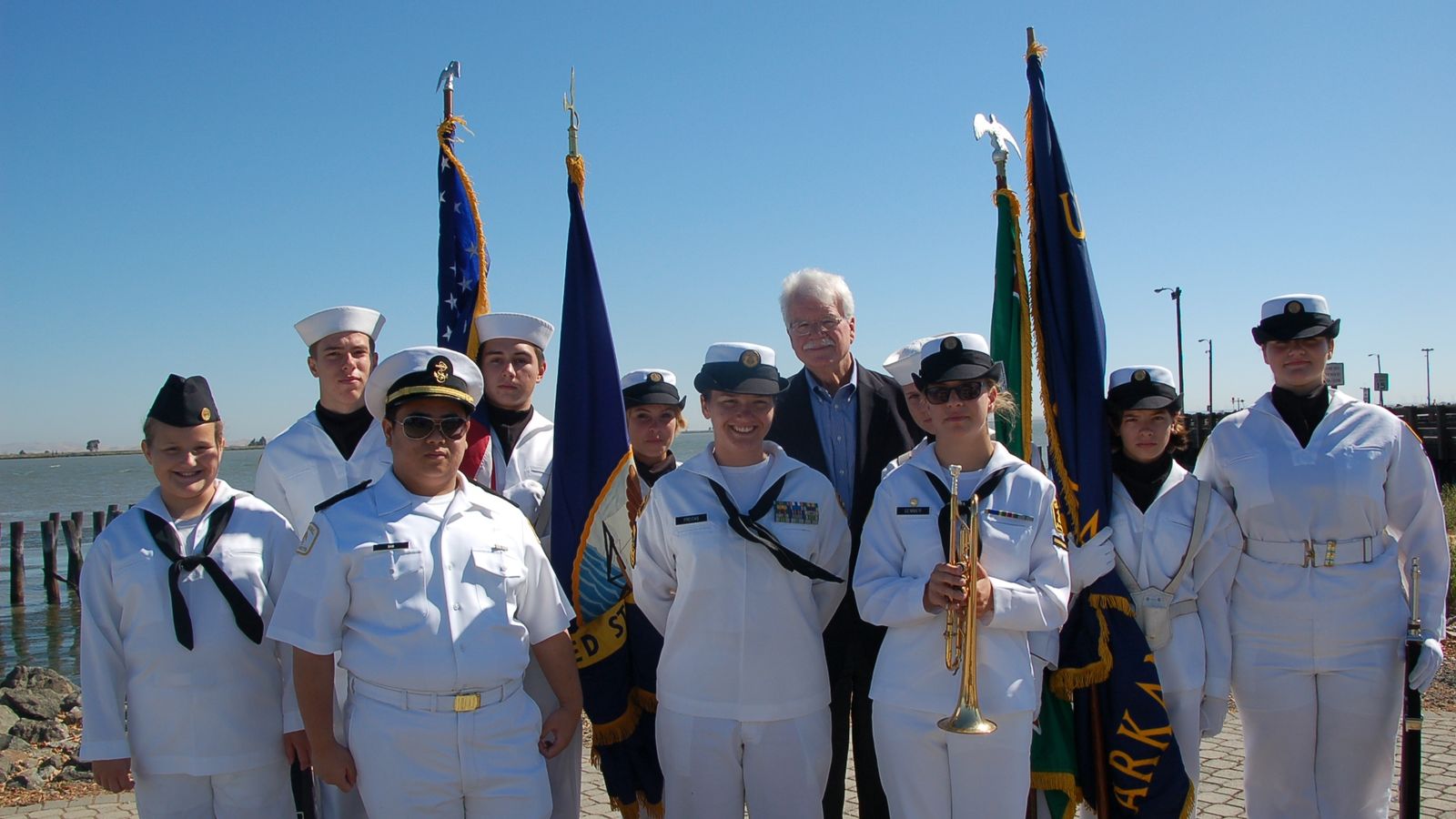
It was 8 decades too late to have a direct impact on the men’s lives and careers, but the legacy of the explosion will remain an eternal reminder of the mistakes of the past, and has been immortalized in a National Memorial in California.
Key Takeaways
- The Port Chicago explosion in 1944 was a pivotal event exposing hazardous conditions and racial discrimination in the US Navy.
- African American workers at Port Chicago faced inadequate training and unsafe working conditions, leading to a catastrophic explosion.
- The Port Chicago 50 were unjustly convicted of mutiny for refusing to work under dangerous conditions, sparking civil rights advocacy.
- The disaster and subsequent strike played a significant role in pushing the US Navy to desegregate its forces.
- It took until 2024 for the US Navy to officially exonerate the men involved in the Port Chicago strike, acknowledging judicial errors.

Simon Whistler
Simon Whistler is one of YouTube's most prolific documentary presenters, known for calm, authoritative deep dives into true crime, disappearances, and the world's most enduring unsolved cases. Into the Shadows is his companion archive for the cases he can't stop thinking about.
Frequently Asked Questions
What was the Port Chicago Explosion?
The Port Chicago Explosion was a massive explosion that occurred on July 17, 1944, at the Port Chicago Naval Magazine in California. It was one of the largest home-front disasters of World War II, resulting in the deaths of 320 men and injuring 390 others.
What were the working conditions like at Port Chicago?
The working conditions at Port Chicago were hazardous. African American workers were given minimal training on handling live munitions and were pressured to work at high speeds. Safety regulations were poorly communicated, and there was a lack of proper equipment and supervision.
What caused the explosion at Port Chicago?
The exact cause of the explosion could not be determined, but it was heavily implied that human error was to blame. The investigation also considered intentional sabotage and defective munitions as possible causes.
What was the response of the Navy to the explosion?
The Navy temporarily paused munitions loading and reorganized the workers into clean-up crews. They later resumed operations without addressing the safety concerns, leading to a strike by the workers.
What was the Port Chicago mutiny?
The Port Chicago mutiny occurred when 258 African American workers refused to return to work after the explosion due to unsafe conditions. They were held in a makeshift military prison, and 50 were charged with mutiny and sentenced to prison terms.
Who were the Port Chicago 50?
The Port Chicago 50 were the 50 African American sailors who were charged with mutiny for refusing to return to work after the explosion. They were sentenced to prison terms ranging from eight to twelve years.
What role did Thurgood Marshall play in the Port Chicago case?
Thurgood Marshall, a civil rights lawyer, took on the case of the Port Chicago 50. He argued for their appeal, highlighting the racial discrimination and unsafe working conditions they faced. His efforts led to the eventual release of most of the men.
When were the Port Chicago 50 exonerated?
The Port Chicago 50 were officially exonerated on July 17, 2024, the 80th anniversary of the explosion. The US Navy cleared all dishonorable discharges, erased all criminal charges, and admitted judicial errors in their trial.
What was the impact of the Port Chicago Explosion on the US Navy?
The Port Chicago Explosion exposed hazardous work conditions and racial discrimination within the US Navy. It played a significant role in pushing the Navy to desegregate its forces in February 1946.
What is the legacy of the Port Chicago Explosion?
The legacy of the Port Chicago Explosion serves as an eternal reminder of past mistakes and has been immortalized in a National Memorial in California. It highlights the struggle for civil rights and the dangers of racial discrimination.
Sources
- Original Into the Shadows video: Port Chicago Explosion
- Hero image source by George Miller / openverse, by.