Introduction
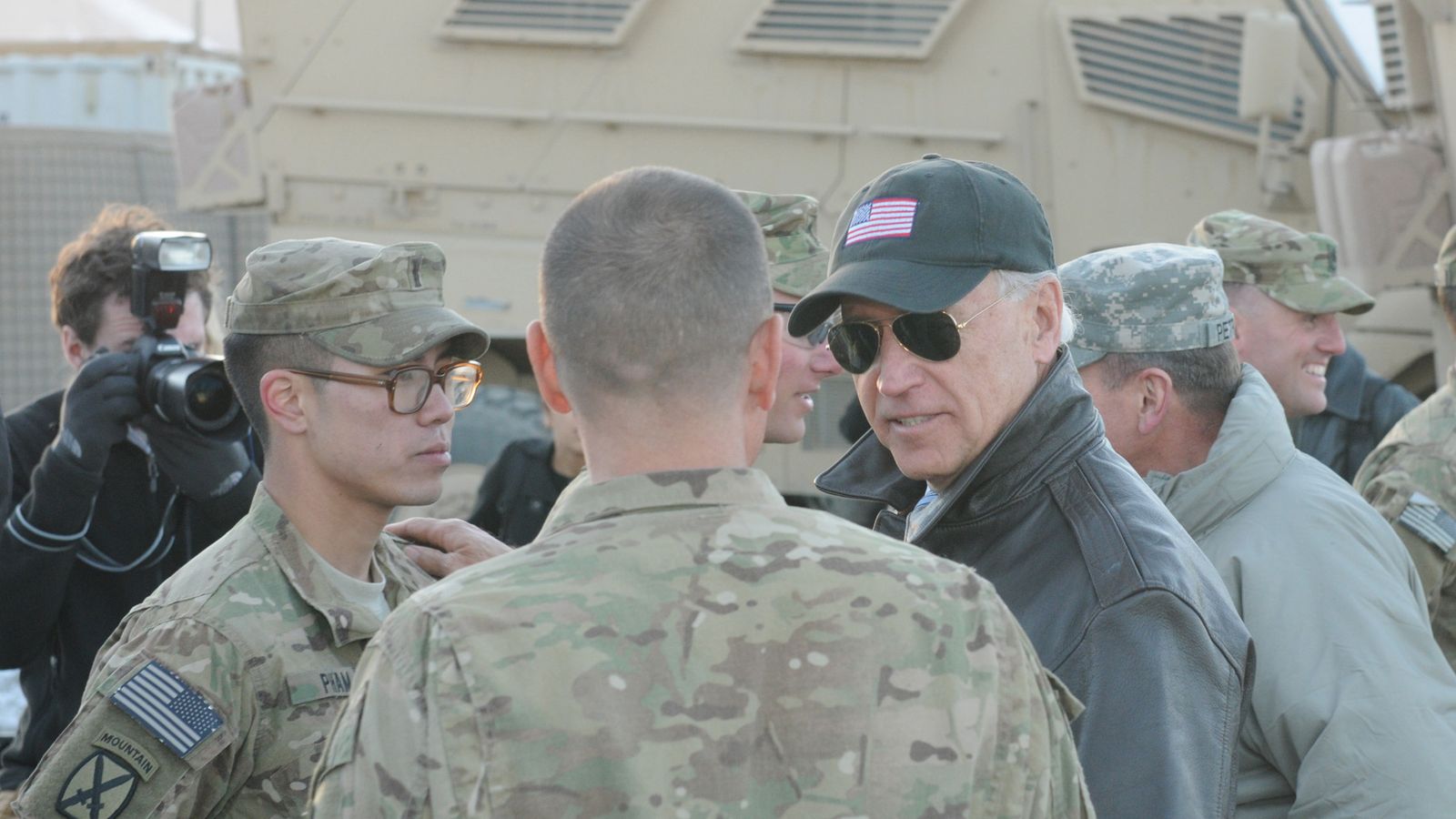
At just before midnight, local time, on August 30, 2021, Major General Chris Donahue boarded a C-17 Globemaster aircraft and issued his final command to American troops in Afghanistan: “Flush the force.” Within ten minutes, Donahue’s plane and the four others on the ground at Hamid Karzai International Airport took to the skies, presumed to have been carrying somewhere between 500 and 600 American troops. As they lifted off the ground and traveled out of Afghan airspace they marked the conclusion not only to almost 20 years of continual occupation of the country by American forces, but to the weeks-long dumpster fire of an evacuation that had heralded their leaving.
We’ve already explored the disaster that was the American withdrawal process, but today, we’re going to look at what came after. With Afghanistan effectively ceded by the Western world, it took almost no time at all for the entire nation to be brought squarely under the control of the Taliban, and since then, Afghanistan and its people have been embroiled in economic and humanitarian crisis. The Taliban appears to understand acutely that the United States has washed its hands of the whole Afghanistan affair, and with few outlets for relief left among the Afghan people, the situation there may only get worse.
The State of Affairs
In order to understand what came afterward, it’s important to understand both the speed of the US withdrawal from Afghanistan, and the disorganization and chaos that came with it. Originally slated for September 11, 2021, the American timeline was moved up less than two months from their new evacuation date, and withdrew suddenly from their long-held locations across the country—not least Bagram Air Base, which the US abandoned in the dead of night without informing Afghan security forces, leaving behind massive amounts of military hardware. Sensing the instability of their situation, the Afghan security forces essentially collapsed, and Afghanistan’s major cities fell to the Taliban basically unopposed.
Key Takeaways
- The Taliban swiftly took control of Afghanistan following the U.S. withdrawal, leading to severe economic and humanitarian crises.
- Women’s rights have been significantly curtailed under Taliban rule, with bans on education and employment.
- The Taliban’s governance is marked by harsh interpretations of Sharia law, including public executions and amputations.
- International aid to Afghanistan is complicated by the Taliban’s control, with countries sending goods instead of money.
- There is internal factionalism within the Taliban, with some leaders advocating for reforms to improve the country’s situation.
The US-backed Afghan President, Ashraf Ghani, fled the country, and the United States was forced to conduct haphazard evacuation flights, on an airfield that was at times swarmed with Afghans so desperate to flee the Taliban that many were documented falling from the exterior of US aircraft—where they had attempted to cling on for dear life, with little hope of their own survival. The civil and military leaders of the US, and of much of the world, were shocked by the speed of Afghanistan’s collapse, and in an effort to simply escape with as many lives intact as possible, the United States made no effort to oppose the Taliban from assuming full control of the country.
So, then…who are the Taliban? With a name that translates literally to “students” in the Pashto language, the Taliban are an organization of Sunni-Islamist hardliners originating in northern Pakistan during the 1990s. The Taliban have fought for control of Afghanistan for decades, and had ruled the country from 1996 to 2001 before maintaining an insurgency, mostly in Afghanistan’s rural areas, for the next twenty years.
Although the actual American withdrawal from Afghanistan took place under the watch of President Joseph Biden, it was his predecessor, Donald Trump, who negotiated a peace deal with the Taliban in 2020—an agreement in which the Taliban made commitments to a series of peace talks with the internationally recognized Afghan government, but which did not include any way to enforce compliance. As probably should have been predicted, the Taliban declined to negotiate in any good faith with the Ghani administration, and when it came time for the US to depart as promised, the Taliban maintained a healthy perimeter around the Americans while swallowing up the territory they had coveted for so long.
As part of the peace process, the Taliban had made commitments to more modern, Westernized principles of governance: that all girls should be allowed to be educated, that Afghanistan should be kept safe and free, and that the rights of all Afghans, including those who did not agree with the Taliban’s goals, should be protected. In this realm, too, the promises the Taliban made had no mechanism of enforcement, and although we’ll go through each one in depth, suffice to say for now that each promise has since been broken or ignored entirely. Instead, they’ve made good on the goals they’ve held for decades: to institute a version of peace that favors their political and cultural interests, and to implement their preferred version of Islamic law.
At this time, the Taliban controls not only the Afghan capitol city of Kabul, but the entirety of Afghanistan, opposed only by relatively small rival groups like the Islamic State in Khorasan and the National Resistance Front. Of the groups trying to stand up to the Taliban, none have both the desire to restore a republic and the political or military ability to organize a meaningful resistance. The Taliban follow their so-called Supreme Leader, a cleric and Islamic scholar named Hibatullah Akhundzada who prefers to rule from the shadows.
Akhundzada is about sixty years old, and is seen by many experts as the person responsible for uniting the Taliban well enough that an Afghan takeover was even possible. His son, for what it’s worth, was one of the Taliban’s own suicide bombers. The Taliban are notoriously secretive about the goings-on among their leadership, and much of Akhundzada’s inner circle are only known by a few basic identifiers, but a few, including Acting Prime Minister Hasan Akhund and First Deputy Leader Sirajuddin Haqqani, have made more of an impact than others.
Speaking more broadly, the Taliban have assumed a sort of command within Afghanistan that is both expansive on the national level, and often vague in its actual commands and expectations. With no governing constitution and an administration still filled with interim appointees, Akhundzada’s government is made up entirely of men who were high-ranking Taliban prior to the takeover. Around the country, Taliban appointees oversee civil servants, most of whom have returned to work after an initial period of panic and fear around the takeover.
Taliban officials implement a highly individual interpretation of their rule of law, with local bands of “security forces” at liberty to decide which acts are considered criminal and which civilians should be detained. For those unlucky enough to face the ire of the Taliban’s legal system, judges in Afghanistan are now encouraged to fully impose their own interpretation of Sharia law, including amputation of limbs, flogging, and public execution. Over a hundred such shows of force took place in stadiums across Afghanistan in the space of a month, in late 2022.
Despite their legal changes and a robust system of taxation and revenue collection, the government has not taken the necessary steps to set up a comparable level of governance in any other sector, and especially in rural areas, there is little to none of the sort of oversight that might prevent individual Taliban leaders from ruling as warlords. The effectiveness and the brutality of that rule are both widely variant, as the Taliban’s former fighters adapt to roles that require little, if any fighting at all.
Domestic Matters
As we go through the effects of Taliban rule at home, it’s only right that we begin with the issue that earned the greatest dread from international observers before and during the American withdrawal: women’s rights. The Taliban have had a long history of blocking women’s access to education, employment, public resources, and other basic freedoms, and although the Taliban made some early promises to protect the right of girls to get a basic education, these appear to have been little more than lip service. Within the first year of Taliban rule, women were expected to begin covering their faces using traditional garments, and although girls were still allowed to attend both primary school and university, they were barred from attending secondary school. Effectively, this would have allowed the Taliban to phase out university education for girls much more quietly, without the sort of international outcry that an outright ban might have brought on.
But the specter of controversy appears not to have mattered that much at all. In December of 2022, women were banned from attending university at all. Women were also banned from working for NGOs and aid operations, an act that both removed one of the few remaining avenues for women to support themselves, and also hamstrung the ability of those NGOs to operate in Afghanistan at all.
Elsewhere in the workplace, women are barred from employment within the government and most sectors of industry, and in one particularly revealing move, the country’s finance ministry asked its women employees to recommend a male relative for their roles, explicitly so that they could then be sacked. As it stands now, women are not permitted to travel more than 70 kilometers without being accompanied by a close male relative, and pharmacies have been gutted of contraceptive medicine, while the quality of healthcare for expectant mothers and their newborns has continually declined. The Taliban are believed to be considering even more repressive measures against women and girls in the coming years, especially since the organizations that women have relied upon for support are beginning to close up shop by necessity.
Primary education, in particular, is believed to be on the chopping block for an absolute ban.
And it’s not just women who’ve caught the brunt of the Taliban’s discriminatory social policies. Members of Afghanistan’s ethnic minorities have been cleared out of most government postings and only minimally involved with the Taliban’s decision-making. They are also prime targets for the Taliban’s police forces, and are subject to harassment and arbitrary detainment, often scapegoated as alleged members of local low-grade insurgencies in their regions.
Afghanistan’s LGBT population has faced targeted attacks, sexual assault, and risk of death, while internally displaced people within the country have been shot dead, held inside Afghanistan’s borders, or denied the ability to apply for asylum. Cultural expression has been sharply limited, too—these days, it’s illegal to play or listen to music in Afghanistan, and popular media has been subject to careful restriction and censorship to ensure that the Afghan cultural life they portray, closely lines up with what the Taliban expects for its people.
Then, there’s the economy. Prior to the US withdrawal from their country, 47% of Afghans already lived in poverty, but one year later, that number had jumped to 97%—so high, in fact, that many Afghan families have been forced to resort to organ donation or the sale of their children for marriage, simply in order to feed themselves. An international freeze on Afghan foreign reserves has left the Taliban utterly unequipped to respond, although it bears noting that the reason for the freeze, as well as the withdrawal of many major organizations, was due to concerns that the Taliban might simply put that money into its own pockets anyhow.
Although global relief has helped to keep most Afghans from starving outright, the population has otherwise gone without any meaningful sort of help, and doctors, lawyers, policymakers, engineers, and other highly educated members of Afghan society have left the country en masse. At this point, the economy is in shambles, and it’s projected to only shrink further in the coming years.
And just because Afghans aren’t necessarily starving, there is a lot of room between starvation and food security, with the vast majority of the population far closer to having nothing than they are to having enough. In 2022, 86% of Afghans reported that they could not afford food, and over half of the population, some 20 million people, are at crisis or emergency levels of food insecurity, according to the World Food Programme. This is the worst level of food insecurity that the world has seen in over a decade, and in the face of depleted food stocks, Afghanistan’s already-low rations are expected to be cut in half for over four million people for months prior to the 2023 harvest season.
At the time of writing, that harvest hasn’t happened yet, but even if it happens to be particularly bountiful, it would still only be a temporary stopgap measure before next year’s lean months. If the harvest is poor, the situation is likely to get even worse, and fast. Given Afghanistan’s persistent droughts in recent history, it’s difficult to be optimistic.
Then, there’s public health, which would be a catastrophe of its own even before the complicating layers of malnutrition and barriers to access. Several aid groups, like Doctors Without Borders, are continuing to do their very best to maintain emergency care services and treat the sickest patients, but with limited resources, their numbers haven’t been enough to keep up with outbreaks of pneumonia, tuberculosis, measles, and malaria, all of which have taken turns ravaging the bodies of Afghans who are already low on food. Afghanistan is one of only a few nations to still have the poliovirus in circulation, and while it’s nowhere near outbreak status, cases have picked up in the last year and a half. The country is also in pharmaceutical crisis, with key medications no longer available, and many public facilities lack the funding to even pay the limited number of Afghan doctors and nurses who still remain.
And, of course, no discussion of any authoritarian regime’s sphere of control would be complete without touching on their attitude toward the free press. In the Taliban’s case, well, they certainly aren’t fans. The leaders of the Taliban have been accused of violence against members of the media in Afghanistan, with deliberate media repression being more likely if a journalist is working outside Kabul, or if they are a woman.
En masse, media workers in Afghanistan have reported threats and explicit directions from the Taliban on what to write or not write about, with large proportions of that intimidation being directed toward potential stories about the Taliban’s own violence. As a result, many journalists within Afghanistan have been forced to self-censor their material, and those who haven’t, risk being harassed or even attacked. These attacks, in particular, are highly unlikely to go unreported when they happen—after all, who’s going to write about them, other than the reporter being attacked?
Many media outlets have been shut down, and most of the remaining ones have been subsumed to the Taliban’s will. As for popular protest, this gets shut down just as quickly; peaceful protesters have been arbitrarily detained, tortured, and disappeared en masse.
Finally, it’s worth circling back to focus on one group in particular: the many Afghan soldiers, interpreters, community leaders, and other dedicated personnel who assisted the United States and coalition forces during nearly twenty years of occupation. Before and during the Afghanistan withdrawal, onlookers around the world expressed extreme concern for the conditions these people might face if the Taliban took over, and many American veterans and aid workers who had worked alongside Afghan friends did their very best to ensure that those friends were on one of the flights leaving Kabul. Luckily, many did manage to escape, but far more were left behind, and their individual ordeals after the fact have been anything from difficult, to downright tragic. In the months following the Taliban takeover, hundreds of former soldiers of the Afghan security forces were killed or disappeared, especially in rural areas, despite the Taliban’s public assurances that they would be given amnesty.
Judges, interpreters, peace activists, and many others had found themselves in the Taliban’s crosshairs prior to their full takeover, as if to ensure that those people wouldn’t be a problem later, and by the accounts of people still living there, the Western coalition’s former Afghan collaborators have suffered exactly the fate many feared. Others, including former interpreters, have been blacklisted by the Taliban government and barred from receiving the visas promised to Afghans who had helped the US. And there are quite a few former US allies who just haven’t been heard from since the invasion, with their friends in the US and Europe forced to recognize that nobody is both willing and able to track them down in Afghanistan—even just to see if they’re alive.
Watch The Project Briefing
Open Video
Video Briefing
How Bad is Afghanistan Since the US Left?
On the World Stage
As of the time this was written, no country has issued formal recognition to the Taliban’s claim to lead Afghanistan. That includes Pakistan, Saudi Arabia, and the United Arab Emirates, which, in their day, were the only three nations to recognize the Taliban prior to 9/11. This situation appears to be to the significant frustration of Supreme Leader Akhundzada, who has continually issued written and verbal demands that the world recognize the legitimacy of his government, only to be continually rebuffed. Given the global geopolitical situation, it seems almost a small miracle, but the Taliban not getting international recognition appears to be just about the only issue the entire world’s governments can agree on.
But unfortunately, real life is quite a bit more complicated than just a simple question of who formally recognizes who, and the Taliban have begun to establish ties with a number of countries, even despite the aforementioned lack of an official sign-off. According to the Taliban, representatives of the Islamic Emirate of Afghanistan have been sent to 14 countries, including Iran, Turkey, Pakistan, Russia, China, and others. Iran, in particular, has fully handed over Afghanistan’s embassy in Tehran to Taliban control.
Pakistan, Turkey, China, and Qatar also maintain their own diplomatic missions in Afghanistan, working directly with the Taliban as the local ruling power. The Supreme Leader and his underlings have also worked to push for greater control of Afghanistan’s diplomatic missions abroad, many of which are currently controlled by the government-in-exile of US-backed President Ashraf Ghani. The government-in-exile also holds Afghanistan’s seat in the UN, a trophy that the Taliban have been exceedingly clear that they’d like to get their hands on.
And even for countries that don’t maintain diplomatic ties with the Taliban, any sort of international aid or relief effort must confront the reality that like it or not, the Taliban are in control. This has been a major reason for those relief efforts and global governments to stop sending support to Afghanistan just by sending money, a practice that has been largely replaced by sending tangible goods—and specifically, ones that can’t just be marked up and sold elsewhere for the Taliban’s government. But even these practices point to the broader truth: any nation in the world with even a passing interest in helping the Afghan people, must implicitly recognize the Taliban’s control of their territory. They simply cannot be ignored, no matter how strongly a nation may wish to oppose them.
The Taliban have also looked to gather investments and foreign backing from world nations, which has become more and more feasible now that they are beginning to be accepted as Afghanistan’s leaders in some corners of the world. Companies from Russia, Iran, and Pakistan have agreed to form a consortium looking into the possibility of power and infrastructure investments, financial connections that will almost certainly play a role in dictating the Taliban’s future trade agreements and even their diplomatic ties. This sort of economic partnership would also go a long way toward the Taliban’s hopes of reducing their dependency on Western aid in order to keep their people alive; after all, if the Taliban doesn’t need Western money, then they have no incentive to even pretend to be playing by Western rules.
It’s here that we get into what may be the deciding factor in the Taliban’s place on the world stage: Whether or not they, like many other smaller nations across the world, are going to be subsumed into a great geopolitical game between China, Russia, and the United States. Obviously, the US has not made a particularly strong case in Afghanistan as of late, but many foreign policy experts within the United States agree that the only thing worse than the Taliban running Afghanistan, would be the Taliban running Afghanistan with the full-throated support of China.
Both China and Russia clearly saw an opportunity in the US withdrawal, practically tripping over themselves to fill the gaps of economic aid, and Russia’s willingness to come to an agreement with Ukraine to facilitate grain exports—even during the ongoing Russian invasion—has gone a long way in ensuring that the people of Afghanistan do not starve outright. But both nations have also had to be careful; Afghanistan has played host to attacks on their business interests, too, and if the Taliban can’t begin to bring the Islamic State in Khorasan Province and other terror groups under control, China and Russia may begin to have second thoughts. On the flip side, China in particular may see an opportunity to become a guarantor of Afghan security, and it’s unclear whether China would learn from the lessons of failed Soviet and American interventions in the country, or take the chance that they might succeed where both major powers had failed.
Lastly, it’s worth touching on the rising tensions between Afghanistan and its next-door neighbor, Pakistan. Despite the Taliban’s origins as Pakistani, not Afghan Islamists, the two states now offer competing models of successful Islamic statehood, and border disputes, confrontational cultural exchanges, and intermittent clashes between Afghan and Pakistani security forces have led to a greater and greater strain on their relationship. Rather than a strategic asset for Pakistan to leverage while trying to check a rising India, Afghanistan has become more of an upstart little brother, and a parallel movement known as the Pakistani Taliban has even begun a terror campaign inside Pakistan’s North Waziristan province. This rising flashpoint has presented both challenges and opportunities for the US, Russia, China, and India, but what will come of the whole mess, is unclear at this time.
The Future of Afghanistan
As Afghanistan and its people do their best to move forward into the future, it seems inevitable that at least in the short term, the Taliban will continue to exercise a firm and unyielding grip on the country. Much of Afghanistan’s economy and ongoing food insecurity cannot be dealt with without foreign aid; foreign aid will not come so long as the Taliban continue to rule; and so long as the Taliban rule, Afghanistan’s economic collapse and food insecurity will most likely grow worse. Under the Taliban’s interpretation of Sharia law, the rights and freedoms of women, girls, ethnic minorities, and many others will continue to be repressed, and the many people who have fled Afghanistan to get out of the Taliban’s crosshairs, are unlikely to ever consider returning while the Taliban rule.
There is, however, some news that we can at least classify as marginally decent: specifically, that there appears to be trouble in paradise within the Taliban’s top echelons of leadership. The Supreme Leader and his political allies agree that their outright and systemic repression of women, their increased isolationism, and their lack of enthusiasm in rehabilitating the Afghan economy are all part of the plan, but not every Taliban leader sees their situation the same way. Many among their number, including even some of the Supreme Leader’s direct deputies, see those measures as a barrier to the Taliban’s long-term success as the rulers of Afghanistan.
Although it’s difficult to refer to such measures as reform, per se, some of these Taliban leaders do privately advocate lifting the ban on women’s education and employment, while beginning to more actively cultivate conditions in which international aid organizations might consider returning to help out again. For now, it appears that the Supreme Leader has thrown those proposals out the window, and there are no direct outward indications that this sort of factionalism in the Taliban might evolve into a full-scale struggle for leadership, or even an attempt at a coup. But reformers exist in every government, even if their ideas of reform are only a baby-step in a better direction, and it’s not unlikely that one of those reformers will eventually rise to power.
There’s also one other element to consider: Resistance. Although the few nations that do meaningfully engage with the Taliban are unlikely to try to force any sorts of change that would be centered around, say, human rights, there is the possibility that Afghanistan may be able to fight for itself. The quick collapse of Afghan security forces prior to the US withdrawal have led many to believe that the nation’s populace is flat-out unable or unwilling to muster a defense of any less-authoritarian version of Afghanistan, but the seeds of dissent do exist. The National Resistance Front, widely viewed as a toothless, tangential threat for most of its short existence, has recently begun to pick up steam, and while it doesn’t have the capability to start a full-grade insurgency against the Taliban, it and groups like it may be the seeds of opposition that will lead to something greater in the future.
No matter what the Taliban believes, people do not like to starve. They do not like to live in poverty, or die of diseases they know full well are preventable. Afghan security forces under the US coalition were clearly not motivated to fight for the version of Afghanistan that America laid out, but forced to choose between the prospect of total ruin, and the prospect of pushing back against the Taliban, it’s not impossible that Afghans may commit to some form of popular resistance.
Now, resistance could just as easily mean anarchy as it could mean order, and it could just as easily take the shape of a virulent, hateful ideology as it could a commitment to democratic values. But those who hope for the Afghan people to stand up to the Taliban, will likely be forced to roll those dice. With no help coming from the outside world, it will be up to Afghanistan, and Afghanistan alone, to decide whether Taliban rule will persist into the future.
Key Takeaways
- The Taliban swiftly took control of Afghanistan following the U.S. withdrawal, leading to severe economic and humanitarian crises.
- Women’s rights have been significantly curtailed under Taliban rule, with bans on education and employment.
- The Taliban’s governance is marked by harsh interpretations of Sharia law, including public executions and amputations.
- International aid to Afghanistan is complicated by the Taliban’s control, with countries sending goods instead of money.
- There is internal factionalism within the Taliban, with some leaders advocating for reforms to improve the country’s situation.
Simon Whistler
Simon Whistler is one of YouTube's most prolific documentary presenters, known for calm, authoritative deep dives into true crime, disappearances, and the world's most enduring unsolved cases. Into the Shadows is his companion archive for the cases he can't stop thinking about.
Frequently Asked Questions
When did the US complete its withdrawal from Afghanistan?
The US completed its withdrawal from Afghanistan on August 30, 2021.
What is the Taliban’s stance on women’s education and employment?
The Taliban have banned women from attending university and working for NGOs and aid operations. They have also barred women from employment within the government and most sectors of industry.
How has the economy in Afghanistan changed since the US withdrawal?
The economy in Afghanistan has significantly deteriorated since the US withdrawal. Poverty levels have skyrocketed from 47% to 97%, and many families have resorted to extreme measures like organ donation or selling their children for marriage to survive.
What is the current state of food security in Afghanistan?
Food security in Afghanistan is dire. In 2022, 86% of Afghans reported that they could not afford food, and over half of the population is at crisis or emergency levels of food insecurity.
How has the Taliban’s rule affected public health in Afghanistan?
Public health in Afghanistan has deteriorated significantly under Taliban rule. There have been outbreaks of pneumonia, tuberculosis, measles, and malaria, and the country is facing a pharmaceutical crisis with key medications no longer available.
What is the Taliban’s approach to the free press and media?
The Taliban have been accused of violence against members of the media and have engaged in deliberate media repression. Many journalists have been forced to self-censor, and numerous media outlets have been shut down or subsumed to the Taliban’s will.
How have former Afghan collaborators with the US been treated under Taliban rule?
Many former Afghan soldiers, interpreters, and community leaders who assisted the US have been killed, disappeared, or blacklisted by the Taliban. Some have been barred from receiving visas promised to Afghans who helped the US.
What is the international recognition status of the Taliban’s government?
As of the time of writing, no country has issued formal recognition to the Taliban’s claim to lead Afghanistan. However, the Taliban have established ties with several countries, including Iran, Turkey, Pakistan, Russia, and China.
What are the internal power struggles within the Taliban leadership?
There are indications of factionalism within the Taliban leadership. Some leaders advocate for lifting the ban on women’s education and employment and for cultivating conditions that might allow international aid organizations to return, but these proposals have not been implemented.
What is the potential for resistance against the Taliban in Afghanistan?
There is potential for resistance against the Taliban, with groups like the National Resistance Front gaining some momentum. However, the likelihood of a full-scale insurgency or popular resistance remains uncertain.
Sources
- Original Into the Shadows video: How Bad is Afghanistan Since the US Left?
- https://www.cbsnews.com/news/afghanistan-troops-withdrawal-last-american-soldier-leave-chris-donahue/
- https://www.factcheck.org/2021/08/timeline-of-u-s-withdrawal-from-afghanistan/
- https://www.bbc.com/news/world-south-asia-11451718
- https://www.reuters.com/world/haibatullah-akhundzada-shadowy-taliban-supreme-leader-whose-son-was-suicide-2021-09-07/
- https://www.crisisgroup.org/asia/south-asia/afghanistan/329-taliban-restrictions-womens-rights-deepen-afghanistans-crisis
- https://www.theguardian.com/global-development/2023/feb/17/taliban-ban-contraception-western-conspiracy
- https://www.theguardian.com/global-development/2022/jul/18/send-us-a-man-to-do-your-job-so-we-can-sack-you-taliban-tell-female-officials
- https://www.usip.org/publications/2022/08/one-year-later-taliban-reprise-repressive-rule-struggle-build-state
- https://news.gallup.com/poll/405524/taliban-plunge-afghans-economic-ruin.aspx
- https://www.doctorswithoutborders.org/latest/afghanistan-one-year-after-us-withdrawal-massive-humanitarian-needs-remain
- https://www.unicef.org/afghanistan/polio-eradication
- https://www.reuters.com/world/middle-east/taliban-sets-up-investment-consortium-with-firms-russia-iran-2023-02-22/
- https://www.rferl.org/a/taliban-censorship-violence-women-media/31740301.html
- https://www.bbc.com/news/world-asia-59474965
- https://www.hrw.org/news/2022/07/07/afghanistan-taliban-execute-disappear-alleged-militants
- https://www.atanet.org/industry-news/blacklisted-afghan-interpreters-were-disqualified-from-u-s-visas-now-theyre-in-hiding/
- https://news.un.org/en/story/2023/03/1134722
- https://www.brookings.edu/blog/order-from-chaos/2023/02/03/afghanistan-in-2023-taliban-internal-power-struggles-and-militancy/
- https://www.usip.org/publications/2022/08/year-after-taliban-takeover-whats-next-us-afghanistan
- https://www.rferl.org/a/taliban-leader-international-recognition/31826839.html#:~:text=No%20country%20has%20formally%20recognized,the%20restoration%20of%20women’s%20rights
- https://www.brookings.edu/research/recognition-and-the-taliban-2/
- https://www.pbs.org/newshour/world/taliban-push-for-control-of-more-afghan-diplomatic-missions
- https://www.washingtoninstitute.org/policy-analysis/iran-formalizes-ties-taliban
- https://www.airuniversity.af.edu/JIPA/Display/Article/2913910/reimagining-afghanistan-geostrategic-engagement-with-major-powers/
- https://www.voanews.com/a/who-donated-wheat-to-afghanistan-ukraine-or-us-/6795388.html
- https://www.lawfareblog.com/afghanistan-site-us-china-competition
- https://geopoliticalfutures.com/pakistan-and-the-afghan-taliban-are-heading-toward-a-fight/
- https://www.mei.edu/publications/pakistan-afghan-taliban-relations-face-mounting-challenges
- https://www.rferl.org/a/afghanistan-kabul-music-ban-taliban-harmonium-wedding/32178596.html
- https://www.cnn.com/2022/11/15/asia/taliban-afghanistan-sharia-law-intl-hnk/index.html
- https://www.cnn.com/2021/11/22/asia/taliban-women-banned-tv-drama-afghanistan-intl/index.html
- https://www.orfonline.org/expert-speak/resistance-to-the-taliban/
- https://blogs.lse.ac.uk/southasia/2022/12/26/taliban-and-the-future-of-the-state-in-afghanistan/
- https://foreignpolicy.com/2022/03/31/the-geopolitics-of-the-talibans-opium-economy/
- https://www.cfr.org/backgrounder/taliban-afghanistan
- https://www.amnesty.org/en/location/asia-and-the-pacific/south-asia/afghanistan/report-afghanistan/
- https://www.nytimes.com/2022/08/12/us/politics/us-withdrawal-afghanistan.html
- https://www.axios.com/2022/08/15/afghanistan-taliban-us-withdrawal-anniversary
- https://www.pbs.org/newshour/world/how-the-taliban-has-changed-afghanistan-a-year-after-taking-power
- https://www.voanews.com/a/afghans-show-mixed-feelings-about-us-more-than-a-year-after-withdrawal/6857734.html
- https://www.theguardian.com/world/2023/mar/08/afghanistan-withdrawal-hearings-house-committee
- https://sgp.fas.org/crs/row/R45122.pdf
- https://www.nbcnews.com/news/world/us-weapons-afghanistan-taliban-kashmir-rcna67134
- https://www.vfw.org/media-and-events/latest-releases/archives/2022/8/leaving-afghanistan-one-year-later
- https://www.carnegie.org/our-work/article/afghanistan-after-us-withdrawal-five-conclusions/
- https://www.cfr.org/global-conflict-tracker/conflict/war-afghanistan
- https://www.brookings.edu/podcast-episode/whats-happening-in-afghanistan-one-year-after-the-u-s-withdrawal/
- Hero image source by DVIDSHUB / openverse, by.