Teenagers have, and probably always will, be difficult. It’s a tough period. Hormones go haywire, anger, resentment, bitterness — maybe even a first love. It is a chaotic time for the mind and body; for some, it all becomes too much.
How to integrate teenagers into adulthood is a quandary felt the world over, with varying degrees of success, but what do you do when you run out of options? What do you do when the troubles overwhelm a teenager and become uncontrollable?
Just outside Poland, Maine, once stood a school like few others that became notorious for the sinister goings-on inside, where punishment wasn’t just a slap on the wrist or a stern lecture but something far darker. A place where your peers could be ordered to beat you into submission or where you might be forced to wear a sign that broadcasts your most humiliating secret to everyone around you. Welcome to ELAN School, a so-called rehabilitation centre that, behind its closed doors, was the school from hell.
Key Takeaways
- ELAN School, founded in 1970, was marketed as a rehabilitation center but was notorious for its cruel and abusive practices.
- The school’s philosophy involved breaking down students completely before rebuilding them, using harsh discipline and psychological manipulation.
- Students at ELAN were subjected to brutal punishments, including forced fights and public humiliation, creating a culture of fear and submission.
- ELAN’s remote location and powerful allies helped maintain its secrecy, allowing abuses to continue for decades.
- The school’s downfall began with survivors sharing their experiences online, leading to increased scrutiny and eventual closure in 2011.
ELAN
Founded in 1970, ELAN was marketed to desperate parents as a last-chance solution for their troubled teens. The school promised to turn around the lives of kids struggling with everything from substance abuse to behavioural problems through a regimen of strict discipline and tough love. But what these parents didn’t know — and what would only come to light years later — was that ELAN was a place of almost unimaginable cruelty, where the line between discipline and abuse was not just blurred but completely erased.
Two men, Joe Ricci and David Goldberg, came together, driven by a shared belief that they could reform young people who had gone off the rails. Joe Ricci was a man with a chequered past — a former gambler and addict who claimed to have turned his life around. Charismatic and driven, Ricci believed in the power of confrontation and discipline, which leaves no room for weakness. David Goldberg, a physician with a penchant for unconventional therapies, shared this belief.
Together, they envisioned a school where tough love wasn’t just a guiding principle but a way of life. And so, they founded ELAN School in the remote town of Poland, Maine, far away from the public’s prying eyes.
From the outside, ELAN looked like the answer to many parents’ prayers — if you could afford the $50,000 (nearly $300,000 today) a year admission fee, that is. It was marketed as a place where wayward teens could be brought back into line, where discipline and structure would mould them into responsible adults. Parents were told that ELAN’s methods, though harsh, were necessary to break their children’s bad habits and build them back up as better people. These parents weren’t told that ELAN was less a school and more a psychological pressure cooker.
Philosophy
The school’s philosophy was based on the idea that these troubled teens needed to be broken down completely before they could be rebuilt. From the moment students arrived, they were stripped of their autonomy. Personal belongings were taken away, and contact with the outside world was severely restricted. Letters were monitored, phone calls were rare, and visits from family were heavily controlled. The message was clear: ELAN would be your entire world now, and escape was not an option.
Inside ELAN’s walls, a strict and rigid hierarchy was enforced. Some students were given authority over others, creating a system where fear and intimidation ruled. Students were constantly watched, not just by the staff but by each other. Any infraction, real or imagined, could result in brutal punishment.
One of the most infamous punishments was “The Ring,” where students deemed to have stepped out of line were forced to fight each other in a boxing match. These weren’t friendly encounters; they were brutal, often bloody affairs that left students battered and broken. The idea was to physically and emotionally exhaust the students until they were too tired to resist, too afraid to step out of line again.
Another common punishment involved what ELAN called “General Meetings.” In these meetings, students who had committed some transgression — whether it was talking back, failing to follow orders, or even just appearing weak — would be dragged in front of the entire school. There, they would be subjected to a barrage of verbal abuse, screamed at, humiliated, and broken down by both the staff and their fellow students. The aim was to strip away their dignity, to force them into submission through sheer psychological trauma.
Cult-Like Practices and Abuse
What made ELAN more than just a strict boarding school was the pervasive, cult-like environment that permeated every corner of life there. This wasn’t just a place where troubled teens were disciplined — this was a place where they were systematically broken down, controlled, and psychologically manipulated in ways that honestly defy belief to modern thinking.
But before talking more about the school, let’s start at the beginning of a young person’s descent into ELAN hell. This wasn’t a place where your mum and dad would drop you off and wave a tearful farewell; this was traumatic from the start. Transport staff would often surprise the unwitting detainee, sometimes in their bedroom in the middle of the night, and essentially legally kidnap them. Handcuffs and blindfolds were sometimes used, and you can only begin to imagine the terror as they were dragged into a waiting car outside.
At ELAN, every day was meticulously planned to keep students in a state of constant anxiety and exhaustion. Wake-up calls were early and abrupt, often accompanied by loud noises or shouting to jolt students out of bed. Breakfast was quick and functional — no time for socialising or relaxing. Every minute of the day was accounted for, and every activity, from cleaning to meals to “therapy” sessions, was designed to reinforce the school’s authoritarian structure.
ELAN’s therapy was unlike anything in a typical rehabilitation program. Instead of professional counselling, students were subjected to a twisted form of group therapy that was more like public shaming. These sessions were called “encounter groups,” and they were notorious for their brutality. In an encounter group, students were encouraged — and by encouraged, I mean forced — to confront each other about their flaws, their pasts, and their deepest fears.
This wasn’t really about healing or understanding. It was about domination and control.
Everybody had a job in ELAN, broken down by how long you had been there and your behaviour and progress:
- Service who did mostly cleaning and janitorial work
- Kitchen who dealt with meal responsibilities
- Business where the residents would deal with the various paperwork
- Communications where the residents would relay outside news and take on somewhat of a managerial role for the day’s plan
- Expeditors who essentially policed the other residents
ELAN had a repertoire of creative punishments that were designed not just to hurt but to humiliate. One of the more infamous tactics was forcing students to wear humiliating signs around their necks. These signs would detail the student’s alleged offences or personal failings, such as “LIAR” or “WHORE,” and they would have to wear them publicly for hours, sometimes days. The goal was to instil a deep sense of shame and self-loathing, to strip away any sense of self-worth.
Then there was “The Corner,” where a student could be sent for minor infractions. In The Corner, they would have to stand, sometimes for hours on end, facing a wall, forbidden from moving or speaking. Some students were made to stay in The Corner for days, a form of psychological torture that you might sadly expect from Guantanamo Bay, not leafy New England.
So, what infractions deserved such medieval torture? Well, take your pick: reading as a non-strength (a non-strength being a new student who hasn’t earned privileges yet), writing or drawing without permission, talking too loudly, talking too softly, looking at the opposite gender, being attracted to someone, looking out windows, pretending to sleep at night, thinking of running away, being in the bathroom for too long, talking too much or too little, showering for more than three minutes, making facial reactions to orders, negative body language, oversleeping, under sleeping, or smiling.
But it wasn’t just the staff who were the enforcers of this cruelty. In ELAN’s twisted hierarchy, some students were given power over others, turning them into enforcers of the very system that oppressed them. These “higher-ranking” students would often lead the encounter groups, deciding who would be the next target of verbal abuse. They would hand out punishments, ensuring everyone knew their place in the pecking order.
This forced students to participate in the cycle of abuse, creating a community where everyone was both a victim and a perpetrator.
The students were also constantly watched, creating a pervasive culture of surveillance and mistrust. ELAN employed a “snitch” system where students were encouraged to report on each other’s behaviour, sometimes bribed or coerced. This system ensured that no one felt safe, and everyone was always on edge, afraid that any misstep or hint of rebellion would be reported and punished.
Watch The Project Briefing
Open Video
Video Briefing
ELAN: The Boarding School Cult
And yet, despite the daily horrors, ELAN exerted strange, almost hypnotic control over its students. Over time, many internalised the school’s logic — its insistence that they were there because they were bad, broken, and needed fixing. Some began to believe they deserved the punishment, that the abuse was necessary for their own good. It was classic cult-like indoctrination, where the victim is made to believe they are the cause of their own suffering.
Survivor Stories
For many of these former students, the impact of their time at ELAN has lingered long after they left, affecting every aspect of their lives. Maura Curley, who attended ELAN in the late 1970s, described her experience as a nightmare that was nearly impossible to escape. “Every day was a battle for survival,” she recalls. “You were constantly under surveillance, always watched, and any small mistake could lead to severe punishment.”
Another survivor, Daniel Shaw, reflected on the emotional manipulation and humiliation that were everyday occurrences at ELAN. “They’d make you wear signs around your neck that labelled you with insults,” he says. “It was all about degrading you, making you feel worthless.”
Humiliation was the cornerstone of ELAN’s ethos, and it was frequently and miserably creative. One young woman was caught breaking a rule related to sex and was then dressed as a sex worker and made to strut around and dance. When residents acted “like babies” they were made to wear a diaper and bonnet and carry around a rattle. One resident suggested they get a house dog, so ELAN decided the student would be the house dog.
He was dressed as a dog and could only bark. One bark would mean yes, and two barks would mean no. He had to walk on all fours and eat dinner from a dog dish.
In a rare video clip that appeared in a documentary on ELAN, one woman can be seen wearing a sign that read:
My name is Phyllis Cohen. I behave like an emotional cripple. I constantly seek people’s attention and try to get them to prove they care about me. I play games and continually usurp people’s emotions in order to make myself feel special. Please confront me because if I don’t change my attitude, I will always be the scared and lonely person I am now.
Wendy Maldonado shared a similar story of psychological abuse. She recalls being forced to participate in “General Meetings,” where staff and peers publicly shamed and berated students. “They would break you down in front of everyone,” Wendy explains. “It wasn’t just about punishment; it was about creating an atmosphere of constant fear and submission. You never knew when you would be the next target.”
Secrecy and Protection
ELAN’s remote location in the dense woods of Poland, Maine, played a significant role in maintaining its secrecy. The isolation of the school, far from the public eye and urban centres, made it easier to conceal what was happening within its walls. Parents were often discouraged from making unscheduled visits, and students’ communication with the outside world was tightly controlled.
Letters were censored, phone calls were monitored, and attempts to speak out were met with swift and severe punishment. This level of control ensured that very few people outside of the school’s staff and students knew the full extent of the abuse taking place.
Beyond physical isolation, ELAN’s leadership was adept at manipulating both parents and authorities. The school was marketed as a last-resort institution for troubled teens — a place where tough love and strict discipline were necessary to achieve behavioural reform. Many parents, desperate for solutions and often overwhelmed by their children’s struggles, were willing to believe in ELAN’s promises of a better future. They were reassured that the harsh methods were both effective and necessary, and in many cases, they were led to believe that questioning the school’s practices would jeopardise their child’s progress.
ELAN also had powerful allies that helped protect it from scrutiny. Joe Ricci, one of the co-founders, was a charismatic figure with connections in Maine’s political and business circles. These connections provided a buffer against investigations and complaints. Whenever concerns were raised about ELAN’s practices, they were often dismissed as misunderstandings or the fabrications of rebellious teenagers who didn’t want to face the consequences of their actions.
The school’s administration was also quick to silence dissent. Strict confidentiality agreements bound staff and students; any attempts to speak out were met with intimidation or legal threats. This culture of silence extended to the local community as well. ELAN was a significant employer in its small rural area, and many locals were hesitant to speak out against the institution for fear of losing their jobs or facing social ostracism.
The Downfall
ELAN School managed to evade scrutiny and accountability for decades, but its downfall began with a series of courageous acts by former students who refused to remain silent about the abuse they endured. In the early 2000s, a wave of survivors started to share their experiences online, finding solidarity in forums and support groups dedicated to exposing ELAN’s dark secrets. This grassroots movement grew steadily, gaining momentum and attracting the attention of the media and public alike.
One of the pivotal moments in ELAN’s unravelling came in 2001 when a former student named Zack Bonner launched a website to expose the school’s abuses. His site became a gathering place for other survivors, who shared their stories of physical, emotional, and psychological torture. As more and more accounts surfaced, the extent of the abuse became impossible to ignore.
Around the same time, investigative journalists began to take notice. Reporters dug into ELAN’s history, interviewing former students, staff, and parents. They uncovered a pattern of abuse that stretched back decades, with stories that painted a chilling picture of what life was like inside the school.
The media coverage sparked outrage and led to increased scrutiny from state authorities. In 2002, the Maine Department of Education investigated ELAN’s practices. Though the school managed to survive the initial inquiry, the writing was on the wall. The public outcry and continued pressure from survivors and activists made it increasingly difficult for ELAN to operate in the shadows as it had for so long.
Numerous deaths have been linked, not necessarily directly, but certainly in connection to ELAN, and these now bubbled to the surface. In 1990, a 15-year-old boy using a false name who had escaped ELAN was fatally shot in a mishandled firearm incident. In another case from 1993, a 17-year-old student ran away from the school during an outing and was tragically raped and then murdered while trying to return home.
In 2013, 49-year-old Tiffany Joyce Sedaris committed suicide. She had lived at ELAN for two years in her younger years; a stay her family claimed had deeply traumatised her to the point she was never the same again. And perhaps most shockingly, the death of a 15-year-old resident who died in 1982 after participating in The Ring at ELAN. The boy was beaten so severely that he developed a brain aneurysm. No charges were filed at the time, and despite the case being reopened in 2016, again nothing came of it.
The final blow came in 2011 when the school’s enrollment plummeted due to the negative publicity and growing awareness of its abusive practices. With fewer and fewer parents willing to send their children to such a controversial institution, ELAN’s financial situation became untenable. Facing mounting legal challenges, public outrage, and an unsustainable business model, the school was forced to close its doors for good. The cult-like boarding school from hell was done, with just about everybody glad to be rid of this wicked, horrifying place.
Nearly 15 years later, and in a much more delicate world, you’d probably assume that institutions like ELAN are long gone. Yes, and no. While businesses have had to make some huge changes over the last decade or so, there are still an estimated 10,000 programs within the Troubled Teen Industry across the United States, a large number of them in Utah. At any one time, there are between 120,000 and 200,000 individuals in these programs, often completely against their will.
It’s a massive industry worth $69 billion a year, with just a single day costing parents between $500 and $1500.
But here’s the shocking statistic. Since 1976, 300 minors have died while in the care of Troubled Teen programs, the youngest of whom was just 6 years old, with the largest chunk of these simply labelled as the cause being “restraint.” The horror of ELAN may be gone, and thank goodness, but this is a dark, insidious problem that still runs deep.
Olivier Guiberteau
Key Takeaways
- ELAN School, founded in 1970, was marketed as a rehabilitation center but was notorious for its cruel and abusive practices.
- The school’s philosophy involved breaking down students completely before rebuilding them, using harsh discipline and psychological manipulation.
- Students at ELAN were subjected to brutal punishments, including forced fights and public humiliation, creating a culture of fear and submission.
- ELAN’s remote location and powerful allies helped maintain its secrecy, allowing abuses to continue for decades.
- The school’s downfall began with survivors sharing their experiences online, leading to increased scrutiny and eventual closure in 2011.
Simon Whistler
Simon Whistler is one of YouTube's most prolific documentary presenters, known for calm, authoritative deep dives into true crime, disappearances, and the world's most enduring unsolved cases. Into the Shadows is his companion archive for the cases he can't stop thinking about.
Frequently Asked Questions
What was ELAN School?
ELAN School was a so-called rehabilitation center founded in 1970, marketed to desperate parents as a last-chance solution for troubled teens. It was notorious for its harsh and abusive methods, including physical and psychological torture.
Who founded ELAN School?
ELAN School was founded by Joe Ricci and David Goldberg. Ricci was a former gambler and addict who believed in the power of confrontation and discipline, while Goldberg was a physician with a penchant for unconventional therapies.
What was the philosophy behind ELAN School?
The school’s philosophy was based on the idea that troubled teens needed to be completely broken down before they could be rebuilt. This involved stripping students of their autonomy, enforcing a strict hierarchy, and using brutal punishments to maintain control.
What were some of the punishments used at ELAN School?
Some of the punishments included ‘The Ring,’ where students were forced to fight each other, and ‘General Meetings,’ where students were publicly shamed and humiliated. Students were also made to wear humiliating signs and stand in ‘The Corner’ for minor infractions.
How did ELAN School maintain secrecy?
ELAN School maintained secrecy through its remote location in Poland, Maine, strict control over students’ communication with the outside world, and manipulation of parents and authorities. The school also had powerful allies and used intimidation and legal threats to silence dissent.
What led to the downfall of ELAN School?
The downfall of ELAN School began with former students sharing their experiences online and gaining media attention. Investigative journalists uncovered a pattern of abuse, leading to increased scrutiny from state authorities and public outrage, which ultimately forced the school to close in 2011.
What is the Troubled Teen Industry?
The Troubled Teen Industry refers to programs designed to rehabilitate troubled teens. As of the article’s publication, there are an estimated 10,000 such programs in the United States, with between 120,000 and 200,000 individuals in these programs at any given time, often against their will.
How many deaths have been linked to Troubled Teen programs?
Since 1976, 300 minors have died while in the care of Troubled Teen programs, with the youngest being just 6 years old. Many of these deaths have been labeled as caused by ‘restraint.’
What was the cost of attending ELAN School?
The cost of attending ELAN School was $50,000 per year, which is nearly $300,000 in today’s dollars.
What was the role of students in enforcing ELAN’s rules?
In ELAN’s twisted hierarchy, some students were given power over others, turning them into enforcers of the system. These ‘higher-ranking’ students led encounter groups, decided who would be targeted for abuse, and handed out punishments, ensuring everyone knew their place.
Sources
- Original Into the Shadows video: ELAN: The Boarding School Cult
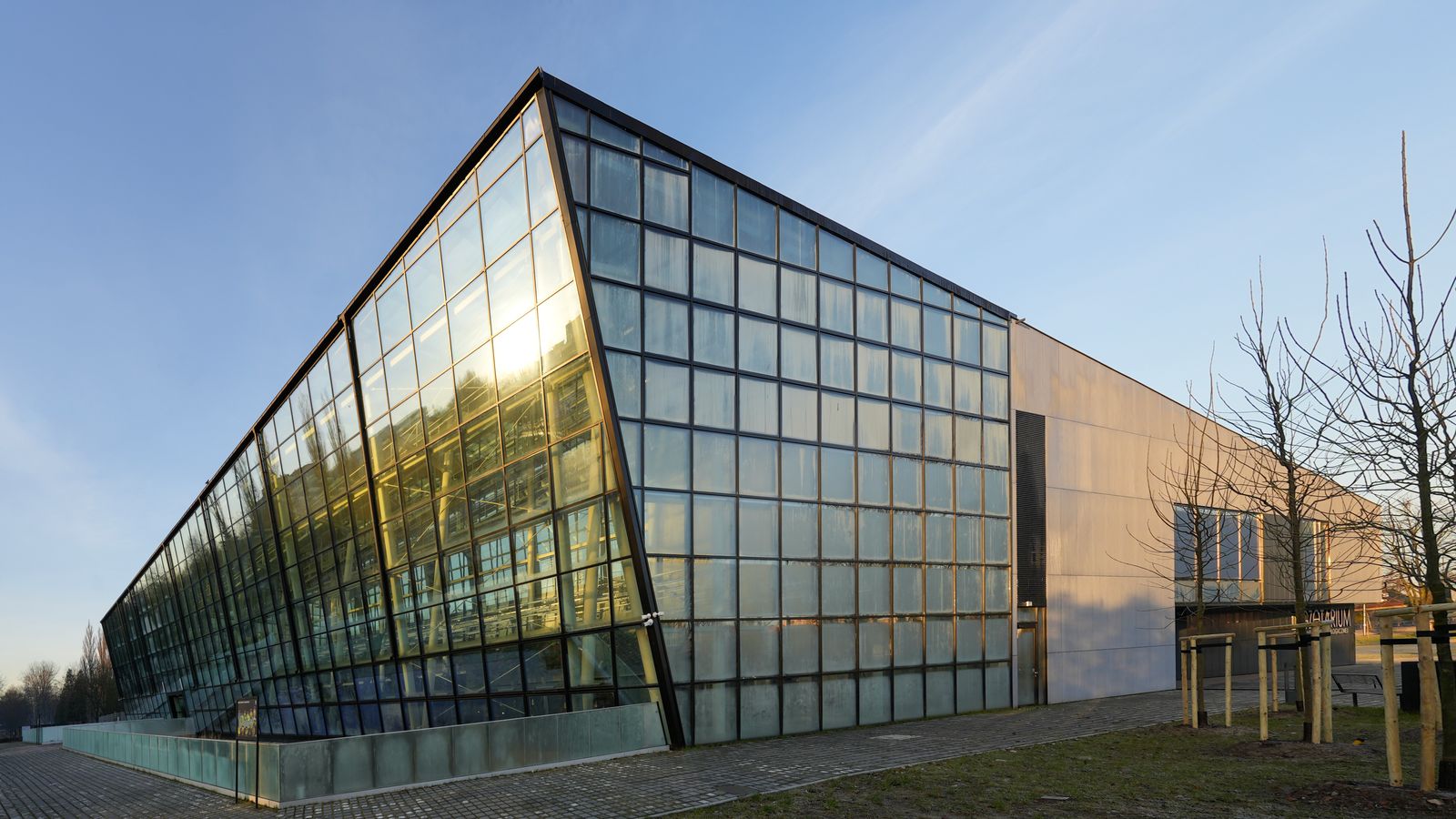
- Hero image source by Krzysztof Popławski / openverse, by.