When September 11th comes to mind, most naturally think of the tragic events that unfolded in cities across America in 2001, from New York to Washington, D.C. A decade after those, though, an attack that took place some 5,000 miles from America would come to dominate the US political scene for years.
As darkness fell on September 11th, 2012, armed militants linked to al-Qaeda stormed a poorly defended U.S. consulate haphazardly set up in Benghazi, Libya, shortly after a revolution toppled longtime dictator Muammar Gaddafi. The events of that night would plunge Americans throughout the country into a fight for their survival. Ultimately, the US Ambassador would be killed along with several other U.S. security personnel.
The response to this almost immediately descended into rank political squabbling, with the real events being clouded in partisan attacks. Now, after more than a decade, we can present the story of what really unfolded on that fateful night.
Key Takeaways
- The 2012 attack on the U.S. consulate in Benghazi, Libya, resulted in the deaths of the U.S. Ambassador and several security personnel.
- The consulate was poorly defended, lacking standard security measures like Marine guards and reinforced structures.
- The Obama administration initially misrepresented the attack as a spontaneous protest, delaying the acknowledgment of it as a terrorist act.
- Political squabbling and investigations followed, with Republicans criticizing the administration’s handling of the situation.
- The Benghazi attack highlighted significant security and logistical failures, emphasizing the need for better preparation in volatile regions.
Setting the Stage
Muammar Gaddafi had ruled Libya with an iron fist since 1969. He was as brutal as he was erratic—jailing or executing dissidents and tightly controlling the country’s vast oil wealth, a move which unsurprisingly led to an economically stagnant country with little opportunity for advancement. Internationally, he gained infamy for sponsoring terrorist organizations, including involvement in the 1988 Lockerbie bombing, which left Libya a pariah state on the world stage. A North African North Korea, if you will.
This all came crashing down during the First Libyan Civil War in 2011, as part of the broader Arab Spring movement. Across the Middle East, Arab populations rose up in opposition to authoritarian leaders who had been in power for decades. From Cairo to Tunis, it seemed as though no dictator was safe.
US foreign policy at the time was strongly in favor of the pro-democracy movements, supporting the revolutions that toppled Hosni Mubarak in Egypt as well as others. The narrative that a region that had been all but dismissed as some backwards, anti-democratic timewarp was finally ready to embrace liberal democracy proved hard to resist for many across the West. The strongmen the rebels were fighting also made for poor targets to rally behind—crackpot dictators who had presided over largely impoverished nations while enriching themselves and their cronies.
US and other NATO members would ultimately end up intervening on behalf of the rebels in Libya. Until this point, it was unclear who was going to pull out ahead—but once the bombs started falling, Gaddafi’s forces were firmly on the retreat. One by one, cities across Libya began falling into rebel hands. By the time rebels stormed the capital city of Tripoli, it was all but over for the regime.
After the collapse of the Gaddafi regime, Libya found itself in a now all-too familiar situation where the loss of a strongman dictator who held a country together by brute force left a chaotic power vacuum in its wake. This gave rise to a broad swath of fighters, many of whom were genuinely supportive of democracy and would come to play a crucial role in supporting the US presence in the country. Others, however, were far more nefarious.
Take Ansar al-Shariah, for instance. The group was a Salafi jihadist militia with clear ideological and operational ties to al Qaeda which rejected outright the idea of democratic governance, instead advocating for strict adherence to Sharia law. Their black and white flag, eerily familiar to anyone following Middle Eastern affairs, soon became brazenly flown across cities outside the provisional government’s control. Chief among these was the Libyan city of Benghazi.
Shots Fired
On the night of September 11th, 2012, Ambassador Stevens was attempting to keep a low profile at a haphazardly arranged diplomatic outpost in Benghazi. Tensions were already high due to the anniversary of 9/11, with Islamist militants known to organize attacks on that date as a perverse kind of celebration.
Complicating the matter was an overall deteriorating security situation in the city, with US State Department intelligence warning of imminent attacks by Ansar al-Shariah, as well as other Islamist groups in the area.
Given this backdrop, Ambassador Stevens was advised to not leave the compound. However, given the haste with which said compound had been set up, its temporary nature, and the fact that it lacked official embassy status, saying that security there was “light” would be a little like saying that Joker 2 was slightly misconceived—an almost award-winning understatement.
Most U.S. embassies have at least one Marine Security Guard, which consist of typically 10-20 highly trained Marines stationed to defend the outpost at all costs. They operate within a heavily fortified base equipped with physical security features such as high, blast-proof walls and watch towers.
The consulate in Benghazi had none of these. There was no Marine Security Guard, no blast-resistant walls, no heavily fortified safe-haven with its own independent ventilation system. What it did have was merely an 8-foot-high wall, and a small group of five Diplomatic Security personnel. Given this security setup, it was heavily reliant on the presence of local Libyan security. In short, defending such an outpost would be a logistical nightmare—and damn near impossible without Libyan support.
At 9:42 pm local time, the first shots rang out. Approximately 20-40 attackers had arrived outside the main gate, armed to the teeth with AK-47s, RPGs, hand grenades, and heavy machine guns. The local security—which had received neither proper training nor advanced weaponry—simply fled in the first few moments of the attack. Without any defensive towers and the front security team having fled, storming the compound had already gone from “easy” to “absolute cakewalk”.
Immediately, the priority was to secure the Ambassador in the semi-fortified safe haven in Villa C. Quickly sealing themselves in with Stevens was DS Scott Strickland and Information Management Officer Sean Smith. The call went out to a CIA station just one mile away urgently requesting reinforcements.
The safe haven in the compound was a defensive room designed to keep out attackers, featuring bars on the windows and bullet-proof, reinforced doors. Designed to withstand small attacks from presumably thieves and lightly-armed groups, it lacked the sophisticated features that a safe haven in a full-fledged embassy would have—namely, an independent ventilation system. Such an oversight would prove to be the compound’s downfall.
After overrunning the consulate, the attackers quickly located the safe haven, which was easily identifiable from its seemingly-impenetrable doors. Suspecting that the ambassador was inside, they began trying to force their way in. All the Ambassador and his small security detail could do was sit there and watch a camera stream of the attackers directly outside their fortified safe haven.
The team frantically scrambled to radio for assistance. Aside from the small CIA annex down the road, the nearest assistance was about 400 miles away on the other side of the country in Tripoli. Within 20 minutes of receiving the distress call, highly trained ex-special forces personnel departed for the consulate at around 10:00 pm local time on what they knew would be a life-or-death mission.
Back at the compound, despite kicking and shooting the door repeatedly, the attackers were unable to breach the barrier. Undeterred, they knew they had to get more radical. If they couldn’t get in to the Ambassador, they would force him out.
Still confined to the safe haven, Ambassador Stevens could only watch in horror as the attackers began to bring in canister after canister of diesel fuel. It became all too clear what was about to transpire, and they were powerless to stop it. One by one, the attackers began emptying the canisters throughout the complex, splashing it on walls and furniture.
And then, at roughly 10:05pm, they lit the match.
The safe haven, lacking fireproofing and an isolated ventilation system, stood no chance against this new onslaught. The building, and later the entire complex, went up in flames. The scene was like something from a medieval painting of Hell, with thick, black smoke rapidly filling the safe haven. It was clear that the room designed to keep them safe from attackers would be their grave if they did not flee.
The events that transpired over the next several minutes remain unclear, even after more than a decade. With thick, black smoke billowing into their enclave, the three men took the only option available to them: an attempt to escape.
The Cavalry Arrives
By 10:25pm, the GRS forces arrived from the nearby CIA compound. By this point, flames engulfed much of what had been Villas C and B. The front gate was breached, allowing opportunistic looters and curious local civilians alike entrance into the compound. The attackers that remained were not dressed in uniform, leading to a situation where the GRS could not tell who was who.
Upon entry, the team came under immediate fire. Shots rang out at them from multiple directions, from multiple buildings. The February 17 brigade—a group of friendly Libyans—were supposed to have been there to protect the compound but had allegedly fled. Were some still there? Was this friendly fire, or were these the attackers? It was chaos.
Nevertheless, the GRS pushed ahead. The attackers—some of whom had already begun to flee after the fires ignited—were taken by surprise by the speed and force with which the American reinforcements arrived. Within a matter of minutes, the attackers abandoned the compound to regroup.
GRS forces reached Villa C—where they had last heard Ambassador Stevens was held up—at 10:30pm. There, they met up with DS Strickland, who had managed to escape out of a bathroom window inside the safe haven. He thought that Ambassador Stevens and DS Smith were behind him, but had lost both of them in the confusion and near-zero visibility inside the safe haven due to smoke.
Battling intense heat and smoke from the ongoing fires, GRS and DS agents made multiple attempts to get inside Villa C to locate the Ambassador. Without saying a word, they all knew the truth: nobody could have survived the heat and smoke inside that building. This was confirmed when they found the body of DS Smith, who would later be determined to have died from smoke inhalation.
Watch The Project Briefing
Open Video
Video Briefing
The 2012 Benghazi Attack...
Unable to find the Ambassador despite multiple attempts and acutely aware that the building risked imminent collapse, the team was ultimately but reluctantly forced to withdraw from Villa C. They knew that the militants were regrouping, and every passing moment they stayed risked another ambush on the poorly defended compound. After completing a quick sweep of the other two villas to ensure nobody was to be left behind, the team pulled out of the compound altogether and made their way back to the annex.
On their way back, they knew that the attackers were not done. After scoring a victory as massive as raiding a U.S. consulate, they would be back.
Hunkering Down
By 11:30, less than two hours after the attack first broke out, all surviving American personnel had arrived at the CIA annex. The situation was grim: the Ambassador had in all likelihood been either killed or kidnapped—which would have been worse, nobody could say for sure. The consulate was completely destroyed, and DS Smith’s corpse lay in the back of one of their vans. The February 17 militia, which was supposed to provide security for the compound, had all but vanished.
It wasn’t until they arrived at the annex, though, that they realized just how alone they were. The GRS consisted of ex-special force veterans who had served multiple tours in Iraq and Afghanistan. There, the US military had positioned large amounts of reinforcements, armed drones, Apache attack helicopters, and bombers for situations like this. It wasn’t always immediate, but in both of those countries when you called for reinforcements, they came.
Libya was a completely different situation. The fall of the Gaddafi regime left behind a fractured country with no strong central authority, militias running rampant, and essentially zero US military presence inside the country or in any of its neighbors. There was the additional small team of six Americans in Tripoli who had been dispatched, but there was no telling when they would arrive. The best rapid response that could be provided was an unarmed Predator drone for aerial surveillance.
This wasn’t for a lack of attention once the attack began, though. While there were serious security missteps in the leadup, Washington was alert to events as they unfolded. Defense Secretary Leon Panetta and Joint Chiefs Chairman General Martin Dempsey were notified within 50 minutes of the attack. Panetta would soon order two Marine platoons in Spain to prepare to deploy, and instructed a special operations team in Europe and another in the US to get ready to stage.
The issue was not a lack of response, but rather a lack of preparation.
Now, you may be under the impression that CIA hideouts are supposed to be top-secret. And you would be right, they’re supposed to be—in theory. In Libya, however, nothing quite goes according to plan. Locals had been aware for some time that something wasn’t quite right about the place.
Its high walls, guard towers, and constant guards outside its gate was a bright red flag that something was going on there. Adding in the steady stream of Westerners coming and going from inside the compound, and it didn’t take a rocket scientist to put two and two together. Keep in mind, post-revolution Benghazi was not exactly a top tourist destination. While they may not have known that it was specifically a CIA outpost, even local civilians had begun to refer to it as the “American compound.”
In other words, the team in the annex knew the attackers were coming for them. Despite repeated attempts to get in touch with Libyan brigade commanders, it quickly became clear that reinforcements would not be coming any time soon. Meanwhile, the six-man armada—Team Tripoli—had landed in Benghazi, but were stuck at the airport without Libyan transportation.
The lack of American presence in the country meant that they would be entirely dependent on Libyans for armored transports. Security for the team was front and center: they would do nobody any good if they themselves got ambushed and pinned down in one of Benghazi’s infamously narrow, winding streets.
Inside the annex, it was all hands-on deck. Sandbagging rooftops, strategically positioning their limited firepower to ensure 360 degrees of surveillance, they were as ready for the incoming siege as they could be. Above head, their only tangible backup provided since the attack began: a single, unarmed drone for aerial surveillance. Washington was watching, but powerless to help.
By the time the clock struck midnight, it was completely silent around the annex. Too quiet. Despite being a CIA outpost, there were other civilian buildings nearby—but they had all gone dark. GRS officer Kris “Tanto” Paronto put it this way in a subsequent interview: “It got too quiet. You could feel it. Everyone disappeared. Like they knew what was about to happen.”
And then, they saw it. First one, then another, then another. Bodies, walking slowly and close to the ground, were approaching the annex. It was hard to tell exactly how many there were, but there were easily over two dozen.
This time, though, the Americans knew they had the advantage. Unlike the consulate—which at one point was described as a “sniper’s paradise”—the annex was significantly better defended. The consulate was also caught completely off guard by the attack, with much of their security collapsing immediately due to the fleeing Libyan militia. This would not be repeated here: friendly Libyan support had thus far failed to materialize, meaning the sole defenders were highly trained US soldiers who were very much expecting this attack.
Contrary to what you might expect, they actually let the attackers get relatively close to the compound. This was more out of strategic decision making than anything: opening fire would give away their location from their muzzle flash. They only had one chance at this, so when they did open fire, they wanted to be deadly accurate and take down the attackers as fast as possible.
Once they did open fire, it was short work to take out the enemy. Despite returning fire, the attackers’ lack of training and lower-quality firearms—largely looted from ex-Gaddafi strongholds, much of which were holdovers from the Soviet era—failed to hit a single American target. They were caught completely off-guard by the enhanced defenses of the annex and quickly retreated.
You would think that by this point, the United States’ military would have been able to mobilize some sort of support for them. And yet even after all this, they were still essentially alone. The Marine force that had been ordered to prepare to deploy from Spain were bogged down in a bureaucratic mess and had not even taken off yet. The rules of engagement were unclear, as they were not formally authorized by the provisional Libyan government to deploy.
Should they be in civilian clothing or in full combat uniforms? This trivial point became a massive hold-up on legalistic grounds, with the team ordered to change in and out of uniform multiple times before deploying. Armed drones at the time were more limited than they are today, with most being deployed in locations like Iraq and Afghanistan—out of range to Benghazi.
Around this time, news reports were coming in that an American had been brought to a Libyan hospital, alive. Immediately, both hope and panic washed over the staff in the annex—this surely had to be Ambassador Stevens. They were relieved that he was alive, yet panicked as they were fighting for their lives in a heavily fortified compound; leaving on a rescue mission to a hospital across the city would’ve been a death sentence for all involved.
These initial reports would prove to be only partially accurate: the American brought in was indeed Stevens. Local concerned Libyan civilians had searched the compound after the attack ended in an attempt to rescue any surviving Americans and carried the Ambassador to the hospital, where they would attempt to revive him for over 90 minutes. What the report got wrong, though, was that he was alive. He had likely passed away before ever making it to the hospital, and was pronounced dead there from smoke inhalation after their resuscitation attempts failed.
Team Tripoli, meanwhile, remained grounded on the tarmac. Operating in a foreign country without any military presence meant no armored ground units to transport them, so they were completely dependent on the Libyan militias to get them there. The militias were themselves hastily organized, and scraping together armored convoys to secure Americans in a city that was rapidly falling into al-Qaeda linked groups’ hands would take time.
By the time 5am rolled around, the sun was beginning to rise over the horizon. The annex had successfully fought off another wave of attackers, and they had no idea when the next one would arrive. With daylight, though, came the first good news since the attacks began: Team Tripoli had finally arrived. It had taken hours, but they managed to scrape together a convoy of friendly Libyan militia brigades to escort them from the airport.
This newfound hope would not last long, though. Less than fifteen minutes after arriving, a deafening explosion rocked the annex. Then another, then another. This was different from the previous waves of attacks: this was not gunfire, but rather mortar shells raining down on the compound.
The first landed just outside the walls, but their accuracy would improve. The second and third were direct hits to the rooftop where Tyrone Woods and Glen Doherty were positioned. Both men were killed instantly. DS Dave Ubben, who was also on the rooftop, was thrown by the blast—his leg mutilated, and his body peppered with shrapnel.
It was clear that holding the compound was no longer tenable. Fending off a rag tag coalition of rebels with Soviet era Kalashnikovs was one thing. There was simply no way to prevent more mortar shells from raining down on them. They had to leave, now.
The team hurriedly evacuated the compound, climbing into the Libyan Shield vehicles that had brought Team Tripoli only minutes earlier under threat of more mortars and gunfire. They were armed to the teeth, braced for one final ambush that, miraculously, never came.
Within the hour, the entire team arrived safely at Benghazi’s airport. Despite another setback due to dependence on Libyan personnel and aircraft for transportation, the team eventually would be wheels-up on a flight from Benghazi to Tripoli, grateful to be alive.
Aftermath
It did not take long for the events of September 11th, 2012, to become politicized. It would lead to years of investigations and Congressional hearings, but almost a decade and a half on, we can see with hindsight how things actually unfolded.
US intelligence broadly underestimated how much Islamist extremist groups had grown in Benghazi at the time. This quickly became apparent as the attack unfolded, but the Obama administration did itself no favors in the coming days. Despite intelligence from the CIA pointing to groups like Ansar al-Shariah to blame, the White House repeatedly pointed to this being more an organic, civilian-led protest gone wrong in response to an anti-Islamic film that had been uploaded to YouTube in previous days which insulted Prophet Mohammad.
While true that the film in question did lead to protests in the Middle East, they broadly missed the mark here. None of the attackers of the compound were carrying signs or seemed to be protesting anything. It ultimately took the administration nine days to admit that this was not a spontaneous protest, but rather a well-planned, coordinated act of terrorism.
The reason for this long-held insistence remains murky, especially when considering internal intelligence never suggested that it was the result of protests. One theory suggests that the administration was concerned about appearing to have “dropped the ball” on national security in the leadup to election year, but this would ultimately come back to bite them.
Republicans, for their part, were eager to leap on this opportunity to portray President Obama—and later down the road in 2016, then Secretary of State Hillary Clinton—as weak on national security. Repeatedly circulated was a rumor that a “stand down” order had been given to the GRS, stopping them from leaving the CIA annex to rescue the Ambassador, but evidence for this never surfaced.
The lessons learned from Benghazi are more nuanced. Speaking with the benefit of hindsight, it is clear that a US Ambassador should never have been left with such minimal security in a country going through waves of post-revolution violence. Reinforcements were too far away to effectively deploy in a meaningfully timely manner, and armed drones were all out of reach. This set up a perfect storm situation: a US military “dead zone,” if you will.
While no stand down order was directly given, the CIA station chief did choose to rely more on local Libyan security than hindsight would suggest would have been wise. Once the mayday was given from the consulate that they were under attack, the station chief wanted to coordinate with Libyan militias before deploying the GRS team to rescue Ambassador Stevens. This resulted in a roughly 20-minute delay which GRS team members strongly believed after the fact made the difference in arriving at the consulate after the ambassador was killed.
The Benghazi attack was a tragedy shaped by chaos, miscalculation, poor preparation, and delayed decisions. Four Americans died not because of a single failure, but because of a chain of them—strategic, logistical, and political. The lessons that must be learned from this are clear: in volatile regions, security must never be an afterthought. The truth, however uncomfortable, should be pursued without being twisted for political gain.
Key Takeaways
- The 2012 attack on the U.S. consulate in Benghazi, Libya, resulted in the deaths of the U.S. Ambassador and several security personnel.
- The consulate was poorly defended, lacking standard security measures like Marine guards and reinforced structures.
- The Obama administration initially misrepresented the attack as a spontaneous protest, delaying the acknowledgment of it as a terrorist act.
- Political squabbling and investigations followed, with Republicans criticizing the administration’s handling of the situation.
- The Benghazi attack highlighted significant security and logistical failures, emphasizing the need for better preparation in volatile regions.
Simon Whistler
Simon Whistler is one of YouTube's most prolific documentary presenters, known for calm, authoritative deep dives into true crime, disappearances, and the world's most enduring unsolved cases. Into the Shadows is his companion archive for the cases he can't stop thinking about.
Frequently Asked Questions
What happened during the 2012 Benghazi attack?
On September 11, 2012, armed militants linked to al-Qaeda stormed a poorly defended U.S. consulate in Benghazi, Libya. The attack resulted in the deaths of U.S. Ambassador J. Christopher Stevens and several other U.S. security personnel.
What was the security situation like at the Benghazi consulate?
The consulate in Benghazi had minimal security. There was no Marine Security Guard, no blast-resistant walls, and no heavily fortified safe-haven. The security setup relied heavily on local Libyan security, which proved inadequate during the attack.
Who were the primary attackers in the Benghazi consulate raid?
The primary attackers were linked to Ansar al-Shariah, a Salafi jihadist militia with ties to al-Qaeda. They rejected democratic governance and advocated for strict adherence to Sharia law.
What was the initial response to the attack from the U.S. government?
The initial response was chaotic and politically charged. The Obama administration initially suggested the attack was a spontaneous protest gone wrong due to an anti-Islamic film, but later admitted it was a coordinated act of terrorism.
What role did local Libyan security play in the Benghazi attack?
Local Libyan security, specifically the February 17 brigade, was supposed to protect the consulate but fled during the initial attack. This left the consulate vulnerable and reliant on a small group of U.S. security personnel.
What was the condition of the safe haven in the Benghazi consulate?
The safe haven in the consulate was designed to withstand small attacks but lacked an independent ventilation system. This oversight proved fatal when attackers set the building on fire, filling it with thick, black smoke.
What was the political fallout from the Benghazi attack?
The attack became highly politicized, leading to years of investigations and Congressional hearings. Republicans criticized the Obama administration for appearing weak on national security, while the administration faced criticism for its initial response and narrative.
What were the key lessons learned from the Benghazi attack?
The attack highlighted the need for adequate security in volatile regions, the importance of timely and effective reinforcement, and the dangers of political interference in national security responses.
What was the role of the CIA annex in the Benghazi attack?
The CIA annex, located about a mile away from the consulate, provided reinforcements during the attack. However, the annex itself came under siege later in the night, resulting in the deaths of two CIA contractors.
What was the significance of the date September 11 in the context of the Benghazi attack?
September 11 was chosen by Islamist militants to organize attacks as a perverse kind of celebration of the 9/11 attacks in the U.S. This made tensions high and increased the likelihood of an attack.
Sources
- Original Into the Shadows video: The 2012 Benghazi Attack…
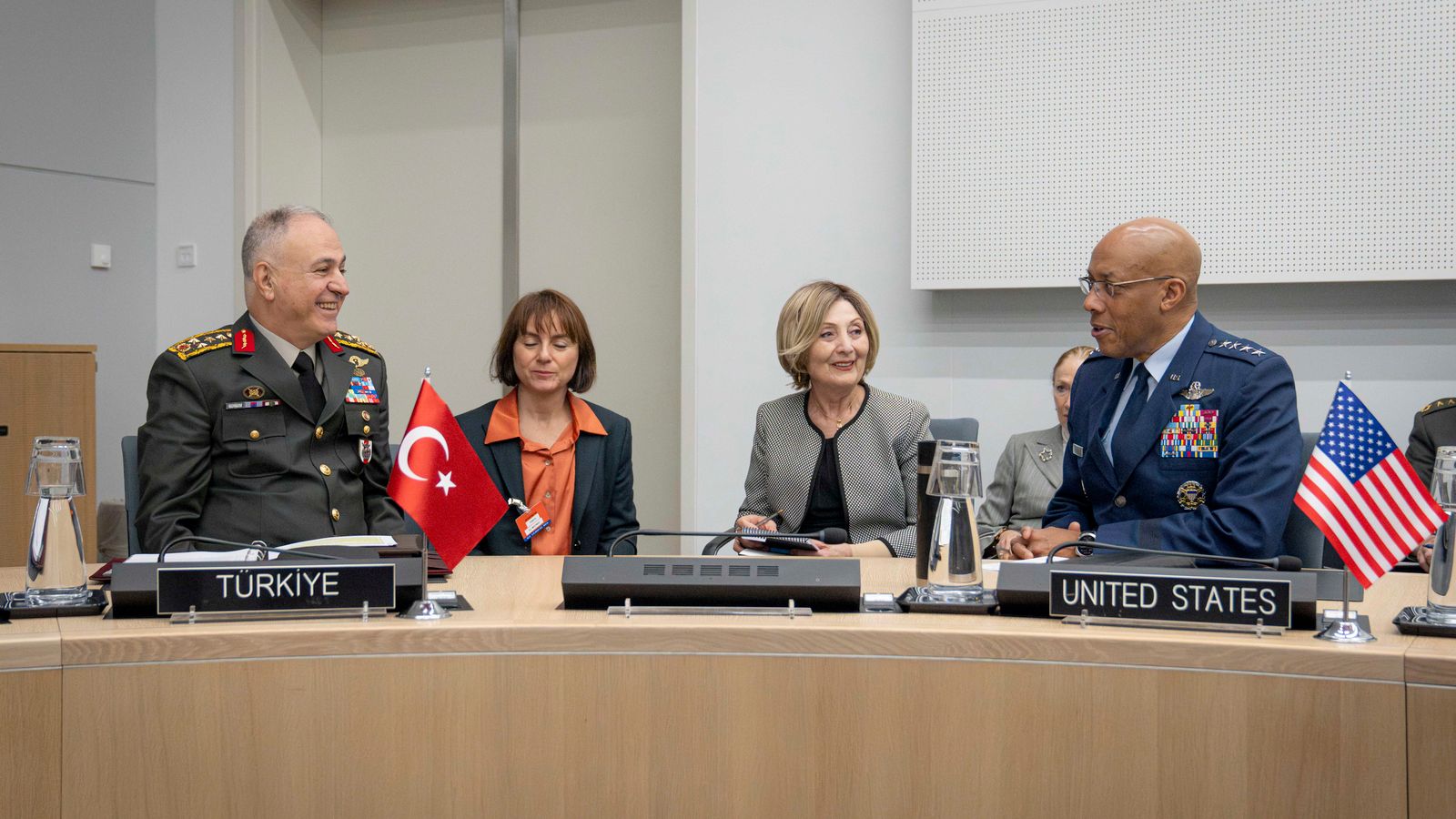
- Hero image source by Chairman of the Joint Chiefs of Staff from Washington D.C, United States / openverse, by.